Installation guide
 Error Codes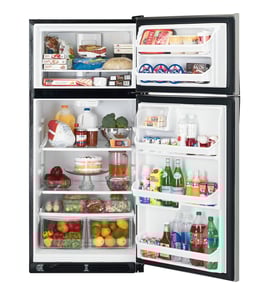


Do garage refrigerators need special outlets?
A Frigidaire top-mount refrigerator like model PLHT219TCKF typically does not need a “special” outlet, but it does need a properly grounded, dedicated 120V outlet in good condition. In a garage, the bigger issue is safe power and temperature swings, so we recommend verifying the electrical setup and placement details in the PLHT219TCKF installation guide.
For reliable cooling and fewer nuisance trips, set up the garage outlet like this:
- Use a properly grounded 3-prong outlet (no cheater adapters).
- Use a dedicated circuit when possible (avoid sharing with freezers, compressors, or power tools).
- Avoid plugging the refrigerator into an outlet controlled by a wall switch.
- If the garage outlet is GFCI-protected, make sure the receptacle is in good shape; weak GFCIs can trip from compressor start-up.
- Do not use an extension cord; if you must temporarily, use a short, heavy-duty appliance-rated cord.
Garages often create conditions that affect performance even when the outlet is correct:
- Hot summers can make the compressor run longer and raise energy use.
- Cold winters can reduce run time and cause warmer fresh-food temps on some designs.
- Poor airflow around the cabinet can trap heat.
The installation guide calls out clearances for airflow:
| Location | Typical clearance to allow |
|---|---|
| Sides and top | 3/8 inch |
| Back | 1 inch |
Use this checklist after moving or installing the refrigerator:
- Confirm the refrigerator is plugged in and house power is on.
- Level the cabinet; it should be level side-to-side and slightly tilted back (about 1/4 inch front-to-back).
- Verify the door seals completely on all sides.
- If you have an ice maker, connect the water supply and recheck for leaks after 24 hours.
A refrigerator compressor draws more power at start-up than during steady running. A dedicated, grounded outlet and proper airflow help prevent nuisance breaker trips, temperature problems, and premature wear.
Last updated: January 2026
What's the best brand for garage refrigerators?
For a garage refrigerator, the “best” brand is the one that offers a garage-ready model rated for your temperature swings; LG, GE, and Gladiator are common top picks. If you’re using a Frigidaire top-mount like model PLHT219TCKF in a garage, focus on stable temperatures, correct leveling, and good door sealing for reliable cooling.
- A stated operating range that matches your garage (hot summers, cold winters)
- Strong door gaskets and consistent door closure (prevents warm air leaks)
- Simple mechanical controls or a proven temperature management system
- Adequate airflow clearances around the cabinet for heat removal
- Easy access to parts such as a light bulb, gasket, or evaporator fan components
| Brand | Typical strengths for garage use | Best fit if you need |
|---|---|---|
| Gladiator | Built for wider ambient temps in many models | Extreme hot or cold garages |
| GE | Broad availability, many full-size options | Traditional top-freezer choices |
| LG | Feature sets and efficiency in many models | Modern features and capacity |
| Frigidaire | Solid mainstream designs | A dependable secondary fridge (when temps are moderate) |
We recommend following the clearances and leveling guidance in the installation guide. The installation checklist calls out key items that directly affect garage performance.
- Keep cabinet clearances around the unit for airflow (typical guidance: 3/8 inch at sides and top, 1 inch at back)
- Level the refrigerator and tilt it slightly back so doors self-close properly
- Confirm the door seals contact the cabinet on all sides
- Recheck water connections for leaks after 24 hours if an ice maker is connected
- After changing temperature controls, wait 24 hours before making more adjustments
Garages often swing outside normal kitchen temperatures; that can cause warm fresh-food temps, soft ice cream, or a compressor that runs too much. Proper leveling, airflow, and tight gaskets help any brand perform closer to its design.
Last updated: January 2026
What's the typical lifespan of a refrigerator?
Most refrigerators last 10 to 15 years. A Frigidaire top-mount like PLHT219TCKF often lands near the middle of that range when it is kept level, has good airflow clearances, and gets routine cleaning and seal checks as outlined in the PLHT219TCKF installation guide.
A refrigerator’s life is usually determined by heat management, door sealing, and how hard the sealed system has to work.
- Keep the refrigerator level and stable so doors close consistently
- Maintain proper clearances for airflow (typical guidance is 3/8 inch at sides and top, 1 inch at back)
- Keep door gaskets sealing on all sides to prevent warm air leaks
- Clean dust from condenser areas regularly (frequency depends on pets and dust)
- Avoid overloading shelves and blocking air vents inside the cabinet
These are typical industry ranges for household refrigerators.
| Refrigerator type | Typical lifespan | Notes |
|---|---|---|
| Top-freezer / top-mount | 12 to 16 years | Often simpler design and fewer components |
| Side-by-side | 10 to 14 years | More doors and features can add wear points |
| French door | 9 to 13 years | More seals, drawers, and airflow paths |
| Compact / dorm | 6 to 10 years | Smaller compressors often run harder |
If you see several of these together, repairs can become more frequent.
- Temperatures swing even after you wait 24 hours following a control change
- Frost buildup returns quickly after defrosting
- Doors do not close easily or you see gaps in the gasket seal
- Compressor runs almost constantly or is unusually loud
- Water leaks or recurring puddles around the unit
A refrigerator that is out of level, has poor airflow, or leaks air at the door gasket runs hotter and longer. That extra run time accelerates wear on the compressor, fans, and defrost system, which shortens overall lifespan.
Last updated: January 2026