
Where is the model number on a tiller?
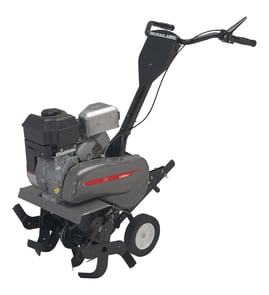
On a Craftsman front-tine tiller like model 917295351, the model number is usually on a printed label or metal tag mounted to the frame. Most commonly, we see it on the tine shield/guard area or near the engine and fuel tank.
Common places to check first
- Tine shield (the guard covering the tines)
- Frame rail near the engine mount
- Near the fuel tank (side of tank or nearby bracket)
- Handle support or handle base area
- Front of the unit on larger tillers
How to find it quickly (best practice)
- Turn the engine off and let it cool.
- Wipe dirt and oil off the frame and tine guard with a rag.
- Use a flashlight and look for a rectangular label or stamped plate.
- Write down the full model number exactly as shown (for example, 917295351).
What the label usually includes
| Item on label | What it’s used for | Example |
|---|---|---|
| Model number | Identifies the exact tiller version | 917295351 |
| Serial number | Helps match production run details | Varies |
| Engine info | Helps match engine tune-up parts | Varies |
Why it matters
The model number is the fastest way to match the correct Craftsman tiller parts (like tines, belts, and hardware) and avoid ordering a similar-looking part that will not fit.
For help with tine-related identification and replacement steps, use how to replace the tines on a front tine tiller.
Last updated: January 2026
What tiller is made in the USA?
Some tillers are made in the USA; for example, Mantis Tillers are designed, engineered, and manufactured in the United States. If you are shopping for a USA-made tiller to compare with your Craftsman model 917295351, confirm the country of origin on the product data plate or the manufacturer listing before you buy.
How to confirm where a tiller is made
Use these quick checks on any front-tine or rear-tine tiller:
- Look for a data plate on the frame, engine shroud, or handle support; it often lists country of origin.
- Check the carton label if you still have the packaging.
- Review the manufacturer’s specifications for “country of origin” or “assembled in”.
- If the engine is a separate brand (common on tillers), check the engine tag too.
- Compare multiple sources; listings can vary by production run.
What “made in the USA” can mean
Manufacturers may use different wording. Here is how it is commonly presented:
| Label you see | What it usually indicates | What to verify |
|---|---|---|
| Made in USA | Product is manufactured in the U.S. | Whether key components are also U.S.-made |
| Assembled in USA | Final assembly is in the U.S. | Where major parts (engine, transmission) are made |
| Designed/engineered in USA | Design work is U.S.-based | Actual manufacturing location |
Why it matters
Country of origin can affect parts availability, service support, and long-term maintenance planning. If you are maintaining a Craftsman 917295351, keeping wear items like tines and hardware in good shape helps performance regardless of where the unit was built.
Related maintenance help for front-tine tillers
If your tiller is wearing tines quickly or not digging well, use how to replace the tines on a front tine tiller as a step-by-step reference.
Last updated: January 2026
What kind of engine is on a Craftsman tiller?
On the Craftsman front-tine tiller model 917295351, the engine type depends on the specific engine build that was installed for that production run; most Craftsman front-tine tillers of this era commonly use a Briggs & Stratton or Tecumseh small gas engine in the 5 to 7 HP range.
How to identify the exact engine on model 917295351
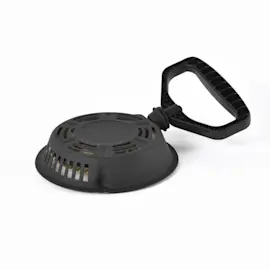
Use the engine’s ID tag, not the tiller model number. Look for a label on the blower housing, valve cover, or near the recoil starter.
- Briggs & Stratton: model, type, and code (three separate fields)
- Tecumseh: model and specification number
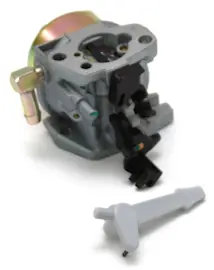
- Record the numbers exactly; they determine the correct carburetor parts, ignition parts, and tune-up items
- If the tag is dirty, wipe it and take a photo before ordering parts
Quick engine ID checklist
| What you have | What it tells us | What to do next |
|---|---|---|
| Engine model/type/code | Exact engine family and build | Match parts to the engine numbers |
| Only “HP” decal | Not reliable for parts | Use the ID tag instead |
| Hard starting or surging | Often fuel or ignition related | Check fuel, spark plug, air filter |
Why it matters
The tiller model 917295351 identifies the chassis and drive system, but the engine model identifies the correct maintenance and repair parts. Using the engine ID prevents ordering the wrong carburetor, gasket set, or ignition coil.
Related tiller help
If you are troubleshooting performance issues that can be mistaken for “engine problems,” use tiller engine runs rough or misfires for the most common causes and fixes.
Last updated: January 2026
Are Craftsman tillers any good?
Craftsman tillers are a solid choice for most homeowners because they typically deliver strong digging power and easy-to-find replacement parts. For the Craftsman 917295351 front-tine tiller, long-term satisfaction usually comes down to routine maintenance and replacing wear items like tines, cables, and hardware as they loosen or wear.
What to expect from a Craftsman tiller
Most Craftsman front-tine tillers are designed for seasonal garden work (vegetable beds, soil mixing, light to moderate compaction). They tend to perform best when you let the machine do the work and avoid forcing it through roots or large rocks.
Common strengths
- Good soil-churning performance for typical garden plots
- Straightforward controls and serviceable design
- Parts support for common wear items (tines, depth stake hardware, clutch cable)
- Practical for homeowners who till a few times per year
Common complaints we see across many tillers
- Hardware loosening from vibration (nuts, bolts, pins)
- Tines wearing faster in rocky soil
- Cable stretch or misadjustment over time
- Belt and pulley wear if the drive is run too tight or misaligned
How to keep a Craftsman tiller “good” over time
A tiller’s reputation often comes down to upkeep. These checks prevent most “durability” complaints.
- Re-tighten fasteners before each use (especially tine and depth stake hardware)
- Keep the tine depth reasonable; make multiple shallow passes instead of one deep pass
- Inspect the clutch cable for fraying and proper engagement (replace if stretched)
- Check the drive pulley for wobble or glazing
- Replace worn tines so the machine doesn’t bounce and strain the drivetrain
Quick wear-item examples for model 917295351
| Wear area | What you’ll notice | Example part to check |
|---|---|---|
| Tines | Poor bite, bouncing, shallow tilling | Weld tine 584971502 |
| Depth control | Hard to hold depth, inconsistent cut | Depth stake 532446066 |
| Drive engagement | Slipping, hard to engage, inconsistent pull | Cbl/cltch t 583731701 |
Why it matters
A front-tine tiller works in constant vibration and shock loads. Keeping tines sharp and hardware tight reduces stress on the pulley, cable, and mounting points, which is what most people experience as “design” or “durability” problems.
For step-by-step help, use our how to replace the tines on a front tine tiller guide.
Last updated: January 2026