Owner’s manual
 Error Codes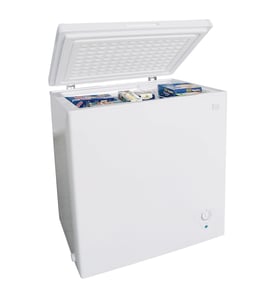



How big is a Kenmore chest freezer model 11117142910?
The Kenmore chest freezer model 11117142910 is part of the Kenmore 111.17142 series, which is a 14 cu. ft. chest freezer. For exact exterior dimensions (width, height, depth), use the specifications section in the owner's manual.
What “big” can mean (and what we can confirm)
From the model documentation, we can confirm capacity for this model family; exterior measurements vary by series and are best taken from the spec page in the manual.
- Capacity (confirmed): 14 cu. ft.
- Type: freestanding chest freezer
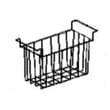
- Storage features: two top storage baskets
- Clearance needed: space around the cabinet for airflow
- Power: grounded 3-prong outlet (no extension cord)
Space planning tips for a chest freezer
Even before you measure the cabinet, plan for ventilation and lid clearance so the freezer cools correctly and the lid seals.
- Leave 1 inch between the back and left side and the wall
- Leave at least 3 inches on the right side near the compressor vent
- Make sure the floor supports a fully loaded freezer
- Level the freezer so the lid aligns and seals properly
- Allow room above the lid to open fully
Quick reference table
| Spec or requirement | What to use for model 11117142910 |
|---|---|
| Storage capacity | 14 cu. ft. |
| Exterior dimensions (W x H x D) | Check the owner's manual |
| Minimum side/back clearance | 1 in. back/left; 3 in. right |
Why it matters
Correct sizing prevents delivery surprises, and proper clearances help the compressor vent breathe. Leveling also protects the lid seal, which reduces frost buildup and temperature swings.
Last updated: February 2026
Is there a reset button on chest freezers?
Most chest freezers, including Kenmore model 11117142910, do not have a dedicated reset button. The practical “reset” is a power reset: unplug the freezer (or switch off the breaker) briefly, then restore power and allow time for temperatures to stabilize; see the owner's manual for control and indicator-light details.
How to “reset” a chest freezer safely
- Unplug the freezer from the wall outlet (or turn the circuit breaker off).
- Wait about 30 seconds.
- Plug it back in (or turn the breaker on).
- Confirm the green Power light is on (it indicates the freezer has electrical power).
- Allow 4 hours for the freezer to cool down completely after restoring power.
What the lights and control usually mean on 11117142910
On this model, the temperature control uses a dial and the indicator lights help you confirm operation.
| Indicator/light | What it tells you | What to do if it seems wrong |
|---|---|---|
| Power light (green) | Freezer has electrical power (can stay on even if control is OFF) | Check outlet, plug fit, fuse/breaker, or power outage |
| Run light (green) | Compressor is running to reach or maintain temperature | If it never comes on, recheck dial setting and power supply |
If you’re resetting because it will not run
These are the most common causes and fixes we see with chest freezers:
- Temperature control is set to OFF; turn it to a cooling setting.
- Plug is loose; push it firmly into a properly grounded 3-prong outlet.
- Tripped breaker or blown fuse; reset/replace as needed.
- Outlet is on a GFCI circuit that trips; try a different circuit.
- Recent unplugging; cooling performance can take several hours to normalize.
Why it matters
A power reset clears minor control glitches, but it does not fix underlying issues like a tripped GFCI, a loose power connection, or a control set to OFF. Confirming the Power and Run lights and giving the freezer the full cool-down time prevents unnecessary food thawing and repeat troubleshooting.
Last updated: February 2026
How often should you defrost a chest freezer?
For the Kenmore 11117142910 chest freezer, we recommend defrosting whenever frost buildup reaches about 1/4 to 1/2 inch. In many homes that works out to every few months, but the frost thickness (not the calendar) is the right trigger. See the owner's manual for the exact defrost procedure and drain-plug steps.
When to defrost (best rule of thumb)
Defrost when you notice any of these:
- Frost is 1/4 to 1/2 inch thick on the interior walls
- The lid is harder to close or the gasket is not sealing smoothly
- Storage space is shrinking because frost is taking up room
- The freezer seems to run longer than normal after door openings
- You see heavier frost near the top (common from warm, moist air entering)
Quick defrost steps for model 11117142910
Always follow the safety notes in the owner's manual.
- Unplug the freezer before defrosting (electrical safety)
- Move food to a cooler or another freezer; leave the lid open
- Use a plastic scraper to remove soft frost (never metal tools)
- If frost is hard, use the front drain outlet and an interior drain plug to drain meltwater into a shallow pan
- Reinstall both drain plugs when finished so warm air cannot enter
What not to do (to prevent damage)
Using the wrong tools can damage the liner and refrigerant tubing.
| Do | Do not |
|---|---|
| Use a plastic scraper with a pulling motion | Use sharp or metallic tools to chip ice |
| Unplug the freezer before defrosting | Defrost while plugged in |
| Drain water using the drain plugs and a pan | Let water overflow or leave the drain open afterward |
Why it matters
Keeping frost below 1/2 inch helps your chest freezer cool efficiently, preserves usable storage space, and reduces run time. It also lowers the chance of accidental damage from trying to force ice off the walls.
Last updated: February 2026
Why is my chest freezer leaking water underneath?
Water under your Kenmore 11117142910 chest freezer almost always comes from defrost water draining out (or overflowing) during manual defrosting, or from moisture and frost problems caused by a lid that is not sealing well because the freezer is not level. See the defrost drain and leveling steps in the owner's manual.
Most common causes (and what to check first)
- Recent defrosting: If you defrosted recently, water can drain out the front drain outlet and spill if the pan is too small.
- Drain plugs not fully reinstalled: Leaving the drain open lets warm air in, which increases frost and meltwater.
- Freezer not level: An unlevel cabinet can misalign the lid so it does not close or seal properly, leading to moisture and water.
- Lid opened often or left open: Warm, humid air enters and creates frost; that frost later melts during defrosting.
- Lid seal (gasket) dirty or not fitting well: Air leaks increase moisture and frost buildup.
Step-by-step: stop the leak
- Unplug the freezer and protect the floor with towels.
- Confirm the drain is closed: Make sure both the inside drain plug and the outside drain outlet plug are seated correctly after defrosting.
- Level the freezer: Set it on a solid floor; shim under the foot pads if needed so the cabinet sits firmly and the lid aligns.
- Do a controlled defrost (if frost is heavy): Use a shallow pan under the front drain outlet and check it often so it does not overflow.
- Clean and dry sealing surfaces: Wipe the lid gasket and the rim where it contacts the cabinet; remove crumbs, ice, or sticky residue.
Quick diagnosis table
| What you notice | Most likely reason | Best fix |
|---|---|---|
| Water appears right after defrosting | Drain water overflowed | Use a larger pan; monitor and empty it |
| Water keeps returning, plus heavy frost | Lid not sealing, warm air entering | Level cabinet; clean gasket; reduce lid openings |
| Moisture on outside near lid | Lid not seating properly | Level freezer; check for obstructions on lid |
Why it matters
Water underneath can mean warm air is getting into the freezer. That drives frost buildup, longer run times, temperature swings, and more frequent defrosting. Keeping the cabinet level and the drain plugs closed prevents repeat leaks.
Last updated: February 2026
Where is the model number on a Kenmore chest freezer?
On Kenmore chest freezer model 11117142910, the model and serial number label is on the lower right exterior wall of the cabinet. Use the exact model and serial from that label when looking up parts and diagrams; the location is shown in the 11117142910 owner's manual.
Where to look first (fast checklist)
Check these common label locations in this order:
- Lower right exterior wall (primary location for this model)
- Back exterior panel near the bottom edge
- Side exterior panel near the rear corner
- Cabinet rim near the lid opening
What the label looks like
The identification label is typically a small serial plate or sticker with both numbers.
| Label item | What we use it for | Typical format |
|---|---|---|
| Model number | Matching the correct parts list and diagrams | Numbers with a brand prefix (example: 111.XXXX) |
| Serial number | Identifying the production run | Letters and numbers |
Why it matters
Using the correct model number prevents wrong-part orders and helps us match the right Kenmore freezer diagrams (controls, lid hardware, baskets, wiring components).
Cleaning the label safely
If the label is dirty, clean it carefully so it stays readable:
- Use mild soap and water
- Wipe dry with a soft cloth
- Avoid abrasives and harsh cleaners
- Do not remove the serial plate
Last updated: February 2026