Installation guide
 Owner’s manual
 Error Codes


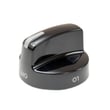
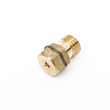
How to take the top off a Kenmore gas range?
To remove the cooktop (top) on your Kenmore gas range model 79074033313, you typically lift the front of the main top after removing the grates and burner pieces, then release any hidden mounting screws or clips holding the top to the frame. Use the steps and diagrams in the installation guide for safe access and reassembly.
Before you start (safety and prep)
- Turn all surface burner knobs to OFF and let the range cool completely.
- Shut off the gas supply at the manual shut-off valve.
- Unplug the range (or switch off the circuit breaker).
- Protect the countertop and cooktop surface with a towel or cardboard.
- Keep a small container for screws so nothing gets lost.
Steps to remove the top (common method)
- Remove the burner grates.
- Lift off the burner caps (for example, the range surface burner cap, 5,000-btu (matte black) 5304508441 and/or range surface burner cap, 9,500-btu (matte black) 5304508442, depending on which burner you’re working around).
- If your model uses burner heads, lift them off (some lift straight up; others are retained by screws).
- Look for mounting screws at the front lip (under the control panel edge) or near the burner bases; remove them if present.
- Lift the front of the main top and slide it slightly forward to disengage rear tabs, then raise it.
- Support the top (some models use a prop rod; otherwise have a helper hold it) so you can access igniters, wiring, and gas components.
What you’ll see under the top (and what it helps you fix)
| Symptom | Common under-top cause | Example part on this model page |
|---|---|---|
| Clicking but no flame | Dirty burner head or misaligned cap | Burner caps, burner heads |
| No spark at one burner | Failed igniter or damaged wiring | Frigidaire range surface burner igniter and orifice holder 316536602 |
| Weak/uneven flame | Clogged orifice or burner head ports | Burner head assemblies |
Why it matters
Removing the top the right way prevents bent metal, cracked porcelain, and pinched igniter wires. It also gives you direct access to surface burner igniters and orifice holders, which are common causes of ignition and flame problems.
Last updated: February 2026
Why is my Kenmore gas oven clicking but not lighting?
If your Kenmore 79074033313 gas range is clicking but the oven will not light, the most common cause is a weak or failed hot-surface igniter. The igniter should glow and, after about 30 to 60 seconds, the gas valve opens and the burner lights; if that sequence does not happen, ignition stops.
What to check first (safe, quick checks)
- Confirm you have power: the oven uses electric ignition; if power is out, do not try to run the oven.
- Give it time: on a normal start, ignition can take 30 to 60 seconds before flame appears.
- Look for igniter glow (through the oven bottom openings): no glow usually points to an igniter, wiring, or control issue.
- Check airflow: do not block the oven vent or the area around the base; restricted combustion air can affect ignition.
- If you smell gas: do not try to light the appliance; follow the safety steps in the installation guide.
Likely causes and the best matching fix
| What you observe | Most likely cause | What we recommend |
|---|---|---|
| No igniter glow at all | Failed igniter, loose/broken wire | Inspect wiring; replace the igniter if wiring is intact |
| Igniter glows but never lights | Weak igniter not drawing enough current to open valve | Replace the igniter |
| Lights sometimes, then fails more often | Igniter weakening | Replace the igniter before it fully fails |
Parts that commonly solve “won’t light” on this model
For oven ignition problems on this model, these parts are the most commonly replaced:
- Tappan range oven burner igniter 316489403 (bake ignition)
- Frigidaire range broil igniter 5304506545 (broil ignition)
Why it matters
A clicking or repeated ignition attempt without flame usually means the burner is not lighting reliably. Fixing ignition quickly helps prevent poor baking performance and reduces the chance of unburned gas odor during failed starts.
Last updated: February 2026
What model is my Kenmore gas range?
Your Kenmore gas range model number is printed on the identification plate on the right-hand surface of the oven front frame. On model 79074033313, you can see it by opening the storage drawer, warmer drawer, or broiler drawer and looking at the plate on the front frame; use that exact model number when ordering parts.
Where to look on Kenmore model 79074033313
Check these common spots in this order:
- Open the storage drawer (or warmer/broiler drawer) and look at the right-hand oven front frame
- Look for an identification plate with the model and serial number
- Write down the model number, serial number, and any lot number/letter shown
- If the label is dirty, wipe it gently so all digits are readable
For a diagram-style reference, use the installation guide.
What the identification plate tells you (and why it matters)
Besides the model number, the plate typically lists key details used for correct parts matching and safe setup:
| Plate item | What it’s used for |
|---|---|
| Model number | Ensures the parts list matches your exact range |
| Serial number | Helps match production variations |
| Lot number/letter | Helps confirm the correct revision/version |
| Fuel type and pressure info | Confirms natural gas vs LP setup details |
Tips for ordering the right parts
Using the exact model number prevents wrong-part returns and fit issues.
- Match the model number exactly as printed (all digits)
- Use the model number to select parts like an igniter, sensor, or burner components
- If you are troubleshooting ignition issues, common related parts include the tappan range oven burner igniter 316489403 and frigidaire range surface burner igniter and orifice holder 316536602
Why it matters
Kenmore ranges often have similar-looking versions; the identification plate is the fastest way to confirm you have 79074033313 so you get the correct oven igniter, temperature sensor, burner caps, and other gas range parts.
Last updated: February 2026
How long should a Kenmore gas stove last?
A Kenmore gas range like model 79074033313 lasts 15 years.
Typical lifespan and what affects it
Most ranges reach their full life when the burners ignite reliably, the oven holds temperature, and the gas supply and electrical connections stay in good condition.
Common factors that shorten life:
- Heavy daily cooking and high-heat use
- Grease buildup around burner heads, caps, and igniters
- Spills that clog burner ports or soak igniter wiring
- Poor installation (gas leaks, improper grounding)
- Running the oven with damaged racks, panels, or door seals
Maintenance that helps you reach 15 years
Use these practical habits to reduce wear on igniters, burner parts, and controls:
- Keep burner caps and burner heads seated correctly after cleaning
- Clean burner ports so flames stay even and blue
- Wipe up boilovers quickly to prevent clogged ports and corrosion
- Avoid slamming the oven door; it stresses hinges and panels
- Replace a dim oven light promptly so you can check baking without opening the door (see appliance light bulb, 40-watt 316538904)
Quick check: normal ignition timing (what “healthy” looks like)
Your installation instructions describe normal ignition behavior after the gas line is purged and the range is connected to power.
| Function | What you should see in normal operation | What it usually means if it does not happen |
|---|---|---|
| Surface burner ignition | Burner lights within about 4 seconds | Dirty burner ports, misaligned cap/head, weak spark, gas supply issue |
| Oven bake ignition | Igniter glows; flame appears in 30 to 60 seconds | Weak igniter, gas valve issue, wiring problem |
| Broil ignition | Flame appears within 60 seconds | Weak broil igniter or related wiring/control issue |
If the oven takes longer than normal to light, a common fix is replacing the oven igniter (see tappan range oven burner igniter 316489403).
Why it matters
A slow-to-ignite burner makes the range work harder and can overheat components like igniters, wiring, and control parts. Keeping ignition and flame quality normal is one of the best ways to get the full 15-year service life.
For model-specific operating and care details, follow the owner's manual.
Last updated: February 2026
What was the size of the Kenmore 79074033313 oven?
The Kenmore gas range model 79074033313 is a standard 30-inch freestanding range size for cabinet openings; the installation requirements call out a 30-inch minimum opening width and a 48-inch minimum clearance from the cooktop to cabinets above. For exact cutout and clearance details, use the installation guide.
What “size” can mean for this model
When people ask for the “size of the oven,” they usually mean one of these:
- Range width (fits the cabinet opening): typically 30 inches
- Overall range dimensions (W x H x D): varies by design and leveling feet
- Oven capacity (cubic feet): a volume spec, not shown in the installation excerpt
- Required clearances: space to cabinets and walls for safe installation
Key installation dimensions and clearances (from the guide)
These are the most important sizing numbers called out for installing model 79074033313:
| Measurement | What it affects | Value shown in guide |
|---|---|---|
| Opening width | Cabinet cutout fit | 30 inches |
| Clearance to cabinets above cooktop | Overhead cabinet safety | 48 inches minimum |
| Cabinet depth note | Front overhang requirement | If depth is greater than 25 inches, oven front frame extends 1/2 inch minimum |
Why the auction dimensions you found may not match
The dimensions in the auction-style answer you referenced appear to describe a different Kenmore 790-series unit (and possibly a double-oven configuration). For model 79074033313, the installation guide’s cabinet-opening and clearance specs are the reliable “fit” dimensions to use.
Why it matters
Using the correct cabinet opening width and clearances prevents heat damage to cabinets, avoids pinching the power cord or gas line, and ensures the range sits level and stable after installation.
Last updated: February 2026