Error Codes



What are the disadvantages of a bottom freezer refrigerator?
A bottom-freezer refrigerator like the GE PVD28BYNEFS keeps fresh food at eye level, but the tradeoff is that frozen items sit lower and are usually stored in deep drawers. That can mean more bending, more digging for items, and sometimes higher purchase cost than simpler top-freezer designs.
Common disadvantages to expect
- More bending and lifting: You typically squat or bend to reach frozen foods, especially heavier items.
- Drawer organization challenges: Deep freezer drawers can hide smaller packages under larger ones.
- Higher upfront cost: Bottom-mount designs often cost more than basic top-freezer models.
- Potentially more parts to maintain: Drawer slides, icemaker systems, and dispenser features can add complexity.
- Not ideal for mobility limitations: Frequent freezer use can be uncomfortable if bending is difficult.
How the freezer layout affects daily use
| Feature | Bottom freezer (drawer) | Top freezer (shelf) |
|---|---|---|
| Access to fresh food | Easier | Less convenient |
| Access to frozen food | More bending | Easier |
| Finding small items | Can be harder | Often easier |
| Typical price | Higher | Lower |
Practical ways to reduce the downsides
- Use bins to separate meats, vegetables, and snacks so items do not stack into one pile.
- Keep heavier items (bulk bags, frozen pizzas) on top or in the upper basket.
- If you use the icemaker heavily, keep the water system maintained; a clogged filter can reduce ice and water flow.
- Replace the filter on schedule using the correct part for this model, such as the GE refrigerator water filter XWFE.
Why it matters
Most owners choose bottom-mount refrigerators for everyday convenience in the fresh-food section. Knowing the freezer drawbacks up front helps you plan storage, reduce strain, and avoid frustration when you need frozen items quickly.
Last updated: January 2026
What is the average lifespan of PVD28BYNEFS?
A GE bottom-mount refrigerator like model PVD28BYNEFS typically lasts 13 years with normal household use. Keeping condenser areas clean, maintaining good door seals, and replacing the water filter on schedule helps the compressor, fans, and ice maker run longer and more efficiently.
Typical lifespan and what affects it
Most lifespan differences come from usage and maintenance, not the brand badge.
- Heavy door opening and warm kitchens shorten run time margins
- Dirty condenser areas increase compressor workload
- Worn door gaskets cause temperature swings and longer run times
- Clogged water filters can reduce dispenser flow and stress the inlet valve
- Ice maker issues (leaks, jams) can create icing that strains fans
Maintenance schedule that supports full life
Use this as a practical baseline for PVD28BYNEFS.
| Task | Good interval | Why it matters |
|---|---|---|
| Replace water filter | Every 6 months | Protects water system flow and taste |
| Clean condenser area | Every 6 to 12 months | Reduces compressor run time |
| Check door seal for gaps | Every 3 months | Prevents warm air leaks and frost |
| Level refrigerator and align doors | As needed | Helps doors close fully |
If you use the dispenser, plan on replacing the GE refrigerator water filter XWFE regularly.
Signs your refrigerator is nearing end-of-life
These symptoms often show up more frequently as sealed-system and control components age.
- Compressor runs almost constantly with warm temperatures
- Repeated frosting/icing problems in the freezer
- Fan noise changes or intermittent airflow
- Water dispenser flow stays weak even after filter replacement
- Temperature swings that spoil food faster
Why it matters
A refrigerator that is running longer than normal uses more electricity and is harder on key components like the compressor, inverter, and evaporator fan motor. Staying ahead of airflow and water-system maintenance is the simplest way to reach the typical 13-year lifespan.
Last updated: March 2026
What is the most common problem with GE profile refrigerators?
The most common issue we see with GE Profile refrigerators (including model PVD28BYNEFS) is a cooling complaint: the fresh food section or freezer is warm, temperatures swing, or food spoils faster than normal. Many “not cooling” calls trace back to airflow, frost buildup, or a fan/defrost-related failure.
What “not cooling” usually means (and what to check first)
- Make sure vents inside the refrigerator and freezer are not blocked by food packages.
- Confirm the doors close tightly and the gaskets seal all the way around.
- Clean the condenser area (dust buildup can reduce cooling performance).
- Listen for the evaporator fan; if airflow is weak or absent, cooling suffers.
- Look for heavy frost on the freezer back panel; that often points to a defrost problem.
Common GE Profile symptoms and likely causes
| Symptom | What it often points to | Parts that may be involved on PVD28BYNEFS |
|---|---|---|
| Freezer cold, fridge warm | Airflow problem between compartments | Refrigerator ice room fan motor assembly WR60X31997 |
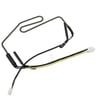
| Frost buildup, warming over time | Defrost system issue | Freezer defrost heater WR51X31995, refrigerator defrost sensor WR55X29875 |
| No ice or slow ice production | Ice maker or water supply issue | Refrigerator small cube ice maker WR30X39345 |
| No water at dispenser | Filter restriction or inlet valve issue | GE refrigerator water filter XWFE, refrigerator dual water inlet valve assembly WR57X24979 |
Why it matters
Cooling problems are the fastest way to lose food and can also create secondary issues like ice maker failures and excess frost. Catching airflow and defrost symptoms early helps prevent bigger repairs.
Helpful GE troubleshooting resources
- GE refrigerator error codes
- How to fix your evaporator cooling fan
- How to replace the water filter in a GE refrigerator
Last updated: January 2026