Owner’s manual

What are the common table saw mistakes?
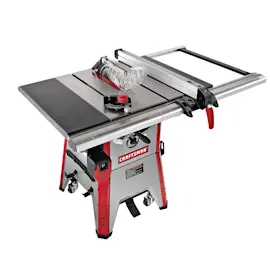
Common table saw mistakes on the Craftsman 137218072 usually come down to skipping safety devices, guiding the workpiece incorrectly, or using poor technique. The biggest risk is kickback, which the manual calls out as most often caused by freehand cutting; using the guard, riving knife, and anti-kickback pawls helps prevent it (see the 137218072 owner's manual).
Most common mistakes we see (and what to do instead)
- Cutting without the blade guard, riving knife, and anti-kickback pawls on through-cuts.
- Cutting freehand instead of guiding with the rip fence or the miter gauge.
- Ripping narrow stock without a push stick or push block.
- Using the miter gauge while ripping (remove it for ripping operations).
- Standing or placing hands in the kickback line; keep hands clear of the blade path.
- Setting the blade height too high; for ripping, set it about 1/8 inch above the workpiece.
- Feeding warped, twisted, or bowed wood against the fence.
Quick safety checklist before every cut
| Check | What “right” looks like | Why it helps |
|---|---|---|
| Guarding | Guard, riving knife, and pawls installed for through-sawing | Reduces contact and kickback risk |
| Work support | Workpiece held firmly against fence or miter gauge | Prevents binding and wandering cuts |
| Blade height | About 1/8 inch above the top of the workpiece (typical ripping setup) | Cleaner cut, less exposed blade |
| Technique | No pulling the workpiece backward during a cut | Prevents kickback |
If your cuts are inaccurate (not just unsafe)
Bad technique often shows up as bad cuts or bad angle cuts. These checks usually fix it:
- Confirm the rip fence is locked and parallel to the miter gauge groove.
- Verify the blade is square to the table at 0 degrees and stable at bevel angles.
- Clean sawdust buildup and keep the saw mounted securely so it cannot shift.
For step-by-step troubleshooting, use table saw bad angle cuts.
Why it matters
Most serious table saw incidents happen fast: binding leads to kickback, and hands drift into the blade path during awkward positioning. Using the fence or miter gauge correctly, setting proper blade height, and keeping guarding in place dramatically lowers risk and improves cut quality.
You can also look up diagrams and replacement items for your Craftsman 137218072, then search by model number on Sears PartsDirect if you need additional parts.
Last updated: February 2026
What size blade is a Craftsman 137218072 table saw?
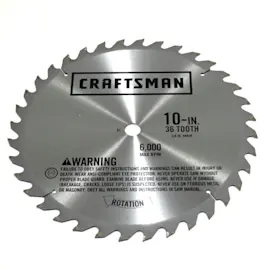
The Craftsman table saw model 137218072 uses a 10-inch diameter saw blade. For safe operation, the blade’s body thickness and kerf need to match the riving knife requirements listed in the 137218072 owner's manual.
Blade size and fit details
A 10-inch blade is the diameter; you still need to confirm the blade style and thickness so it works correctly with the guard and riving knife.
- Blade diameter: 10 in.
- Typical blade body thickness: about 0.07 in.
- Typical kerf (cut width): about 0.10 in.
- Riving knife thickness: about 0.09 in.
- Use a blade with a kerf wider than the riving knife and a blade body thinner than the riving knife
Quick compatibility checklist
Use this as a fast “does it fit and run safely?” check before installing a new blade.
| Item to match | What to look for | Why it matters |
|---|---|---|
| Diameter | 10-inch blade | Fits the saw’s arbor height range and guard geometry |
| Kerf vs. riving knife | Kerf must be thicker than riving knife | Prevents binding and kickback risk |
| Blade body vs. riving knife | Blade body must be thinner than riving knife | Keeps the riving knife aligned in the cut |
| Condition | Sharp, flat, no missing teeth | Reduces burning, bogging, and rough cuts |
Why it matters
On a table saw, blade diameter is only part of the story. A blade that is the right diameter but the wrong kerf or thickness can interfere with the riving knife, increase binding, and lead to poor cut quality.
Helpful next steps
- Follow the blade change steps in the 137218072 owner's manual
- If you want a step-by-step overview, use our guide: how to replace a table saw blade
- For ordering, use the parts list for model 137218072, or search by model number on Sears PartsDirect
Last updated: February 2026
Does Craftsman make a good table saw?
Yes. Craftsman table saws are a solid choice for DIYers and hobbyists who want good cutting power and practical features at a reasonable price; for pro-level, all-day precision work, you typically plan on extra setup, tuning, and sometimes upgrades for repeatable accuracy.
What you can expect from a Craftsman table saw like model 137218072
Craftsman table saws are built to handle common woodworking tasks (rip cuts, crosscuts, bevel cuts) when they are assembled correctly and kept adjusted. The 137218072 owner's manual is the best reference for the safety system, assembly steps, and adjustment points that directly affect cut quality.
- Good value for general woodworking and home projects
- Capable of accurate cuts after fence and blade alignment are dialed in
- Safety features matter; use the blade guard, anti-kickback pawls, and riving knife correctly
- Best results come from a sharp, correct blade and a clean, well-maintained saw
- Not ideal for production work if you need “perfect out of the box” fence repeatability
Quick “good for” checklist
| Use case | Fit for most Craftsman table saws | Notes |
|---|---|---|
| DIY projects and repairs | Yes | Great for learning and weekend use |
| Hobby furniture builds | Yes | Expect setup and periodic re-checks |
| Jobsite or daily pro use | Sometimes | Depends on tolerance needs and workload |
| Fine joinery accuracy | Sometimes | Often needs jigs/sleds and careful calibration |
What affects cut quality the most
If you are judging whether the saw is “good,” focus on the items that change results the fastest:
- Fence parallel to the blade (prevents burning and binding)
- Blade condition and correct blade type for the material
- Miter gauge fit and technique (especially for crosscuts)
- Blade height and bevel mechanisms moving smoothly
- Sawdust control; frequent cleanup helps prevent performance issues
For common accuracy complaints, we use these guides:
Why it matters
A table saw can feel “bad” even when the motor is strong if alignment is off or the blade is dull. Proper assembly, adjustment, and safe operation reduce kickback risk and improve cut consistency.
If you need replacement parts for Craftsman 137218072, start with the parts list for your model, or search by model number on Sears PartsDirect.
Last updated: February 2026
Can you use an 8 inch blade on a 10 inch table saw?
Yes; you can run an 8-inch standard blade on the Craftsman 137218072 table saw if it fits the arbor and the riving knife remains properly matched to the blade’s body thickness and kerf. You will lose cutting depth. For dado work, this model is limited to a 6-inch stackable dado set.
What the 137218072 manual allows
Our guidance for this saw includes these key limits:
- The saw is supplied with a 10-inch blade.
- The riving knife must be compatible with the blade body and kerf.
- Through cuts require the blade guard, riving knife, and anti-kickback pawls.
- Dado cuts: stackable dado blades only; no wobble/adjustable dado sets.
- Maximum dado width is 1/2 inch; maximum dado diameter is 6 inches.
For the exact riving-knife and blade matching requirements, use the 137218072 owner’s manual.
What changes with an 8-inch blade
An 8-inch blade is mainly a capacity tradeoff and a setup check:
- Reduced maximum cutting depth (about 1 inch less than a 10-inch blade).
- Guard and riving knife alignment becomes more critical because the knife is positioned relative to the blade’s toothed rim.
- Cut quality depends on choosing the right tooth count and a sharp blade.
Quick comparison
| Blade setup | Allowed on 137218072 | Best for | Main limitation |
|---|---|---|---|
| 10-inch standard blade | Yes | General ripping/crosscutting | None (full capacity) |
| 8-inch standard blade | Yes (if arbor fit and riving knife match) | Thinner stock, specialty cuts | Less depth of cut |
| 6-inch stackable dado | Yes (per manual) | Dados, rabbets (non-through) | 1/2-inch max width; guard removed for dado |
Why it matters
Using the correct blade diameter and kerf keeps the riving knife doing its job: reducing binding and kickback risk. The 6-inch maximum dado diameter on this model is especially important for safe clearance and proper non-through-cut setup.
If you are shopping for blades or other replacement items by model number, start with the parts list for Craftsman 137218072 or search on Sears PartsDirect.
Last updated: February 2026