
How do I know what size blade my circular saw is?
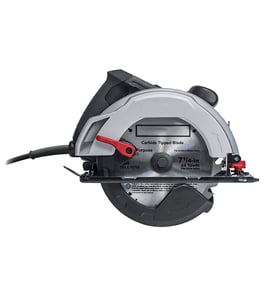
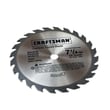
For your Craftsman 32010854 circular saw, the blade size is the blade’s diameter (for example, 7-1/4 in). You can confirm it by reading the markings on the blade, measuring across the blade, and checking the arbor (center hole) size so the blade fits and runs true.
Look for etched or printed specs on the blade face. Common markings include:
- Diameter (overall blade size, such as 6-1/2 in or 7-1/4 in)
- Arbor size (center hole, commonly 5/8 in on many saws)
- Tooth count (more teeth = smoother cut; fewer teeth = faster rip cuts)
- Kerf (blade thickness at the teeth; thin-kerf blades reduce load)
- Unplug the saw or remove the battery.
- Remove the blade guard interference by retracting it as needed.
- Measure straight across the blade through the center (tip-to-tip) with a tape measure.
- Measure the arbor hole with calipers (best) or compare to a known arbor size.
- Use a tape measure for diameter.
- Use calipers for arbor hole and kerf.
- Replace the blade if it is warped, cracked, missing teeth, or has heavy burning.
| Cut type | Tooth count (typical) | Notes |
|---|---|---|
| Framing and ripping | 18 to 24T | Fast cuts, rougher edge |
| General purpose | 24 to 40T | Good all-around choice |
| Plywood and finish cuts | 40 to 60T | Cleaner edge, slower feed |
Using the correct diameter and arbor size helps the blade seat properly on the spindle, keeps the guard working correctly, and reduces vibration, kickback risk, and poor cut quality.
For help confirming you have the correct model number before ordering blades or parts, use how to find your appliance model number (and what it means for parts).
Last updated: February 2026
What is a 140 tooth circular saw blade used for?
A 140-tooth circular saw blade is used for ultra-smooth, low tear-out cuts in thin sheet goods and trim materials; it’s a finish-cut blade, not a fast framing blade. On a Craftsman circular saw model 32010854, it’s best for clean edges where you want minimal sanding.
A high tooth count means smaller bites per tooth, which leaves a cleaner edge but cuts slower.
- Plywood and veneered panels (reduces splintering on the face veneer)
- Melamine and laminated sheet goods (helps limit chipping)
- Hardboard and thin paneling
- Non-ferrous materials only if the blade is rated for it (check the blade label)
- Fine crosscuts in trim stock (when the blade diameter matches your saw)
A 140T blade is the wrong choice when you need speed, deep ripping, or aggressive stock removal.
- Ripping thick lumber (it will bog down and heat up)
- Wet, pressure-treated, or dirty wood (dulls teeth quickly)
- Demolition cuts (hidden nails can ruin the blade)
- Long continuous cuts without breaks (higher heat buildup)
| Task | Typical tooth count | Why |
|---|---|---|
| Fast framing cuts | 18 to 24T | Clears chips quickly, cuts fast |
| General purpose | 40 to 60T | Balanced speed and finish |
| Fine finish cuts | 80 to 140T | Smooth edge, less tear-out |
Using the right tooth count helps your Craftsman 32010854 cut cleaner and run cooler. A blade with too many teeth for the job increases friction, heat, and motor load; a blade with too few teeth increases splintering and tear-out.
For safe DIY habits and setup basics (power off, stable work support, correct PPE), follow are diy appliance repairs safe.
Last updated: February 2026
Can a 4.5 circular saw cut a 2x4?
Yes, a 4.5-inch circular saw can cut a 2x4, but only if its maximum cut depth at 90° is at least about 1-1/2 inches (the actual thickness of a 2x4). For the Craftsman 32010854 circular saw, confirm the saw’s depth-of-cut setting and blade condition before you start.
A 2x4 is typically 1-1/2 in. thick. Your saw must have enough depth-of-cut at 90° to clear that thickness.
Check these items first:
- Depth-of-cut adjustment: Set the base plate so the blade teeth extend about 1/8 to 1/4 in. below the board.
- Blade diameter and kerf: A worn, incorrect, or dull blade reduces effective cutting performance.
- Blade type: Use a wood-cutting blade (more teeth for cleaner cuts; fewer teeth for faster framing cuts).
- Motor power and feed rate: Compact saws need a steady, slower feed to avoid bogging down.
- Material condition: Wet, knotty, or pressure-treated lumber cuts harder than dry SPF.
Use this as a practical setup target for most wood cuts:
- Blade teeth below the board: 1/8 to 1/4 in.
- Too shallow: you may not cut through
- Too deep: more kickback risk and rougher cutting
| Item | Typical value for a 2x4 cut | What you should do |
|---|---|---|
| Actual 2x4 thickness | 1-1/2 in. | Set depth to exceed this slightly |
| Blade exposure below wood | 1/8 to 1/4 in. | Adjust the depth lever/knob |
| Cut angle | 90° | Keep the shoe flat on the board |
If the depth is set correctly and the blade is sharp, a 4.5-inch circular saw can handle 2x4 crosscuts and short rip cuts cleanly. Most “won’t cut through” complaints come from a shallow depth setting, a dull blade, or forcing the saw.
If the saw struggles, checking the cord, switch, and internal wiring for damage is a smart next step; see how to repair broken or damaged wires video.
Last updated: February 2026
Why is my Craftsman circular saw not spinning?
If your Craftsman circular saw model 32010854 won’t spin, the most common causes are a power supply issue, worn motor brushes, a failed trigger switch, or a jammed blade or guard. Start with quick external checks, then move to brush and switch inspection.
- Unplug the saw; remove the battery if it’s a cordless setup.
- Confirm the outlet has power; try a different outlet or tool.
- Inspect the cord and plug for cuts, melted spots, or loose prongs.
- Make sure the blade spins freely by hand (with the saw unplugged).
- Check the lower blade guard; it should move smoothly and return fully.
- Verify the arbor nut is tight and the blade is not pinched or warped.
Many circular saw motors use carbon brushes to transfer power to the spinning armature. If brushes are worn down, cracked, or burned, the motor may hum, spark excessively, or do nothing.
A failing trigger switch, loose spade connector, or broken lead wire can stop the motor from getting voltage even when the cord and outlet are good.
Pitch buildup, a bent blade, or debris around the guard or arbor can prevent the blade from turning and can also overload the motor.
- Power: outlet, extension cord (if used), saw cord.
- Free rotation: blade and guard movement.
- Brushes: inspect for wear and burning; replace as a set.
- Switch: test continuity through the trigger when pulled.
- Motor: burning smell, heavy sparking, or no continuity can indicate a motor issue.
| Task | Typical tools | Skill level |
|---|---|---|
| Check blade/guard bind | Hex key, brush, rag | Basic |
| Inspect/replace brushes | Screwdriver | Basic to intermediate |
| Test switch/wiring | Multimeter | Intermediate |
A saw that won’t spin is often a simple electrical interruption (brushes, switch, cord) or a mechanical bind. Fixing the root cause prevents repeated tripping, overheating, and premature motor damage.
For safe electrical testing steps, use our how to use a multimeter to test electrical parts video.
Last updated: February 2026
Should I get a 6 1/2 or 7 1/4 circular saw?
A 7-1/4 inch circular saw is the best all-around choice for deeper cuts and the widest blade selection; a 6-1/2 inch saw is easier to handle and lighter for overhead or long sessions. For a Craftsman circular saw like model 32010854, pick the size that matches the thickest material you cut most often.
| Feature | 6-1/2 inch saw | 7-1/4 inch saw |
|---|---|---|
| Typical max cut depth at 90° | About 2-1/8 in. | About 2-7/16 in. |
| Cutting 2x lumber at 45° | Often borderline | Usually fits in one pass |
| Weight and fatigue | Lighter, less tiring | Heavier, more tiring |
| Blade availability | Good | Best (most common size) |
| Best use | Sheet goods, trim, portability | Framing, general construction |
- Choose 7-1/4 inch if you cut 2x lumber, do framing, or need clean bevel cuts without flipping the board.
- Choose 6-1/2 inch if you prioritize lighter weight, do lots of plywood/OSB breakdown, or work overhead.
- If you already own a miter saw, a 6-1/2 inch circular saw can be a great “carry-around” cutter for sheet goods and quick rips.
- If you plan to use a track/straightedge often, both sizes work; the 7-1/4 inch just gives more depth margin.
- If you cut thicker stock (like 4x material), either size typically requires cutting from both sides.
Blade diameter directly affects cut depth and bevel capacity. That determines whether you can finish common jobs (like 2x at 45°) in one pass, and it also impacts comfort since larger saws usually weigh more.
For safe troubleshooting and electrical checks on corded tools, use how to use a multimeter to test electrical parts video.
Last updated: February 2026
