Installation guide
 Owner’s manual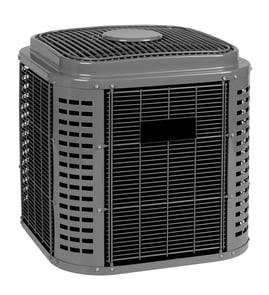



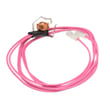
What tonnage is 38YRA030?
Carrier model 38YRA030 is a 2.5-ton (about 30,000 BTU/hr) split-system heat pump outdoor unit. In Carrier model numbers, the “030” size commonly indicates 30,000 BTU, which equals 2.5 tons.
Quick size conversion
- 1 ton = 12,000 BTU/hr
- 30,000 BTU/hr = 2.5 tons
- “030” capacity class is used for 2.5-ton systems
| Model size code | Approx. BTU/hr | Nominal tons |
|---|---|---|
| 018 | 18,000 | 1.5 |
| 024 | 24,000 | 2.0 |
| 030 | 30,000 | 2.5 |
| 036 | 36,000 | 3.0 |
How to confirm on your exact unit
We recommend verifying tonnage using the unit rating plate and the installation documentation for 38YRA units.
- Check the rating plate on the outdoor unit (often on a corner panel)
- Match the model number exactly: 38YRA030
- Use the piping and connection tables in the installation guide to confirm you are working with the correct size class
Why it matters
Correct tonnage affects indoor comfort and reliability. A mismatched capacity can lead to short cycling, poor humidity control, and incorrect refrigerant line sizing during installation or service.
Last updated: February 2026
How many square feet will a 3 ton AC unit cool?
A 3-ton central air conditioner or heat pump like the Carrier 38YRA030 typically cools about 1,500 to 2,500 sq ft. The right coverage depends most on insulation, ceiling height, window exposure, duct condition, and your local climate, so the best match is the unit sizing shown on the rating plate and in the installation guide.
What changes the square-foot coverage most
- Climate zone: hot, humid regions need more capacity per sq ft
- Insulation and air sealing: attic insulation and air leaks can swing sizing a lot
- Ceiling height: tall ceilings increase the air volume you must cool
- Sun exposure and windows: large west-facing glass raises the load
- Ductwork condition: leaks and poor airflow reduce delivered cooling
- Occupancy and appliances: more people and heat sources add load
Quick sizing rule of thumb (use as a starting point)
Most homes land in the 18 to 30 BTU per sq ft range depending on conditions.
| Home conditions | Typical BTU per sq ft | 3-ton (36,000 BTU) rough coverage |
|---|---|---|
| Efficient, well-insulated, mild climate | 18 to 22 | ~1,600 to 2,000 sq ft |
| Average insulation, mixed climate | 22 to 26 | ~1,400 to 1,650 sq ft |
| Hot climate, leaky or poorly insulated | 26 to 30 | ~1,200 to 1,400 sq ft |
Why it matters
Oversizing can cause short cycling and poor humidity control; undersizing can run constantly and still miss the thermostat setpoint. Correct sizing protects comfort, energy use, and compressor life.
Model-specific tip for Carrier 38YRA030
For the most accurate match, use the unit rating plate information referenced in the installation guide and compare it to your home’s load calculation and indoor coil/air handler match.
Last updated: February 2026
How much does a 3 ton carrier AC cost?
A 3-ton Carrier central AC or heat pump system typically costs $3,000 to $15,000 installed, depending on efficiency level, ductwork and electrical needs, refrigerant line-set work, and whether you are replacing just the outdoor unit or a full matched system. For model-specific setup details, use the installation guide.
What drives the price most
- Equipment type: AC-only condenser vs. heat pump (your Carrier 38YRA030 is a heat pump model)
- Efficiency rating: higher efficiency usually costs more up front
- Scope of replacement: outdoor unit only vs. outdoor unit plus indoor coil/air handler
- Home and ductwork condition: duct repairs, sealing, or resizing
- Electrical and controls: disconnect, breaker, wiring, thermostat compatibility
- Refrigerant line-set work: length, routing, and whether it must be replaced
Typical cost ranges (installed)
| Scenario | What’s included | Common range |
|---|---|---|
| Outdoor unit replacement only | Outdoor unit swap, basic startup | $3,000 to $7,000 |
| Full matched system | Outdoor unit + indoor coil/air handler match | $6,000 to $12,000 |
| Complex install | Ductwork/electrical upgrades, difficult access | $10,000 to $15,000 |
Why it matters for a 3-ton system
A 3-ton system is often large enough that airflow, duct sizing, and refrigerant charging have a big impact on comfort and compressor life. The installation instructions for this platform call out final checks like securing panels and tightening service valve caps, and they describe charging practices that must be done correctly for reliable operation (details in the installation guide).
Parts costs vs. installed system cost
If you are budgeting for repairs on the Carrier 38YRA030 instead of full replacement, parts are only one piece of the total. For example, common service items include:
- Central air conditioner run capacitor CAP050300440RSP (often tied to hard-start or fan/compressor issues)
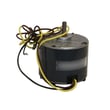
- Central air conditioner condenser fan motor HC37GE210 (fan not running, overheating shutdowns)
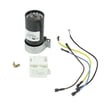
- Central air conditioner compressor hard start kit KSAHS1501AAA (hard starting, intermittent starts)
Last updated: February 2026
What AC parts are most commonly replaced?
For the Carrier 38YRA030 heat pump (central air conditioner system), the most commonly replaced items are electrical start/run parts and outdoor airflow components. Keeping filters clean and getting regular inspections prevents overheating that shortens the life of the compressor and motors (see the owner's manual).
Most common replacements
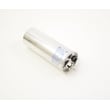
- Run capacitor: helps start and keep the compressor and fan motor running; a weak capacitor can cause hard starting or humming.
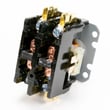
- Contactor: the electrical switch that sends power to the outdoor unit; worn contacts can cause intermittent operation.
- Condenser fan motor: moves air through the outdoor coil; failure can lead to overheating and shutdown.
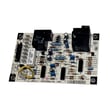
- Defrost control (heat pump systems): manages defrost cycles; problems can cause icing or poor heating.
- Indoor air filter(s): the manual recommends checking filters every 3 to 4 weeks; a dirty filter strains the compressor and blower.
Model-relevant parts you can match to symptoms
| Symptom | Common suspect part | Example part on this model page |
|---|---|---|
| Outdoor unit will not start, thermostat calling | Contactor or run capacitor | Contactor (part number HN51KB024), capactr dual CAP050300440RSP |
| Outdoor fan not spinning, unit shuts down | Condenser fan motor or run capacitor | Central air conditioner condenser fan motor HC37GE210, capactr dual CAP050300440RSP |
| Hard starting, lights dim at startup | Start assist kit or run capacitor | Central air conditioner compressor hard start kit KSAHS1501AAA |
| Icing concerns in heat mode | Defrost control, airflow issues | Defrost control (part number CESO110063-02) |
Why it matters
Restricted airflow and neglected maintenance overheat major components. Our manual guidance for this model highlights that dirty filters can strain the compressor and blower motor, leading to shutdowns and part failures.
Quick prevention checklist
- Check and replace or clean indoor filter(s) every 3 to 4 weeks.
- Keep the outdoor coil area clear so the fan can move air.
- Schedule a professional inspection at least yearly (twice yearly is preferred).
- Disconnect power to both indoor and outdoor units before opening panels; there can be more than one disconnect.
Last updated: February 2026
Is it hard to get Carrier parts?
For the Carrier 38YRA030 (Series 300), getting the right replacement part is usually straightforward when you match the exact model and the specific component; the biggest challenge is correct identification (model/series/serial and electrical ratings), not the Carrier brand itself. Our owner's manual explains what information to have ready when sourcing parts.
What makes parts seem “hard to get”
Carrier outdoor units can have multiple revisions and accessory combinations, so the same symptom can point to different components.
- Match the model number, series letter, and serial number from the outdoor unit data plate
- Confirm the application (standard vs. low-ambient or long-line setups)
- Electrical parts must match voltage, capacitance, and terminal style
- Some repairs are commonly paired (capacitor plus contactor)
- Peak-season demand can affect lead times for motors and controls
Common replacement parts we see for this model
These are frequently replaced items listed for the 38YRA030.
- Capactr dual CAP050300440RSP (run capacitor that supports compressor and fan operation)
- Central air conditioner condenser fan motor HC37GE210 (moves air across the outdoor coil)
- Central air conditioner compressor hard start kit KSAHS1501AAA (helps a hard-starting compressor)
Quick “what to check first” guide
Turn off power at the disconnect and breaker before opening the unit.
- Confirm the thermostat is calling and the indoor blower runs
- Inspect disconnect/fuses (if equipped) and look for loose or burned wiring
- Check for a swollen capacitor or a noisy, chattering contactor
- Verify the condenser fan blade spins freely by hand (power off)
- If the unit was recently installed or moved, confirm tubing is not rubbing (covered in the installation guide)
Symptom-to-part cheat sheet
| Symptom | Most likely part type | Example for 38YRA030 |
|---|---|---|
| Outdoor unit will not start | Run capacitor or contactor | CAP050300440RSP; contactor |
| Fan not running, compressor runs | Fan motor or capacitor | HC37GE210; CAP050300440RSP |
| Hums, struggles to start | Hard start kit | KSAHS1501AAA |
Why it matters
Correct part matching prevents repeat failures, nuisance trips, and compressor stress. Having the model and serial information ready speeds up identification and helps ensure the replacement fits your exact 38YRA030 configuration.
Last updated: February 2026