 Owner’s manual
 Error Codes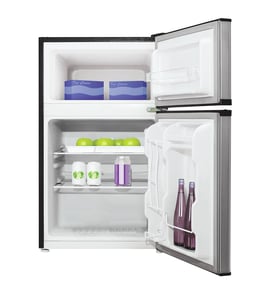





Are there 33 wide refrigerators?
Yes. 33-inch-wide refrigerators are a common size, especially in apartment-friendly and counter-depth styles. Your Haier HC33SW20RB is a compact refrigerator (not 33 inches wide), so a “33 wide” unit would be a different refrigerator size class; confirm exact width in the HC33SW20RB owner's manual.
Common 33-inch refrigerator types
Most 33-inch-wide refrigerators fall into these categories:
- Top-freezer refrigerators (often the most budget-friendly)
- Bottom-freezer refrigerators
- French door counter-depth models (popular for tighter kitchens)
- Side-by-side models (less common at exactly 33 inches)
How to shop the right width (so it fits)
When you measure for a 33-inch-wide refrigerator, we recommend:
- Measure the cabinet opening width at the front and back
- Leave airflow clearance (rear and sides) per the manual for the new fridge
- Check door swing and handle clearance so doors open fully
- Confirm the path into the home (doorways, hallways, stairs)
- Verify electrical requirements and outlet location
Quick fit checklist
| What to measure | What to look for |
|---|---|
| Opening width | True 33 in. class width (often slightly under 33) |
| Depth | Standard vs counter-depth (counter-depth sticks out less) |
| Height | Includes hinges and leveling feet |
| Clearance | Space for ventilation and door swing |
Why it matters
A “33-inch-wide” refrigerator is usually chosen to maximize capacity in a tight opening. Compact refrigerators like the Haier HC33SW20RB are designed for small spaces and have different ventilation and leveling needs, so using the manual’s guidance helps prevent poor cooling and noise.
Last updated: February 2026
Can I replace fridge parts myself?
Yes. On the Haier HC33SW20RB compact refrigerator, we can safely replace many non-sealed-system parts ourselves (shelves, door rails, hinge covers, leveling legs, and the ice tray) as long as we unplug the unit first and follow the safety steps in the HC33SW20RB owner's manual. For anything involving refrigerant tubing or the cooling system, use a certified technician.
What you can usually replace yourself
These are common DIY-friendly items on this model:
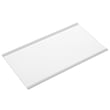
- Interior shelf glass such as the Haier lower glass WR71X28230 and Haier upper glass WR71X28232
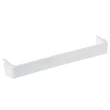
- Door storage pieces like the refrigerator door rail WR71X28239
- Door hardware and trim such as the Haier top hinge cover black WR13X28223
- A damaged or missing foot such as the Haier refrigerator leveling leg WR01X28240
- The refrigerator ice tray WR01X28229
Repairs to leave to a technician
The manual calls out fire or explosion risk with flammable refrigerant and warns not to puncture refrigerant tubing. Avoid DIY work that could contact the sealed system.
- Compressor, evaporator, condenser, or any refrigerant line
- Defrosting with sharp tools or mechanical devices that could puncture tubing
- Electrical repairs beyond simple part swaps (especially if wiring is damaged)
Quick DIY safety checklist
Before starting any repair:
- Unplug the refrigerator before cleaning or making repairs.
- If the unit was transported on its side or tilted, wait 24 hours before plugging it in.
- Pull the plug straight out; do not yank the cord.
- Do not use knives, screwdrivers, or other sharp metal tools near the freezer compartment.
Common tasks and what they involve
| Task | Typical tools | Difficulty |
|---|---|---|
| Replace shelf glass | None | Easy |
| Replace door rail | Screwdriver (sometimes) | Easy |
| Replace hinge cover | Screwdriver | Easy |
| Replace leveling leg | Adjustable wrench (sometimes) | Easy to moderate |
Why it matters
DIY replacement of simple parts can restore storage, door alignment, and everyday usability quickly. Avoiding sealed-system and refrigerant-area repairs protects the cooling system and reduces safety risks.
Last updated: February 2026
How often should a Haier fridge be defrosted?
For the Haier HC33SW20RB compact refrigerator, we recommend defrosting whenever frost on the freezer compartment wall reaches about 1/8 inch thick. In normal use, that can be every few weeks to every few months, depending on humidity, door openings, and temperature settings.
Quick defrost steps (safe for this model)
Follow the defrost procedure in the HC33SW20RB owner's manual.
- Move food to a cooler; remove the ice cube tray.
- Make sure the drip tray is installed; then unplug the refrigerator.
- Leave the door open; defrosting typically takes a few hours.
- To speed it up, place a bowl of warm water inside (do not use heaters).
- Empty the drip tray and wash it with warm water; dry before reinstalling.
- Plug the unit back in and allow temperatures to stabilize before restocking.
What not to do (important safety)
This model uses flammable refrigerant, so use only gentle methods.
- Do not use metal tools (knives, screwdrivers, scrapers) to remove ice.
- Do not use mechanical defrost devices or puncture any tubing.
- Do not chip ice off the evaporator wall.
- Do not work on the unit while it is plugged in.
Frost thickness guide
| Frost level on freezer wall | What to do | Why |
|---|---|---|
| Light dusting | Wait | Normal moisture buildup |
| Around 1/8 inch | Defrost now | Restores airflow and cooling efficiency |
| Heavier than 1/8 inch | Defrost ASAP | Prevents poor cooling and door-seal issues |
Why it matters
A thick frost layer acts like insulation and restricts airflow in the freezer compartment. Defrosting at the 1/8 inch point helps the HC33SW20RB cool more consistently, reduces run time, and helps protect stored food.
Last updated: February 2026
How to change water filter on Haier fridge freezer?
The Haier HC33SW20RB compact refrigerator uses an ice cube tray and is not designed with a plumbed water system; it does not have a routine, user-replaceable water filter. Use the HC33SW20RB documentation to confirm features and focus maintenance on cleaning and defrosting.
How to confirm whether your refrigerator has a water filter
Check these items on your Haier compact refrigerator:
- Look for a water dispenser on the door or inside the cabinet.
- Look for a water line connection at the back (inlet valve and tubing).
- Check for a filter head or filter cover inside the fresh food section (often upper right) or in the base grille.
- If you only have a manual ice cube tray, there is no filter to replace.
- Verify the model tag on the rear of the cabinet reads HC33SW20RB.
What to do instead (HC33SW20RB maintenance that helps most)
For this model, these steps improve performance and reduce odors:
- Clean interior shelves and bins with mild soap and warm water.
- Keep door gaskets clean so the door seals tightly.
- Defrost the freezer compartment when frost reaches about 1/8 inch.
- Empty and wash the drip tray after defrosting.
- Keep the temperature control set for safe food storage.
Quick reference
| If your refrigerator has... | Then you should... | Filter replacement needed? |
|---|---|---|
| Manual ice cube tray only | Defrost and clean regularly | No |
| Dispenser or automatic ice maker with a water line | Replace the correct filter for that specific model | Yes |
Why it matters
Trying to “change a filter” on a compact, non-plumbed refrigerator wastes time and can lead to broken covers or cracked liners. Following the correct care steps keeps cooling efficient and prevents frost buildup.
For model-specific care and defrost instructions, use the HC33SW20RB owner's manual.
Last updated: February 2026
What are common problems with Haier refrigerators?
Common problems we see with Haier refrigerators (including the HC33SW20RB compact refrigerator) are no cooling or intermittent cooling, temperatures that run too warm or too cold, moisture buildup, odors, and doors that will not close or seal. Many issues are caused by settings, airflow, leveling, or door gasket sealing, not a major sealed-system failure.
Quick checks that fix many issues
- Make sure the thermostat is not set to “0” (off).
- Confirm the refrigerator is plugged in and the outlet has power (check the breaker).
- Reduce frequent door openings and let newly added warm food cool down.
- Check that the door closes fully and the gasket seals all the way around.
- Do not line shelves with foil, wax paper, or paper towels; it restricts cold-air circulation.
- Level the unit so the door swings shut naturally; adjust the front feet if needed.
Symptom-to-cause guide (most common)
| Symptom | Most likely causes | What to do first |
|---|---|---|
| Refrigerator does not run | Control set to “0”, no power | Verify dial setting, outlet power |
| Food too warm | Door openings, warm food load, poor gasket seal | Minimize openings, check gasket, set colder |
| Moisture inside/outside | High humidity, door opened often, gasket leak | Improve seal, reduce openings |
| Odor | Spills, unwrapped food | Clean interior, wrap/seal foods |
| Door will not shut | Not level, bins/shelves blocking | Level unit, remove obstructions |
Parts that commonly relate to door and stability problems
If the door will not shut or the cabinet rocks, these model-matched parts are often involved:
- Haier refrigerator leveling leg WR01X28240 (helps stabilize and align the cabinet)
- Top hinge cover black WR13X28223 (cosmetic cover; remove to inspect hinge area)
- Top hinge ho WR02X28238 (hinge hardware that affects door alignment)
Why it matters
A compact refrigerator like the Haier HC33SW20RB depends on steady airflow and a tight door seal. Poor leveling or a leaking gasket makes the compressor run longer, warms food, and increases moisture and odors.
For model-specific operating and troubleshooting steps (including temperature control guidance and care tips), use the HC33SW20RB owner's manual.
Last updated: February 2026
What is the average lifespan of a mini fridge?
Most mini fridges last 6 to 10 years with normal use. For a Haier compact refrigerator like model HC33SW20RB, keeping airflow clear, maintaining door sealing, and leveling the unit helps the compressor run less and can extend service life.
What affects mini fridge lifespan most
- Heat and ventilation: Tight cabinets and hot garages make the compressor work harder.
- Leveling: A tilted cabinet can affect door closing and cooling performance.
- Door seal condition: Leaks cause longer run times and more wear.
- Defrost and cleaning habits: Ice buildup and dirty surfaces reduce efficiency.
- How it’s used: Frequent door openings and overpacking shorten life.
Quick care checklist (best ROI)
Use the HC33SW20RB owner's manual for the exact care steps and safety guidance.
- Leave space around the cabinet for proper air circulation.
- Keep the temperature control at a steady, mid-range setting (avoid constant max-cold).
- Defrost when frost buildup starts reducing freezer compartment space.
- Wipe spills promptly and keep shelves and door bins seated correctly.
- Make sure the unit sits solidly on the floor; replace worn feet such as the Haier refrigerator leveling leg WR01X28240 if the fridge rocks.
Typical lifespan expectations
| Mini fridge use case | Typical lifespan | Notes |
|---|---|---|
| Bedroom/office (climate controlled) | 8 to 12 years | Light duty, stable temps |
| Dorm/party room (heavy door use) | 6 to 10 years | More cycling and vibration |
| Garage/basement (hot or cold swings) | 4 to 8 years | Hardest on compressor |
Why it matters
A mini fridge usually fails early from overwork (poor ventilation, warm room, leaky door, or not level). Reducing run time protects the sealed system and helps food stay at safer temperatures.
Last updated: February 2026
Why is my Haier mini fridge not cooling?
If your Haier HC33SW20RB compact refrigerator has power (light works) but is not cooling, the most common causes are an incorrect thermostat setting, poor airflow from blocked vents or dirty coils, a door that is not sealing, or a problem in the compressor start circuit. Use the HC33SW20RB owner's manual to confirm control settings and basic checks.
Quick checks (no tools)
- Make sure the thermostat control is not set to “0” (off).
- Confirm the outlet has power (check the breaker, then test the outlet with another device).
- Reduce door openings and make sure the door closes fully (containers and shelves can block it).
- Do not line shelves with foil, wax paper, or paper towels; liners restrict cold-air circulation.
- Check the door gasket for gaps; warm air leaks can prevent proper cooling.
Installation and airflow issues that stop cooling
Poor ventilation can make a mini fridge run but not cool well.
| What to check | What to do | Why it helps |
|---|---|---|
| Room temperature | Keep the fridge in a space above 55°F | This model is not designed for colder locations (like some garages) |
| Leveling | Level the cabinet using the front leveling legs | Helps the door seal and improves normal operation |
| Heat sources | Move away from sunlight, radiators, and cooking appliances | Reduces heat load so the system can cool |
If the unit rocks or the door swings open, inspect the leveling hardware such as the Haier refrigerator leveling leg WR01X28240.
When the compressor is not starting
If you hear clicking, buzzing, or the compressor is silent while the light works, focus on the start components and temperature control:
- Unplug the refrigerator before any inspection or cleaning.
- If the thermostat is set correctly but the compressor never runs, the thermostat or start components may need testing.
- Use a meter to check electrical parts only if you are comfortable doing so; otherwise schedule service.
Why it matters
A compact refrigerator that is not cooling can quickly push food above safe temperatures. Fixing airflow, sealing, and control settings first prevents unnecessary parts replacement and often restores normal cooling.
Last updated: February 2026





