



How do I tell what model my GE washer is?
Your GE washer’s model number is printed on the appliance ID label. On the GE GFW850SPN3RS front-load platform, you’ll typically find that label in the door opening (door jamb) or just behind the door; some units also place it on the back of the control panel or cabinet.
Where to look on a GE front-load washer
Check these spots in order (they are the most common):
- Open the door and look along the door opening (door jamb) on the cabinet frame
- Look just behind the door on the front frame area
- Check the back of the control panel area
- Check the side of the main cabinet near the bottom edge
- If your washer is stacked or tight to a wall, use a flashlight and take a photo to zoom in
What the model label looks like
Most GE washer ID labels include a few key fields. Use the model number for parts lookup.
| Label field | What it’s used for | Example format |
|---|---|---|
| Model number | Identifies the exact washer version for parts | GFW850SPN3RS |
| Serial number | Production tracking and service history | Letters and numbers |
| Electrical ratings | Confirms power requirements | Volts/amps |
Tips to avoid ordering the wrong part
Even one character difference can change the correct door lock, control board, or water inlet valve.
- Copy the model number exactly as printed (letters and numbers)
- Include any suffixes; do not shorten the model
- If the label is worn, take a clear photo and zoom in
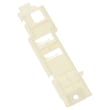
- Match parts to the exact model before ordering (for example, GE washer door lock WH01X29528)
Why it matters
GE washer parts are model-specific. Using the exact model number helps us match the correct assemblies (like the door latch, electronic control board, or drain pump) so the repair fits and the washer operates safely.
Last updated: February 2026
What is the life expectancy of a GE front load washer?
A GE front load washer like model GFW850SPN3RS typically lasts 10 to 14 years. Consistent care (using HE detergent, keeping the door boot clean, and preventing drain clogs) pushes lifespan toward the high end; chronic overloading and poor maintenance shorten it.
What most affects washer lifespan
- Load size and balance: frequent overloading strains the drive system and suspension.
- Door boot care: wiping the gasket reduces mold, odor, and leaks.
- Drain health: coins, lint, and small items can damage the pump and cause slow draining.
- Water quality: hard water increases scale and can affect valves and dispenser flow.
- Ventilation: leaving the door ajar helps prevent mildew and corrosion.
Maintenance checklist (monthly and as-needed)
- Run a tub-clean cycle or hot wash with a washer cleaner.
- Wipe the door glass and gasket folds dry after laundry day.
- Check pockets to reduce debris reaching the pump.
- Use the right amount of HE detergent; too much causes residue and odors.
- Inspect fill hoses and connections for seepage.
Common “end-of-life” symptoms and likely repairs
| Symptom | What it often points to | Example part for GFW850SPN3RS |
|---|---|---|
| Won’t drain or drains slowly | Pump blockage or failing pump | GE washer drain pump assembly WH11X39237 |
| Door won’t lock or won’t start | Door lock or latch issue | GE washer door lock WH01X29528 |
| Random shutoffs, dead display, odd behavior | Main control problem | Washer electronic control board WH22X37840 |
| Won’t fill or fills slowly | Inlet valve or screen restriction | GE washer water inlet valve WH23X29553 |
Why it matters
A front load washer’s most expensive wear items are the control electronics, drain system, and tub-related components. Preventing moisture buildup and keeping the drain path clear reduces the most common failures and helps you get the full 10 to 14 years.
Last updated: February 2026
What is the most common problem with GE washers?
The most common GE washer problem is a no-drain or no-spin condition. On the GE GFW850SPN3RS front-load washer, this usually traces to a drain restriction, a failing drain pump, or a door-lock/door-latch issue that prevents high-speed spin.
Most common symptoms we see
- Water left in the tub at the end of the cycle
- Washer stops mid-cycle or won’t advance to spin
- Clothes come out dripping wet
- Humming/buzzing during drain with little or no water flow
- Door stays locked or won’t lock consistently
Quick checks before replacing parts
- Unplug the washer for 2 minutes, then restore power and try a Drain/Spin cycle.
- Check the drain hose for kinks, crushing, or an overly deep standpipe insertion.
- Confirm the standpipe or sink drain is not backing up.
- Reduce load size; a severely unbalanced load can cancel or limit spin.
- If the door won’t lock or unlock normally, focus on the lock/latch circuit first.
Parts that commonly solve no-drain/no-spin on this model
| What’s happening | Most likely area | Example part for GFW850SPN3RS |
|---|---|---|
| Won’t drain, pump hums | Drain pump or blockage | GE washer drain pump assembly WH11X39237 |
| Won’t spin, door won’t lock | Door lock/latch system | GE washer door lock WH01X29528 or door latch WH01X32580 |
| Fills/drains erratically | Water inlet control issue | GE washer water inlet valve WH23X29553 |
| Random stopping, dead UI, odd behavior | Main control or UI | Washer electronic control board WH22X37840 |
Why it matters
A washer that can’t drain usually can’t spin; that leaves clothes wet and can overwork the drain pump. Fixing restrictions early also helps prevent leaks at hoses and reduces strain on the control system.
Helpful troubleshooting resource
If you’re seeing an error code on the display, use our GE gfw front load washer error codes guide to match the code to the most likely failure area.
Last updated: February 2026


