Owner’s manual
 Error Codes

What's the lifespan of a bottom freezer fridge?
Most bottom-freezer refrigerators, including Samsung bottom-mount models like RF28HMEDBBC, typically last 15 to 20 years with normal household use and basic maintenance. Consistent temperatures, clean condenser areas, and good door sealing do the most to reach the high end of that range.
What affects lifespan the most
A bottom freezer fridge has more airflow and defrost components than older top-freezer designs, so maintenance and usage habits matter.
- Compressor run time (heavy use, hot kitchens, dirty coils increase wear)
- Door seal condition (warm air leaks cause longer run times and frost)
- Ice maker and dispenser use (more moving parts, more chances for clogs and leaks)
- Water quality (affects filter, valve, and ice maker performance)
- Defrost system health (prevents ice buildup that can strain fans and cooling)
Maintenance that helps you hit 15 to 20 years
Use these as your baseline care steps; we cover model-specific features and settings in the owner's manual.
- Keep doors closing fully; avoid overloading door bins
- Replace the water filter on schedule to protect the water system
- Keep vents inside the fresh food section and freezer clear
- Clean spills quickly so drawers and rails do not bind
- If you see frost or puddles, address it early (often a drain or door-seal issue)
Quick “repair vs. replace” guide
This is a practical way to think about cost and downtime as the unit ages.
| Fridge age | What’s common | Typical next step |
|---|---|---|
| 0 to 7 years | Minor adjustments, filter changes | Maintain and monitor |
| 8 to 14 years | Fans, sensors, ice maker issues | Repair is usually worthwhile |
| 15 to 20 years | Major sealed-system or control issues | Compare repair cost to replacement |
Why it matters
Knowing the expected lifespan helps you plan: if your RF28HMEDBBC is approaching 15 years, recurring cooling, ice, or water issues often point to higher-wear components (like sensors, fans, or the sealed system) that can drive bigger repair decisions.
Last updated: February 2026
What are the disadvantages of a bottom freezer?
Bottom-freezer refrigerators like the Samsung RF28HMEDBBC keep fresh food at eye level, but the tradeoffs are higher purchase cost, more bending to reach frozen items, and deep drawers that can hide smaller packages. They can also be more prone to drain and defrost-related water issues if maintenance is neglected; see the owner's manual for model-specific care steps.
Common disadvantages (what we see most often)
- More bending and lifting: heavy frozen foods sit low, so access is less convenient.
- Deep drawer organization: items stack and get buried, especially in large freezer bins.
- Upfront cost: bottom-mount designs typically cost more than basic top-freezer models.
- Freezer access frequency: if you use the freezer constantly, the lower position can feel less ergonomic.
- Drain and ice-related messes: clogged drains can lead to puddles or ice buildup in some bottom-freezer layouts.
Quick comparison: bottom freezer vs top freezer
| Feature | Bottom freezer | Top freezer |
|---|---|---|
| Fresh food access | Easier (eye level) | More bending for fridge items |
| Freezer access | More bending | Easier (waist to chest height) |
| Organization | Large drawers, can bury items | Shelves, often easier to sort |
| Typical price | Higher | Lower |
How to reduce the downsides
- Use bins or baskets to separate meats, vegetables, and quick-grab items.
- Keep a “first-out” section on top of the freezer drawer to prevent forgotten food.
- If you notice water under the crisper or in the freezer, address it early; a drain issue can worsen quickly.
- Replace water filtration on schedule to help dispenser flow and taste; this model commonly uses the refrigerator water filter DA29-00020B.
Why it matters
Choosing a freezer layout is mostly about daily habits. If your household uses fresh food more than frozen, bottom-freezer convenience usually wins. If you access frozen items all day, the bending and drawer stacking can become a real annoyance over time.
Last updated: February 2026
What is the most common problem with Samsung refrigerators?
The most common problems we see on Samsung refrigerators like model RF28HMEDBBC are cooling issues and ice maker troubles. These usually trace back to airflow problems (evaporator fan or air damper), defrost/drain issues that cause ice buildup, or temperature-sensing and control problems.
What it looks like in real life
Common symptoms customers report include:
- Fresh food section gets warm but freezer seems OK
- Frost or ice buildup on the back wall or around the evaporator cover
- Ice maker stops producing ice, makes small cubes, or jams
- Water leaking or puddles under the crisper or in the freezer drawer
- Clicking, buzzing, or fan noise that comes and goes
Most common causes (and the parts that often relate)
On a bottom-mount Samsung such as RF28HMEDBBC, these are frequent culprits:
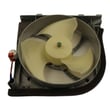
- Evaporator fan or airflow restriction: poor circulation leads to warm spots and icing
- Defrost system or drain problem: ice blocks airflow and can cause leaks
- Temperature sensor drift/failure: incorrect readings cause unstable temps
- Air damper not opening/closing correctly: fridge section does not get enough cold air
- Control/inverter issues: compressor or fan operation becomes inconsistent
If you are troubleshooting cooling or icing, the refrigerator temperature sensor DA32-10104N and refrigerator air damper assembly DA97-08430A are examples of model-matched parts that can be involved.
Quick checks we recommend before replacing parts
These steps solve a lot of “warm fridge” and “no ice” complaints:
- Confirm the temperature settings are at normal targets (about 37°F fridge, 0°F freezer)
- Make sure vents are not blocked by food packages
- Check door gaskets for gaps and confirm doors close fully
- Look for heavy frost buildup that suggests a defrost or airflow problem
- Replace the water filter on schedule if water flow is slow or ice is hollow
For model-specific operating details and control-panel functions, use the owner's manual.
Cooling vs. ice maker problems: a fast comparison
| Issue you notice | Most likely category | What to check first |
|---|---|---|
| Fridge warm, freezer OK | Airflow/damper/fan | Vents blocked, frost buildup, damper operation |
| Both sections warm | Sealed system or control | Condenser cleanliness, compressor running, error codes |
| No ice but temps OK | Ice maker/water supply | Filter, water pressure, ice room icing |
| Puddles inside | Drain/defrost | Ice clog in drain, drain tube condition |
Why it matters
Cooling and ice maker symptoms often share the same root cause: restricted airflow from frost buildup or a failing fan/damper. Catching it early helps prevent food spoilage, repeated icing, and strain on the compressor.
Last updated: February 2026