Owner’s manual
 Error Codes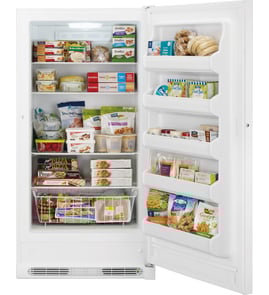

What are the parts of a standing freezer?
A standing (upright) freezer like the Wc Wood V1813RW3 uses a sealed refrigeration system plus airflow and controls to pull heat out of the cabinet and keep food near 0°F. The core components work together to circulate refrigerant, remove heat, and regulate temperature (see the owner's manual).
Main parts you will find in most upright freezers
- Compressor: pumps refrigerant through the sealed system.
- Condenser: releases heat to the room air (often why the outside can feel warm during operation).
- Metering device (capillary tube or similar): controls refrigerant flow into the evaporator.
- Evaporator (cooling coil): absorbs heat inside the freezer.
- Temperature control (thermostat/control): sets and maintains cabinet temperature.
- Door gasket and door liner: seals cold air in and helps prevent frost and moisture issues.
How the cooling system works (quick overview)
| Component | What it does | What you might notice if it has a problem |
|---|---|---|
| Compressor | Moves refrigerant and drives cooling | Warm cabinet, clicking, long run times |
| Condenser | Dumps heat into the room | Hot exterior, poor cooling if airflow is blocked |
| Evaporator | Makes the inside cold | Frost pattern issues, uneven temps |
| Temperature control | Regulates on/off cycling | Too warm or too cold settings behavior |
No-frost vs. manual-defrost parts
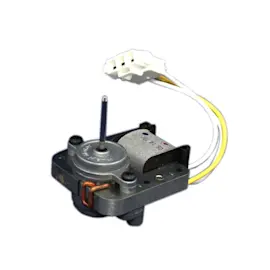
Some upright freezers are no-frost. In no-frost designs, moisture freezes on the cooling coil, then the coil periodically warms just enough to melt frost so it can drain to a pan and evaporate. That design typically adds airflow and defrost-related components (fan, defrost heater, defrost control/timer) compared with simpler manual-defrost systems.
Why it matters
Knowing the major parts helps you troubleshoot symptoms faster. For example, if the cabinet is warm but the exterior feels hot, that points you toward heat-rejection airflow (condenser area) and temperature control checks before assuming a sealed-system failure.
Last updated: February 2026
What is the average life expectancy of an upright freezer?
Most upright freezers last 10 to 15 years with normal use and basic maintenance. For your Wc Wood upright freezer model V1813RW3, good installation, proper airflow clearance, and correct temperature settings help you reach that typical lifespan; see the V1813RW3 owner's manual for care and setup details.
What affects upright freezer lifespan
- Room temperature and ventilation: tight clearances make the compressor work harder.
- Electrical supply quality: a dedicated, grounded outlet helps prevent nuisance power issues.
- How often the door is opened and how long it stays open.
- Loading habits: adding large amounts of unfrozen food at once increases run time.
- Cleaning and gasket condition: dirty surfaces and poor door sealing raise operating stress.
Setup and use tips that help it last longer
The V1813RW3 manual recommends a 115V, 60 Hz, 15 or 20 amp grounded supply and avoiding extension cords. It also calls for airflow space around the cabinet.
| Item to check | Good target | Why it matters |
|---|---|---|
| Top clearance | About 3 in. | Reduces heat buildup and run time |
| Back clearance | About 1 in. | Helps condenser heat dissipate |
| Side clearance | About 3 in. each side | Improves airflow and service access |
| Temperature control | Around 0°F | Protects food while avoiding overwork |
Why it matters
A freezer that runs hotter, runs constantly, or has poor airflow typically experiences more compressor wear. Keeping the freezer level, giving it proper clearance, and using the recommended temperature settings supports long, dependable service.
Last updated: February 2026
What is the disadvantage of an upright freezer?
An upright freezer like the Wc Wood V1813RW3 is typically less energy-efficient than a chest freezer because cold air spills out when the door opens, which can cause more temperature swing and longer compressor run time. Uprights also have fixed shelves that can limit bulky-item storage.
Common disadvantages (and what you can do about them)
- More cold-air loss when opened: Minimize door-open time and keep frequently used items at eye level.
- More sensitive to door sealing: Keep the door gasket clean and make sure the door closes fully.
- Less flexible for oversized items: Shelves and bins improve organization but can restrict large boxes.
- Can warm faster during outages: Keep the door closed; a fuller freezer holds temperature longer.
- Placement matters for efficiency: Install indoors, away from heat sources, and allow airflow clearance.
For model-specific setup and clearances, follow the V1813RW3 owner's manual.
Upright vs. chest freezer: quick comparison
| Feature | Upright freezer | Chest freezer |
|---|---|---|
| Organization | Easier (shelves, bins) | Harder (stacking) |
| Energy use | Typically higher | Typically lower |
| Door-open temperature impact | Higher | Lower |
| Bulky item storage | Often limited by shelves | Often easier |
| Power outage hold time | Often shorter | Often longer |
Why it matters
These disadvantages mainly affect operating cost, food temperature stability, and how you store large items. With good airflow around the cabinet, a clean gasket, and smart organization, an upright freezer can still be a very practical choice for everyday access.
Last updated: February 2026
What is the most reliable brand of upright freezer?
The most reliable upright freezer brand is the one that matches your needs (frost-free vs. manual defrost, garage-ready temperature range, alarm features) and has a strong service record; in practice, Frigidaire, GE, and Whirlpool are consistently solid picks. For your Wc Wood V1813RW3, use the owner's manual to confirm which reliability-related features your unit includes.
What to look for when “reliability” matters
- Stable operating environment: Upright freezers run best when the room stays about 40°F to 90°F.
- Simple temperature control: Fewer electronics usually means fewer failure points.
- Door seal quality: A tight gasket prevents warm air leaks that cause long run times and frost.
- Alarm or indicator features: Helpful for catching power loss or temperature rise early.
- Defrost style: Frost-free adds convenience; manual defrost often has fewer components.
How the V1813RW3’s features relate to reliability
Your V1813RW3 manual describes features that can support dependable performance when used correctly.
| Feature (some models) | What it does | Reliability benefit |
|---|---|---|
| Fast Freeze | Runs continuously to reach the coldest temp | Helps recover after loading food (use 24 to 48 hours) |
| Power light | Indicates power presence (light off can mean power interruption) | Helps you spot outages quickly |
| Temperature monitor alarm | Sounds if freezer rises above about 10°F | Helps prevent unnoticed thawing |
Practical buying guidance (brand-agnostic)
When comparing brands, we recommend prioritizing these decision points first, then choosing the best-reviewed model that fits them.
- Capacity and layout: Shelves, bins, and a basket that match how you store food.
- Noise and energy use: Look for consistent cooling without excessive run time.
- Garage placement: Only choose “garage-ready” models if your space gets outside normal indoor temps.
- Serviceability: Availability of common parts like door gaskets, thermostats, and fans.
Why it matters
Most “freezer failures” start as airflow, temperature-setting, or door-seal problems. Choosing a brand with proven designs helps, but correct placement (40°F to 90°F) and proper loading habits do the most to keep an upright freezer running for years.
Last updated: February 2026