Installation guide
 Owner’s manual





How do I reset the lid lock on a Maytag washer?
On the Maytag MVWC215EW1 washer, the lid lock usually “resets” by pausing the cycle and letting the basket fully stop; press START/Pause and wait until the Lid Locked light turns off, then open and close the lid and press START/Pause to continue. For model-specific operating details, use the owner's manual.
Quick reset steps (most common)
- Press START/Pause once to pause the cycle.
- Keep the lid closed and wait for all washer movement to stop.
- Watch the Lid Locked light; it turns off when the lid can open.
- Open the lid, then close it firmly.
- Press START/Pause to resume.
If the lid still will not unlock
These checks address the most common causes noted for this style of top-load washer:
- Give it time after a high-speed spin: unlocking can take several seconds to several minutes after spinning.
- Confirm the lid is fully closed: a flashing lid lock light often means the lid is not closed.
- Power reset: unplug the washer (or switch off the breaker) for about 5 minutes, then restore power and try START/Pause again.
- Reduce an overloaded or unbalanced load: pause, redistribute items evenly, remove a few items if tightly packed, then restart.
When a part is likely the issue
If the lid lock never engages, never releases, or the washer will not start/fill with the lid closed, the lid lock assembly or lid strike can be worn or misaligned.
| Symptom | What it usually points to | What to do next |
|---|---|---|
| Lid Locked light on, lid will not open | Basket still moving or control waiting for stop | Pause and wait for full stop, then retry |
| Lid Locked light flashing | Lid not closed or cycle paused | Close lid firmly, press START/Pause |
| Washer will not start/fill | Lid not sensed as closed/locked | Inspect lock and strike alignment |
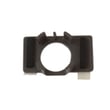
Model-matched parts to check:
Why it matters
The lid lock is a safety feature that allows higher spin speeds. The washer will not run or fill with the lid open, and it will not unlock until the basket stops moving.
Last updated: February 2026
How do I fix f5 e1 error on Maytag washer?
On the Maytag MVWC215EW1, an F5 E1 error is typically tied to the lid lock system not sensing the lid closed and locked. We fix it by resetting power, checking the lid strike and lock for damage or misalignment, and replacing the lid lock if it will not reliably lock.
Quick reset and basic checks
- Unplug the washer for 1 minute, then plug it back in.
- Close the lid firmly; the washer will not start or fill with the lid open.
- If the lid locked light is flashing, wait a few minutes after pressing Start/Pause; the basket may still be stopping.
- Make sure the load is not tightly packed; redistribute items evenly.
- Review the lid lock and start behavior in the MVWC215EW1 owner's manual.
Inspect the lid lock and lid strike
The most common causes are a failed lid lock, a broken lid strike, or a loose connection.
- Check the lid strike for cracks, looseness, or a bent mounting position.
- Check the lid lock for physical damage and signs it is not latching consistently.
- If the strike is damaged, replace the strike pima W10837741.
- If the lock is failing to lock or unlock correctly, replace the washer lid lock W11307244.
Wiring and control checks (safe, practical approach)
- Unplug the washer.
- Inspect the lid lock wiring harness connection for looseness or corrosion.
- Reseat connectors firmly.
- If the error returns immediately after replacing a known-bad lock or strike, follow the diagnostic steps in the MVWC215EW1 owner's manual.
What to replace first (common fix order)
| Symptom | Most likely cause | Part to consider |
|---|---|---|
| Lid will not lock, won’t start | Failed lid lock | Washer lid lock W11307244 |
| Lid locks sometimes, then errors | Misaligned or broken strike | Strike pima W10837741 |
| Lid locked light flashing after pause | Basket still stopping or heavy load | No part; wait, redistribute load |
Why it matters
The lid lock is a safety system. If the washer cannot confirm the lid is closed and locked, it can stop the cycle to prevent spinning with the lid open.
Last updated: February 2026
What's the average lifespan of a Maytag washer?
A Maytag washer typically lasts 10 to 13 years. For your Maytag MVWC215EW1, lifespan depends most on load size, cycle frequency, and routine care; following the maintenance steps in the owner's manual helps you get the full service life from the drive system, basket, and water valves.
Typical lifespan and what affects it
Most washers reach their expected life when they are installed correctly, kept level, and not overloaded.
- Usage volume: multiple loads per day shortens life faster than a few loads per week
- Overloading: strains the drive belt, drive pulley, and gear case
- Water quality: sediment can clog inlet screens and stress the inlet valve
- Drain performance: slow draining increases wear and can trigger cycle issues
- Maintenance habits: periodic cleaning reduces odor, residue, and component stress
Maintenance that extends washer life
We recommend these practical habits for the MVWC215EW1:
- Run the washer cleaning routine described in the owner's manual
- Use the correct detergent amount; excess suds can cause poor rinsing and extra agitation time
- Keep loads balanced; mix items to avoid a single heavy, wet mass
- Check fill hoses and the standpipe setup during installation and periodically after
- If the washer starts banging or walking, re-level the feet and confirm the floor is solid
Parts that commonly wear first (and why)
| Symptom | Common wear area | Example part for MVWC215EW1 |
|---|---|---|
| Won’t spin or slips under load | Belt and pulley drive | Washer drive belt WPW10006384 |
| Loud thumping, excessive tub movement | Suspension/damping | Damper assembly W10780045 |
| Won’t fill or fills slowly | Water inlet valve/screens | Washer water inlet valve W11210459 |
Why it matters
Knowing the typical 10 to 13 year lifespan helps you decide when basic maintenance and a few key parts (belt, valve, suspension) are worth it versus planning for replacement, especially if multiple major components begin failing close together.
Last updated: February 2026
What is the most common problem with a Maytag washer?
The most common Maytag washer problems are “won’t drain or spin,” “won’t start,” leaks, and loud banging or grinding. On the Maytag MVWC215EW1, these symptoms often trace back to load balance, a lid not fully closed (lid lock), drain hose issues, or wear items in the drive system. See the owner's manual for model-specific troubleshooting steps.
Quick checks we recommend first
- Confirm the lid is fully closed; the washer will not start or fill with the lid open.
- If the lid lock light is flashing, pause and wait for the basket to stop before expecting the lid to unlock.
- Redistribute the load (bulky items can trigger out-of-balance spinning and noise).
- Check the drain hose for kinks, clogs, or an improper standpipe setup.
- Run the washer cleaning routine referenced in the “Cleaning your Washer” section.
Common symptoms and the parts that often fix them
| Symptom | Most common causes | Parts on this model that often apply |
|---|---|---|
| Won’t start or stops mid-cycle | Lid not closed, lid lock not engaging | Washer lid lock W11307244, strike pima W10837741 |
| Won’t spin or makes a squeal | Worn/slipping belt, pulley issues | Washer drive belt WPW10006384, whirlpool washer drive pulley W10721967 |
| Loud banging, walking, off-balance | Weak suspension/dampers, overloaded tub | Damper assembly W10780045 |
| Won’t fill or fills slowly | Inlet valve restriction or failure | Washer water inlet valve W11210459 |
Why it matters
Drain/spin and balance problems can look like a “bad washer,” but they often start as simple conditions (lid not latched, load too heavy, hose kinked). Catching those early helps prevent secondary damage to the drive belt, pulley, and gear case.
When to move from checks to repair
Use parts replacement when you see one of these patterns:
- Lid closes but the washer still will not start and the lock never engages.
- Belt dust, burning rubber smell, or repeated spin failures.
- Persistent banging even with small, evenly distributed loads.
Last updated: February 2026