Owner’s manual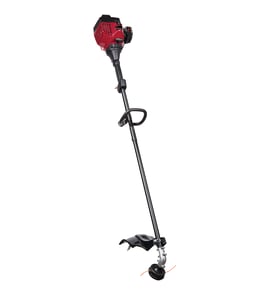




How to unflood a string trimmer?
If your Craftsman gas line trimmer model 316740800 is flooded, we clear it by opening up airflow, drying the spark plug area, then restarting with the correct choke and throttle position. This removes excess fuel so the engine can ignite and run normally.
- Move the trimmer to a well-ventilated area and set it on stable ground.
- Turn the switch to OFF; wait 1 to 2 minutes so fuel vapors can dissipate.
- Remove the air filter cover and air filter to increase airflow (reinstall after it starts).
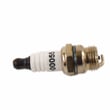
- Remove the spark plug; dry it and let the cylinder air out for a few minutes.
- Reinstall the spark plug, then start with choke OFF (run position) and throttle held open.
- Pull the starter rope in steady pulls until it fires; then let it warm up briefly.
Use this as a practical baseline; exact control positions vary by handle style.
| Situation | Choke | Throttle | What to do |
|---|---|---|---|
| Strong fuel smell, wet plug, won’t start | OFF | Wide open | Pull until it sputters, then ease off throttle |
| Starts then dies immediately | Half to OFF | Slightly open | Restart and let it warm up 30 to 60 seconds |
| Cold start (not flooded) | ON then OFF | Slightly open | Start on choke, then move to run |
Flooding is almost always caused by too many pulls with the choke on, or repeated priming when the engine is already getting fuel.
- Use fresh, properly mixed 2-cycle fuel (stale fuel makes starting harder).
- Don’t keep priming after you see fuel moving in the bulb/lines.
- If it doesn’t start after a few pulls on choke, switch to run and try again.
- Keep the air filter clean; a restricted filter can make the mixture too rich.
If flooding keeps happening, the fuel system may be over-fueling or the engine may not be getting enough air.
- Inspect and replace a dirty air filter (this model uses a serviceable filter element).
- Check for fuel leaks around the tank and cap.
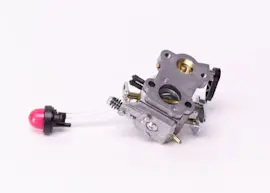
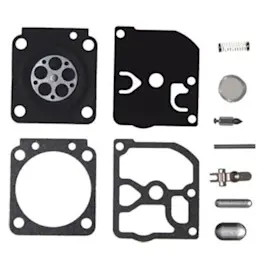
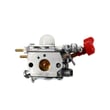
- If it runs only with the choke partly on, clean or replace the carburetor: mtd line trimmer carburetor 753-06288.
For control locations and model-specific starting procedure, follow the 316740800 owner’s manual.
Last updated: February 2026
Why does my Craftsman trimmer die when I give gas?
When your Craftsman gas line trimmer model 316740800 dies as you squeeze the throttle, the most common causes are restricted airflow (dirty air filter), fuel delivery problems, or a carburetor that needs service. Start with the quick maintenance checks in the 316740800 operator’s manual.
- Clean and re-oil the air filter (a clogged filter makes the engine run too rich and stall).
- Drain old fuel and refill with fresh, properly mixed 2-cycle fuel.
- Check the fuel cap vent; a plugged vent can starve fuel as RPM increases.
- Inspect the spark plug; replace if fouled and set the gap per the manual.
- Make sure the cutting head is not dragging in tall grass; heavy load can bog the engine.
If basic maintenance does not help, these model-matched parts are frequent fixes:
| Symptom when you hit the gas | Most likely area | Part to consider |
|---|---|---|
| Starts, then bogs and dies | Airflow restriction | Line trimmer air filter 751-15514 |
| Needs choke to stay running | Fuel metering/carburetion | Mtd line trimmer carburetor 753-06288 |
| Runs, but power drops under load | Fuel supply/venting | Line trimmer fuel tank cap 753-06857 |
A 2-cycle trimmer like the 316740800 needs the right air-to-fuel mix at higher RPM. A dirty filter, restricted venting, or a carburetor issue can make the mixture too rich or too lean, and the engine will stall as soon as you demand more power.
- Inspect the unit before use and correct any fuel leaks or damaged parts.
- Use only the trimming line type specified for the trimmer.
- Avoid tapping the bump knob in tall grass; extra load can stall the engine.
Last updated: February 2026
How to replace line on Craftsman gas trimmer?
On the Craftsman gas line trimmer model 316740800, you replace the trimming line by loading two equal lengths into the bump head eyelets, then winding with the bump knob until about 5 inches of line sticks out on each side. Follow the steps in the 316740800 owner's manual for the exact bump-head procedure.
- Shut the engine off and let the cutting head stop completely.
- Disconnect the spark plug wire to prevent accidental starting.
- Wear gloves and eye protection.
- Use only the trimming line type and diameter listed in the specifications for your trimmer.
- Cut the correct line length; line that is too long can keep the head from feeding properly.
We follow the manual method for installing new trimming line on the bump head:
- Cut two 10-foot (3.0 m) lengths of new line.
- Cut one end of each line at a 30° angle to help it feed into the eyelet.
- Turn the bump knob to align the mark on the bump knob with the mark on the spool cover.
- Insert each line into an eyelet and push it in about 3 inches (7.5 cm).
- Turn the bump knob to wind the line until about 5 inches (12.5 cm) protrude from each side.
- Do not push the bump knob down while winding.
| Item | What to use | Why |
|---|---|---|
| Line pieces | 2 pieces | The head feeds two lines separately |
| Line length | 10 ft each | Winds correctly without binding |
| Starter push-in | 3 in | Grabs the line so it winds evenly |
| Final tail length | 5 in each side | Prevents retracting into the head |
Correct line length and even tails help the bump feed release about 1 inch of line per tap and reduce stalling when you bump on hard soil. It also prevents tangles inside the cutting head.
Last updated: February 2026
Which is better, .080 or .095 trimmer line?
For the Craftsman gas line trimmer model 316740800, .095-inch line is the better everyday choice because it matches the bump-head line diameter listed in the specifications and holds up better in thicker grass and light weeds. Use .080-inch for lighter trimming and less load.
The specifications for this model list:
- Bump head line diameter: 0.095 in. (2.41 mm)
- Fixed-line cutting head line diameter: 0.110 in. (2.79 mm) Medium or 0.130 in. (3.30 mm) Large
For the exact cutting head type on your unit and the recommended line style, use the 316740800 owner's manual.
| Line diameter | Best for | What you give up |
|---|---|---|
| .080 in. | light grass, detail trimming, small yards | breaks and wears faster in weeds |
| .095 in. | general trimming, edging, thicker grass, light weeds | slightly less “fine” trimming feel |
- Pick .095 when you cut mixed grass and weeds or edge along fences and curbs.
- Pick .080 when you mainly trim light grass and want easier, more nimble cutting.
- If the engine bogs down, keep .095 but take shallower passes instead of forcing the head.
- If you switch to a fixed-line head, use the fixed-line sizes listed above, not .080 or .095.
- Replace worn line promptly; short line feeds harder and cuts poorly.
Using the diameter your cutting head is designed for improves line feeding, reduces breakage, and helps prevent overheating from excess line length. Matching the line to the head style (bump head vs fixed-line head) is the key decision.
Last updated: February 2026
What size is the fuel line on a Craftsman trimmer?
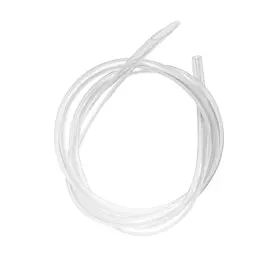
For the Craftsman gas line trimmer model 316740800, the operator’s manual focuses on operation and maintenance and does not list a specific fuel hose inside diameter or outside diameter. The correct fuel line size is the one that seals tightly at the fuel tank grommet and fits snugly on the carburetor and primer bulb fittings; use the routing shown in the 316740800 operator’s manual.
We recommend matching by fit and function because small 2-cycle trimmers often use more than one hose size.
- Remove the old line and bring a short sample to match at the store
- Measure inside diameter (ID) to match the carburetor or primer bulb nipple
- Measure outside diameter (OD) to ensure a tight seal through the tank grommet
- Replace any line that is stiff, swollen, cracked, or loose on fittings
- Cut hose ends square; avoid kinks and sharp bends
- Confirm the in-tank fuel filter stays submerged and moves freely
Use this as a practical starting point, then match to your fittings for an airtight seal.
| Fuel line role | What to match | What “correct” looks like | Common symptom if wrong |
|---|---|---|---|
| Tank-to-carb supply line | Tank grommet + carb inlet | Tight through grommet; snug on carb | Hard starting, fuel starvation |
| Return line (if equipped) | Primer bulb return fitting | Snug on fitting; no seepage | Poor priming, fuel leaks |
- Prime until fuel visibly moves through the lines
- Start and let it idle; it should not surge or die when you blip the throttle
- Inspect for wet spots around the tank grommet, carb fittings, and primer bulb
A fuel line that is even slightly loose can pull air into the fuel system. That causes hard starting, stalling, and lean running that can overheat a 2-cycle engine.
Last updated: February 2026