Owner’s manual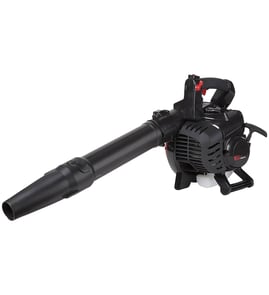



What is the life expectancy of a gas leaf blower?
A gas leaf blower like the Craftsman CMXGAAMR25BL typically lasts 10 years or more with normal homeowner use and consistent maintenance (clean air filter, fresh fuel mix, and periodic spark plug service). Heavy use, dirty storage, or stale fuel can shorten that lifespan.
What most affects lifespan on the CMXGAAMR25BL
We see these items make the biggest difference over time:
- Fuel quality and age: use fresh unleaded fuel mixed at the correct 40:1 ratio; avoid fuel older than about 30 days
- Air filter care: clean and re-oil on schedule to prevent dirt ingestion and power loss
- Spark plug condition: keep the gap correct and replace when fouled
- Cooling airflow: keep intake areas clear so the air-cooled engine runs cooler
- Storage habits: drain fuel and run the engine dry before long-term storage
For the model-specific maintenance intervals and procedures, follow the CMXGAAMR25BL operator’s manual.
Quick maintenance schedule (easy to follow)
Here is a simple schedule that matches typical 2-cycle handheld blower needs:
| Interval | What to do | Why it matters |
|---|---|---|
| Every 10 hours | Clean and re-oil the air filter | Prevents lean running and premature engine wear |
| Every 25 hours | Check spark plug condition and gap | Helps starting, power, and fuel efficiency |
| End of season | Prep fuel system for storage | Prevents carburetor gumming and hard-start issues |
Signs your blower is nearing end-of-life (or needs repair)
These symptoms often show up as the engine and fuel system wear:
- Hard starting even with correct choke and priming
- Won’t idle or stalls when you release the throttle
- Loss of power under load, especially after warming up
- Excessive vibration or unusual noises
- Fuel leaks, cracked fuel lines, or persistent fuel odor
Why it matters
A well-maintained 2-cycle engine can run for many seasons; most “early failures” we see are actually fuel-related (stale fuel, incorrect mix, or clogged filter). Staying on top of routine service helps you avoid carburetor problems and keeps performance consistent.
If you are storing the blower for the season, use our guide preparing a leaf blower for long term storage.
Last updated: January 2026
What is the best gas leaf blower to buy?
For most homeowners, the “best” gas leaf blower is the one that matches your yard size and debris type. Your Craftsman CMXGAAMR25BL is a solid handheld choice for routine cleanup; if you need faster clearing for heavy, wet leaves, a higher-output backpack blower is usually the better buy.
How to choose the right gas blower (what to compare)
We recommend comparing these factors first:
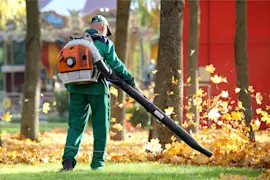
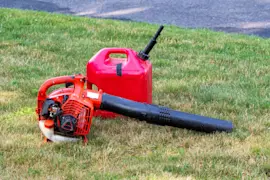
- Blower type: handheld for quick jobs; backpack for long sessions and big properties
- Airflow and airspeed: higher numbers generally move heavier debris more easily
- Weight and comfort: lighter handhelds reduce fatigue; backpacks distribute weight better
- Engine size and fuel system: larger displacement often supports higher output
- Noise and local rules: some areas restrict hours or sound levels
- Maintenance access: easy air filter and spark plug service saves time
For CMXGAAMR25BL-SPECIFIC operation and maintenance basics (fuel mix, starting steps, air filter care), use the CMXGAAMR25BL operator’s manual.
Quick comparison: handheld vs backpack
| Feature | Handheld gas blower (like CMXGAAMR25BL) | Backpack gas blower |
|---|---|---|
| Best for | Driveways, patios, small to medium yards | Large yards, heavy leaf loads, long run times |
| Comfort | Light, but arm fatigue can build | Better for long sessions |
| Power potential | Moderate | High |
| Storage | Easier | Bulkier |
What “best” means for common situations
- Small yard, light dry leaves: handheld gas blower is usually the best value
- Medium yard, weekly cleanup: handheld or entry backpack depending on tolerance for time and noise
- Large yard, wet leaves, acorns, pine needles: backpack blower typically performs best
- You want lowest hassle: consider how often you will clean the air filter and replace the spark plug
Why it matters
Buying the right blower type prevents frustration (leaves that will not move), reduces fatigue, and helps avoid avoidable engine issues from improper fuel or skipped maintenance.
If your current blower is hard to start or runs rough, our DIY content on easy steps for maintaining a leaf blower can help you decide whether a tune-up is all you need before upgrading.
Last updated: January 2026
What oil do I mix with gas for my leaf blower?
For the Craftsman CMXGAAMR25BL 2-cycle gas leaf blower, we mix unleaded gasoline with 2-cycle oil for air-cooled engines at a 40:1 ratio (3.2 fl. oz. oil per 1 U.S. gallon of gas). This blower uses a fuel/oil mixture for lubrication; there is no separate crankcase oil.
Correct fuel mix for CMXGAAMR25BL
Use this ratio every time you make fuel. We recommend following the CMXGAAMR25BL operator’s manual for the exact mixing instructions and cautions.
- Use fresh, clean unleaded gasoline (fuel less than about 30 days old is best)
- Use 2-cycle oil designed for air-cooled engines
- Mix in an approved fuel can, not in the blower’s fuel tank
- Add oil first, then add gasoline, then cap and shake to blend
- Avoid fuel with more than 10% ethanol (do not use E85)
Mixing chart (40:1)
| Gasoline amount | 2-cycle oil amount | Notes |
|---|---|---|
| 1 U.S. gallon | 3.2 fl. oz. | Matches the included 3.2 oz bottle size |
| 1 liter | 25 ml | Metric equivalent |
Why the ratio matters
A 2-cycle engine depends on the oil mixed into the fuel to lubricate internal parts. Too little oil can accelerate wear and scoring; too much oil can cause heavy smoke, carbon buildup, and spark plug fouling.
Quick tips if it smokes or runs rough after fueling
- If it smokes a lot, recheck that you used 40:1, not 50:1 or 32:1
- If it won’t start after refueling, the fuel may be old or the engine may be flooded
- If it runs rough, drain and replace with a fresh 40:1 mix and check the air filter
For seasonal storage practices that help prevent carburetor and fuel system problems, use our guide: preparing a leaf blower for long term storage.
Last updated: January 2026
How many cfm should a good leaf blower have?
A “good” leaf blower CFM depends on the job, but for the Craftsman CMXGAAMR25BL, the operator’s manual lists 430 CFM with the upper tube (and 320 CFM with the general-use tube). That puts it in a solid range for typical yard cleanup with dry leaves and light debris; MPH helps with stuck-on debris.
CFM ranges we use to size a blower
- 200 to 400 CFM: small areas, patios, light dry leaves
- 400 to 600 CFM: typical suburban yards, mixed debris (a common “good” target)
- 600+ CFM: larger properties, heavier leaf volume, faster clearing
- 700+ CFM: heavy, wet leaves and big piles (often pro-focused)
How CFM and MPH work together
CFM is air volume; MPH is air speed. On the CMXGAAMR25BL, the manual shows different CFM and MPH depending on which tube you use.
| Tube setup (CMXGAAMR25BL) | Air volume (CFM) | Peak air speed (MPH) | Best use |
|---|---|---|---|
| Upper tube | 430 | 90 | General blowing, balanced control |
| General-use tube | 320 | 145 | More “push” for heavier debris |
| Special-use tube | 75 | 200 | Concentrated stream for tight spots |
For the exact specs and tube guidance, use the CMXGAAMR25BL operator’s manual.
Picking the right “good” CFM for your yard
- Small yard or driveway: prioritize control; 300 to 450 CFM is usually plenty
- Medium yard with leaf beds: 400 to 600 CFM clears faster
- Wet leaves or matted debris: look for enough MPH to break it loose, then CFM to move it away
- Mulch beds and landscaping: lower throttle and careful aim helps prevent scattering
- Noise-sensitive areas: use the lowest speed that gets the job done
Why it matters
Choosing the right CFM helps you finish faster without overbuying power you will not use. For the CMXGAAMR25BL specifically, using the correct tube can change how the blower “feels” more than the engine size alone.
Last updated: January 2026