Error Codes




How many watt generator do I need to run a 12000 BTU air conditioner?
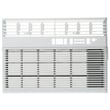
For a 12,000 BTU room air conditioner like the GE AHC12AZW1, we size the generator for both running watts and the startup surge. Plan on about 2,500 to 3,500 watts minimum, and choose a generator with enough surge capacity to start the compressor reliably.
How to size the generator (simple method)
Use these steps to avoid nuisance tripping and hard starts:
- Estimate running watts: many 12,000 BTU window units run around 1,000 to 1,500 watts.
- Account for startup surge: compressor startup is commonly 2 to 3 times the running load.
- Add other loads: lights, a fridge, chargers, or a fan can push you over the edge.
- Prefer headroom: extra capacity helps voltage stay stable during startup.
- Match the outlet: make sure the generator has the correct 120V receptacle for your cord/plug.
Typical wattage targets for a 12,000 BTU window AC
These are practical planning numbers used for most room air conditioners in this size class.
| What you’re planning for | Typical watts to budget |
|---|---|
| Continuous running | 1,000 to 1,500 W |
| Startup surge (short burst) | 2,500 to 3,500 W |
| “Comfortable” generator size (with headroom) | 3,500 to 4,500 W |
Why it matters
If the generator cannot supply the startup surge, the compressor may fail to start, the voltage can sag, and the unit may cycle off or trip protection. Stable power helps your GE room air conditioner cool consistently and protects electrical components.
Related troubleshooting and tips
If your unit runs but does not cool well (or seems to struggle after a power event), these resources help narrow it down:
- Room air conditioner installation and operation tips
- Window air conditioner running but not cooling
- GE error codes
Last updated: February 2026
Is 1 ton AC sufficient for a 12 * 12 room?
Yes. For a typical 12 ft x 12 ft room (about 144 sq ft), a 1-ton air conditioner is more than sufficient in most homes; it should cool quickly and cycle normally when the room is reasonably sealed and insulated. For your GE AHC12AZW1 room air conditioner, correct sizing and airflow matter as much as capacity.
Quick sizing check (what usually works)
Most rooms around 120 to 180 sq ft cool well with roughly 5,000 to 8,000 BTU in average conditions. A 1-ton unit is about 12,000 BTU, so it is typically oversized for a 12x12 room.
| Room size | Typical BTU range | 1-ton (12,000 BTU) fit? |
|---|---|---|
| 12x12 (144 sq ft) | 5,000 to 8,000 | Usually larger than needed |
| 12x12 with heavy sun/poor insulation | 8,000 to 10,000 | Can be acceptable |
When 1 ton is a good choice for a 12x12 room
A 1-ton window AC can make sense if one or more of these apply:
- The room gets strong afternoon sun (west-facing windows).
- Insulation is poor or there are air leaks around windows/doors.
- Ceilings are high (over about 8 ft).
- The room has multiple occupants or heat-producing equipment (PCs, gaming, kitchen-adjacent).
- You want to cool an attached area (hallway, open doorway to another room).
If the AC feels “too strong” (common with oversized units)
Oversizing can cause short cycling and weaker humidity removal. We recommend:
- Use Eco or Auto fan mode if available.
- Set a steady temperature (avoid frequent setpoint changes).
- Keep airflow strong by cleaning or replacing the filter; a clogged filter reduces comfort and efficiency.
- Check the front grille and intake for blockage.
If you need a replacement filter for this model, use the room air conditioner air filter WJ85X24905.
Why it matters
Right-sizing helps your room feel consistently comfortable. An oversized unit can cool the air fast but leave the room feeling damp; good airflow and a clean filter help your GE AHC12AZW1 perform its best.
Last updated: February 2026
What is the cost of AC in a 12X12 room?
For a 12 x 12 room (about 144 sq ft), the total cost to cool the space depends on the air conditioner size (BTU), the unit price, and your electricity rate. For a GE room air conditioner like model AHC12AZW1, most homeowners budget for both the purchase price and ongoing monthly energy use.
Typical costs to plan for
- Upfront unit cost: Most window/room air conditioners commonly fall in the $200 to $600 range, depending on BTU, features (Wi-Fi, remote), and efficiency.
- Operating cost: Many 144 sq ft rooms use an 8,000 to 10,000 BTU unit; typical electricity cost is often $20 to $60 per month during heavy use (varies by kWh rate, runtime, and insulation).
- Maintenance cost: A washable or replaceable filter and basic cleaning are usually the main recurring needs.
Sizing guide for a 12 x 12 room
Most rooms around 144 sq ft cool best with an air conditioner in this range:
| Room size | Typical BTU range | What you’ll notice if undersized | What you’ll notice if oversized |
|---|---|---|---|
| ~144 sq ft (12 x 12) | 8,000 to 10,000 BTU | Runs constantly, weak cooling | Short cycles, clammy humidity |
What changes the price the most
- Energy efficiency (EER/CEER): Higher efficiency usually costs more upfront but less to run.
- Heat load: West-facing windows, poor insulation, and high ceilings increase BTU needs.
- Features: Wi-Fi control, digital display, and a remote can raise the unit price.
- Airflow restrictions: A dirty filter can make the unit run longer and cost more to operate.
Keep operating costs down (quick wins)
- Clean or replace the filter regularly; for this model, check the room air conditioner air filter WJ85X24905.
- Keep doors closed and use blinds/curtains during peak sun.
- Set a steady temperature (constant big changes can increase runtime).
- Make sure the unit is level and draining correctly.
Why it matters
Correct BTU sizing and basic maintenance help your GE AHC12AZW1 cool faster, control humidity better, and avoid unnecessary wear on the compressor and fan motor.
Last updated: February 2026