Installation guide
 Owner’s manual



How do I reset the lid lock on my Whirlpool washer?
On the Whirlpool WFW7590FW0, you do not reset a “lid lock” because this is a front-load washer that uses a door lock. The most effective reset is a simple power reset; if the door stays locked, the washer may still be draining or the door lock may be failing.
Quick reset steps for WFW7590FW0 (door lock)
- Touch Power/Cancel to stop the cycle.
- Wait for the drum to stop moving.
- Unplug the washer for 30 seconds (this returns options to factory defaults on this model).
- Plug it back in.
- Select Drain & Spin, then touch and hold Start for 3 seconds.
For control and door-lock behavior details specific to this model, use the WFW7590FW0 use & care manual.
If the door is locked and will not open
On this model, the door can stay locked until the washer finishes draining. If you cancel a cycle with water in the tub, allow the drain routine to complete before expecting the door to unlock.
- Let the washer finish any drain period before trying to open the door
- Avoid forcing the door handle; it can damage the latch
- Check for excessive suds (too much detergent can extend drain time)
- Try a Drain & Spin cycle to clear water from the tub
- If the lock clicks repeatedly but never unlocks, inspect the door strike area for obstruction
When a part is likely the fix
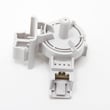
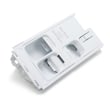
If resets do not help and the door stays locked, won’t lock, or you see door-lock related symptoms, the lock assembly itself is a common failure point.
| Symptom | What it often points to | What we recommend |
|---|---|---|
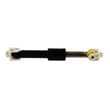
| Door won’t lock to start | Door lock not engaging | Inspect/replace washer door lock WPW10443885 |
| Door stays locked after cycle | Lock not releasing or drain issue | Run Drain & Spin; then check lock |
| Intermittent locking/unlocking | Loose connection or failing lock | Check wiring to lock; replace if needed |
Why it matters
The washer uses the door lock as a safety interlock; if the control does not sense a properly locked door, it may not start, may pause mid-cycle, or may keep the door locked until it believes conditions are safe.
Last updated: January 2026
What is a common problem for a Whirlpool washer front loader?
For the Whirlpool WFW7590FW0 front-load washer, the most common problems we see are odor or leaks from residue and mold buildup around the door seal, “won’t drain/spin” symptoms from a restricted drain path, and excessive vibration from unbalanced loading or leveling issues. See the WFW7590FW0 use & care manual for model-specific cleaning and operating guidance.
Most common issues (and what usually causes them)
- Musty odor or visible mold: moisture and detergent residue left in the door boot area
- Water leaking at the front: debris or tears in the door boot, or residue preventing a good seal
- Washer won’t drain or spins poorly: clogged filter area, kinked drain hose, or a restricted drain path
- Walking or heavy vibration: unbalanced loads, washer not level, or worn suspension components
- Door won’t lock/unlock correctly: latch/lock mechanism issues or a cycle that has not fully drained
Quick checks you can do first
- Wipe and inspect the door seal folds; remove coins, hair pins, and lint.
- Run the Clean Washer cycle as recommended (many Whirlpool front-loaders prompt about every 30 cycles).
- Use only HE detergent and avoid over-dosing (excess suds can cause longer cycles and drain complaints).
- Confirm the washer is level and the load is not tightly packed.
Parts that commonly relate to these symptoms
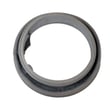
If you find damage or a recurring leak at the door opening, the door boot is a frequent fix on this model: washer bellow W11106747.
If the washer will not start a cycle because the door will not secure, the lock assembly is a common suspect: washer door lock WPW10443885.
| Symptom | Most likely area | Typical next step |
|---|---|---|
| Odor/mildew | Door seal, detergent use | Clean seal, run Clean Washer cycle, reduce detergent |
| Front leak | Door boot | Inspect for tears, replace if damaged |
| Won’t drain/spin | Drain path/filter/hose | Check for restrictions, correct hose routing |
| Excess vibration | Load balance, leveling, suspension | Rebalance load, level washer, inspect shocks |
Why it matters
Front-load washers like the WFW7590FW0 use low water levels; that saves water and energy, but it also means detergent residue and moisture management (door seal care, correct HE detergent amount, and prompt unloading) directly affect odors, leaks, and drain performance.
Last updated: January 2026
How do I find the model number on my WFW7590FW0?
Your Whirlpool washer’s model number is printed on the appliance’s model and serial tag; on front-load washers like the WFW7590FW0, it’s typically located around the door opening area. Once you find it, write down the full model and serial number for parts lookup and service.
Where to look on a front-load Whirlpool washer
Check these common tag locations first:
- Open the washer door and look along the door opening (door frame) for a sticker or metal tag
- Check the inside edge of the door itself
- Look behind the lower access panel area (if your unit has a removable toe/kick panel)
- As a backup, check the back panel near the power cord entry
For diagrams and model identification details specific to this washer, use the WFW7590FW0 owner's manual.
What to record (and why)
We recommend recording both numbers exactly as shown:
- Model number: identifies the exact design series (needed to match parts like a door lock or drain pump)
- Serial number: identifies the production run (often used for service history and correct revisions)
- Brand: Whirlpool (helpful when searching across similar washer platforms)
Quick reference
| Item | What it’s used for | Example (format) |
|---|---|---|
| Model number | Correct parts diagrams and fit | WFW7590FW0 |
| Serial number | Production details and service identification | Letters and numbers |
Why it matters
Whirlpool makes multiple versions that look similar; using the exact model number prevents ordering the wrong component (for example, a washer door lock WPW10443885 or washer drain pump WPW10605427) and helps troubleshooting match the right control system and features.
Last updated: March 2026