Owner’s manual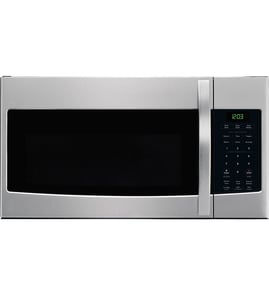



Are Kenmore microwaves good?
Kenmore microwaves are a solid choice for most kitchens because they typically deliver good everyday performance and long-term value when they’re installed correctly and maintained. For Kenmore model 66561639100, following the care and use guidance in the 66561639100 owner's manual helps you get the best reliability and cooking results.
What “good” usually means for a microwave/hood combo
A microwave/hood combo has two jobs: cooking and ventilation. In real-world use, “good” usually comes down to these factors:
- Consistent heating for common tasks (reheating, defrosting, melting)
- Reliable door operation and interlock safety switching
- Effective cooktop lighting and vent fan performance
- Easy-to-clean interior and turntable support
- Reasonable parts availability for wear items (filters, lights, switches)
How to keep a Kenmore microwave performing well
The manual for this model emphasizes routine cleaning and basic upkeep. These habits prevent many common complaints (odors, staining, poor airflow):
- Clean interior surfaces often with warm, sudsy water and a soft cloth
- Keep the door and frame contact areas clean so the door seals properly
- Use steam (boil a cup of water for 2 to 3 minutes) to loosen stubborn soil
- Deodorize by boiling water with lemon juice or vinegar
- Wash the turntable and support in mild, sudsy water
Parts and maintenance that affect “goodness” the most
If performance drops, these are common, fixable items on over-the-range microwaves:
| Symptom | Common cause | Example part for this model |
|---|---|---|
| Weak or no heat | High-voltage component issue | Diode W11256462 |
| Dead unit or intermittent power | Overheat protection opened | Thermal fuse W11707984 |
| Light out over cooktop | Burned-out lamp assembly | Lamp assembly 8206232A |
| Won’t start when door closes | Door switch or bracket issue | Primary switch W10211972 |
Why it matters
A microwave that’s kept clean and ventilating properly runs cooler and more consistently. That reduces nuisance shutdowns and helps key components (like the magnetron and safety fuses) last longer.
Last updated: February 2026
How big is a Kenmore microwave model 66561639100 in inches?
The Kenmore microwave/hood combo model 66561639100 is a standard over-the-range size; most units in this class measure about 30 inches wide, 16 to 17 inches high, and 15 to 17 inches deep. For the exact cabinet cutout and mounting clearances, use the 66561639100 owner's manual.
Typical dimensions you can expect
These are the most common exterior size ranges for a 30-inch over-the-range microwave/hood combo:
- Width: 29 7/8 inches to 30 inches
- Height: 16 inches to 17 1/4 inches
- Depth (front to back): 15 inches to 17 inches
- Range compatibility: designed for installation above ranges up to 36 inches wide
How to confirm the exact measurements on your unit
We recommend verifying the physical size on your specific microwave before ordering trim parts or planning cabinetry.
- Measure left-to-right across the front for width
- Measure top-to-bottom of the front frame for height
- Measure front face to the back edge (not including the wall gap) for depth
- Check for added depth from the door handle and front trim
- Confirm required clearances and mounting points in the 66561639100 owner's manual
Why it matters
Over-the-range microwaves are often “30-inch class,” but small differences in height and depth affect cabinet fit, venting alignment, and whether the door clears nearby cabinets. Using the manual specs helps avoid rework during installation.
Quick reference table
| Measurement | Typical for this style | Best way to verify |
|---|---|---|
| Width | ~30 inches | Measure the front frame |
| Height | ~16 to 17 1/4 inches | Measure the front frame |
| Depth | ~15 to 17 inches | Measure front to back (include handle separately) |
Last updated: February 2026
How many CFM is a microwave hood?
Most microwave/hood combos (including Kenmore model 66561639100) move less air than a dedicated range hood; a typical microwave hood fan is up to about 200 CFM, while many standalone range hoods are commonly 200 to 600 CFM. For your exact venting details and setup notes, use the 66561639100 owner's manual.
What to expect for airflow (CFM)
Microwave hood combinations are designed for light to moderate ventilation over a cooktop, not heavy-duty smoke capture.
- Typical microwave hood combo fan: 0 to ~200 CFM
- Typical standalone range hood: ~200 to 600 CFM (varies widely by hood size and blower)
- Real-world performance depends on ducting, backdraft damper operation, and filter condition
- Recirculating setups rely heavily on the charcoal filter for odor control
| Venting setup | What it does | What you notice most |
|---|---|---|
| Outside vented (ducted) | Exhausts air outdoors | Best smoke and moisture removal |
| Recirculating (non-ducted) | Filters and returns air to kitchen | Better odor reduction than smoke removal |
Quick checks that affect CFM in real use
Even with the same fan motor, restrictions can make the airflow feel weak.
- Clean the aluminum grease filters monthly (grease buildup reduces airflow)
- Replace the charcoal filter every 6 to 12 months in recirculation mode
- Make sure the vent path is not crushed, kinked, or blocked
- Confirm the damper opens freely and is not stuck
- Use the correct replacement charcoal filter: filter 6800
Why it matters
CFM is the main indicator of how well your microwave hood combo can capture cooking smoke, steam, and odors. If you cook on high heat often, a higher-CFM dedicated range hood usually performs better; for everyday cooking, a microwave hood combo is typically sufficient when filters and venting are maintained.
Last updated: February 2026
How many cubic feet is a Kenmore Model 66561639100 microwave?
The Kenmore microwave/hood combo model 66561639100 is 1.7 cubic feet in capacity. For the most accurate confirmation for your exact unit and configuration, we recommend checking the specifications section in the 66561639100 owner's manual.
How to confirm the capacity on your unit
Use these quick checks to verify you are looking at the right specs for your microwave:
- Match the full model number on the rating label to 66561639100
- Confirm you are using the correct document for the 665.61639 model series
- Look for a “Specifications” or “Getting to know your microwave oven” section
- Avoid using “similar model” specs; small model changes can affect capacity listings
What “1.7 cu. ft.” means in everyday use
A 1.7 cu. ft. over-the-range microwave like this Kenmore unit is typically sized for common household tasks such as reheating plates, cooking frozen meals, and using standard microwave-safe cookware.
Typical fit guide (general)
| Item | Usually fits in 1.7 cu. ft.? | Notes |
|---|---|---|
| Standard dinner plate | Yes | Center it on the turntable for even heating |
| 2 to 3 quart casserole dish | Usually | Use microwave-safe glass/ceramic |
| Large roasting pan | Often no | May interfere with turntable rotation |
Why it matters
Capacity affects what cookware fits, how evenly food heats on the turntable, and whether accessories like a rack are practical for your cooking style. Using the correct capacity also helps when ordering accessories or comparing replacement units.
Last updated: February 2026
What is the life expectancy of a Kenmore microwave?
Most Kenmore microwaves, including the Kenmore model 66561639100 microwave/hood combo, typically last 9 to 10 years with normal household use. Heavy daily use, poor ventilation, and repeated door slams can shorten that lifespan; consistent cleaning and filter care help it reach the full range.
Typical lifespan and what affects it
Common factors that change how long a microwave/hood combo lasts:
- Daily run time (multiple long heat cycles per day wears components faster)
- Ventilation and grease buildup (heat and grease stress the fan and internal wiring)
- Door alignment and latch wear (affects safe operation and heating performance)
- Power quality (surges can damage control boards and high-voltage parts)
- Maintenance habits (keeping filters and vents clean reduces heat load)
Repair vs. replace: quick decision guide
Use this as a practical rule of thumb for model 66561639100.
| Situation | What we recommend | Why |
|---|---|---|
| Under ~5 years old and otherwise in good shape | Repair is usually worth it | You are still early in the normal service life |
| 6 to 10 years old | Compare repair cost to replacement | You are in the typical end-of-life window |
| Over 10 years old | Replace unless the fix is minor | Reliability drops and multiple parts may be aging |
Signs your microwave is nearing end of life
If you see these symptoms, plan for service or replacement:
- Food takes much longer to heat than it used to
- The unit runs but does not heat consistently
- The interior light, fan, or turntable becomes intermittent
- You notice burning smells, repeated shutdowns, or frequent blown fuses
For model-specific operating and care guidance (including filter and light maintenance), use the 66561639100 owner's manual.
Why it matters
A microwave/hood combo that is past its typical lifespan can become less efficient and more failure-prone, especially in the venting system. Staying on top of cleaning and filter care helps reduce heat stress and extends the life of key components.
Last updated: February 2026