 Owner’s manual
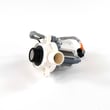


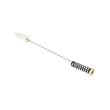
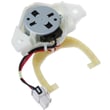
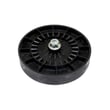
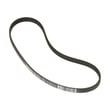
How to order GE appliance parts?
To order parts for your GE washer model GTW680BSJ0WS, use the complete model number and serial number to match the exact replacement part (such as a drain pump, lid lock, or water inlet valve). Order directly from the parts list for GTW680BSJ0WS, or search by model on Sears PartsDirect.
- Complete model number: GTW680BSJ0WS
- Serial number (from the washer’s serial tag)
- The part name and, when possible, the part ID (example: washer drain pump assembly WH23X28418)
- A short symptom description (for troubleshooting the right part)
- Shipping address and preferred delivery timing
Ordering by exact model and part ID is the fastest way to avoid returns. For example, if the washer will not drain, the drain pump is a common match for that symptom.
Check for any listed substitutions on the part page, and compare the part ID and description to your original. If you need help confirming the right replacement, contact Sears PartsDirect support.
| Symptom | Common part to check | Example part ID |
|---|---|---|
| Won’t drain / standing water | Drain pump | WH23X28418 |
| Won’t fill / slow fill | Water inlet valve assembly | WH13X26637 |
| Won’t start / lid won’t lock | Lid lock | WH08X37938 |
| Excessive shaking / off-balance | Suspension rod and spring assembly | WH16X26911 |
GE washers often have multiple versions of similar-looking parts. Using the full GTW680BSJ0WS model number and serial number helps ensure the correct fit, correct electrical connectors, and correct revision level.
For diagrams, part locations, and model-specific identifiers, use the GTW680BSJ0WS manual.
Last updated: March 2026
Is it worth fixing a GE washing machine?
Yes, it’s worth fixing a GE washer like model GTW680BSJ0WS when the problem is a common, contained repair (drain, fill, lid lock, balance) and the total repair cost stays well below the price of a comparable new washer. For major drive-system failures, replacement usually makes more sense.
- Fix it if the washer is under about 8 years old and this is the first major issue.
- Fix it if the repair is a single-part failure (pump, valve, lid lock, suspension).
- Fix it if the total repair (parts + labor) is under ~50% of replacement cost.
- Replace it if the washer has repeated breakdowns or multiple symptoms at once.
- Replace it if the repair involves major drivetrain components (gear case, basket, control system) and costs climb quickly.
These are frequent causes of no-drain, no-fill, or won’t-start complaints and are typically straightforward compared to major mechanical repairs:
| Symptom | Likely area | Example part for this model |
|---|---|---|
| Won’t drain / water left in tub | Drain system | Washer drain pump assembly WH23X28418 |
| Won’t fill / fills slowly | Water supply and valve | Washer water inlet valve assembly WH13X26637 |
| Won’t start / lid won’t lock | Lid lock circuit | Washer lid lock WH08X37938 |
| Banging, walking, out-of-balance | Suspension | Washer suspension rod and spring assembly WH16X26911 |
Major repairs can be worth it only when the washer is otherwise in excellent condition and the total cost stays low.
- Gear case or drive issues (often paired with loud grinding or poor agitation)
- Tub or basket damage (leaks, severe rust, chronic imbalance)
- Multiple electrical symptoms (intermittent power, random stopping) combined with mechanical issues
A top-load washer’s value is mostly in its drivetrain and tub system. If the failure is isolated to a serviceable part (like a drain pump, inlet valve, or lid lock), you usually restore reliable operation at a reasonable cost. If the failure is in the gear case or basket area, costs can approach replacement quickly.
- Check for stored fault codes and symptom patterns using GE gtw top load washer error codes.
- Confirm basic setup items: hot/cold valves fully open, drain hose not shoved too deep into the standpipe, and a stable, level cabinet.
- Use the GTW680BSJ0WS owner’s manual for model-specific diagnostics, cycle behavior, and any reset or calibration steps.
Last updated: February 2026
What is the life expectancy of a GE washing machine?
A GE washer like model GTW680BSJ0WS typically lasts 10 to 14 years with normal household use. Consistent care (correct loading, proper detergent, and periodic cleaning) helps you reach the high end of that range and reduces wear on the drive system and suspension.
Most top-load washers fall into a predictable range, but usage and maintenance make the biggest difference.
- Normal use (3 to 5 loads/week): 10 to 14 years
- Heavy use (daily loads, large items): closer to 8 to 12 years
- Light use (1 to 2 loads/week): often 12 to 15 years
- Hard water and overdosing detergent: shortens life by increasing residue and strain
- Frequent unbalanced loads: accelerates wear on suspension and drivetrain
These habits reduce vibration, prevent drain issues, and protect the motor and controls.
- Keep loads evenly distributed; wash bulky items in pairs when possible
- Use HE detergent and measure carefully (too much causes buildup)
- Run a monthly cleaning cycle or hot wash to reduce residue (follow the GTW680BSJ0WS owner’s manual)
- Check pockets to prevent coins and debris from damaging the pump
- If the washer starts banging or walking, inspect suspension components early
When these parts wear out, repairs may restore performance and extend service life.
| Symptom | Common cause | Example part for GTW680BSJ0WS |
|---|---|---|
| Won’t drain or leaves water | Drain pump issue or blockage | Washer drain pump assembly WH23X28418 |
| Excessive shaking or banging | Worn suspension | Washer suspension rod and spring assembly WH16X26911 |
| Won’t fill or fills slowly | Inlet valve or screen restriction | Washer water inlet valve assembly WH13X26637 |
| Won’t start, lid won’t lock | Lid lock problem | Washer lid lock WH08X37938 |
Knowing the expected lifespan helps you decide whether to repair or replace. If your GTW680BSJ0WS is under about 10 years old, fixing a drain, fill, or lid-lock problem is often a practical way to get several more years of reliable washing.
Last updated: February 2026
What is the most common problem with GE washers?
The most common problem we see with GE washers like model GTW680BSJ0WS is a no-spin or poor-spin condition, often tied to lid lock sensing, draining problems, or drive system shifting issues. When the washer cannot drain correctly, it also commonly stops before the final spin.
- Won’t spin or stops mid-cycle: lid lock not engaging, shifter/drive issue, or drain problem
- Won’t drain or leaves water in the tub: drain pump, drain hose restriction, or a control sensing issue
- Won’t fill or fills slowly: inlet screens clogged, household water supply issue, or inlet valve problem
- Out of balance, banging, or walking: worn suspension rods/springs or overloaded/uneven loads
- Lid won’t lock or unlocks unexpectedly: lid lock or lid lock wiring concern
- Redistribute the load and run a Spin/Drain cycle; bulky items can prevent high-speed spin.
- Confirm draining: listen for the pump and check that the standpipe is not backing up.
- Check the drain path: look for kinks or clogs in the hose and at the drain/standpipe.
- Power reset: unplug for 2 minutes, then retry a cycle.
- Pull the exact error code (if shown) and match it to the troubleshooting steps in the GTW680BSJ0WS owner’s manual.
| Symptom | Commonly involved part | Example part for this model |
|---|---|---|
| Won’t drain, won’t spin because water remains | Drain pump | Washer drain pump assembly WH23X28418 |
| Lid won’t lock, won’t start/spin | Lid lock | Washer lid lock WH08X37938 |
| Won’t agitate/spin correctly | Shifter | Washer shifter WH03X30517 |
| Excessive vibration or out-of-balance | Suspension | Washer suspension rod and spring assembly (model-specific set) |
On a top-load GE washer, spinning depends on safety sensing and water level. If the lid lock does not confirm closed, or if the tub cannot drain, the control will commonly prevent high-speed spin to protect the washer and your laundry.
For code-based troubleshooting, we also use the GE gtw top load washer error codes guide to narrow the failure to the lid lock, drain system, shifter, or control.
Last updated: February 2026


