


How to get KitchenAid replacement parts?
For your KitchenAid dishwasher model KDTM604KBS1, we recommend ordering replacement parts by searching with the model number first, then matching the exact part name and part ID to your symptom (leak, no fill, not draining, poor cleaning) so you get the correct fit and function.
The fastest way to find the right part
- Search using the full model number KDTM604KBS1 to filter to compatible parts.
- Use the symptom to narrow the part category (water inlet, drain, wash system, door seal, racks).
- Match the part name and part ID exactly before ordering.
- If you already have a part number from the old part label, cross-check it against the listing.
- Confirm quantity needed (some items use multiple screws, clamps, or seals).
Common KDTM604KBS1 parts customers replace
| Symptom | What to check/replace | Example part for this model |
|---|---|---|
| Dishwasher not filling | Water inlet valve, inlet components | Fill valve assembly W11434044 |
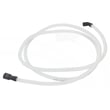
| Not draining | Drain hose, drain path restrictions | Dishwasher drain hose W11551233 |
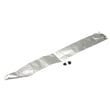
| Leaking at the door | Door seals and tub gasket | Seal, door bottom W11664713 |
| Not cleaning well | Filter, spray arm/manifold | Dishwasher filter W11568785 |
Why it matters
Dishwashers often have similar-looking parts across model families, but small design changes affect fit, electrical connectors, and water flow. Using KDTM604KBS1 plus the exact part ID helps prevent returns and repeat repairs.
Helpful DIY guidance
If you are troubleshooting before ordering, use these guides to pinpoint the most likely part:
Last updated: February 2026
What's the average lifespan of a KitchenAid dishwasher?
A KitchenAid dishwasher typically lasts 10 to 14 years with normal household use and basic maintenance. For your KitchenAid KDTM604KBS1, keeping wash water flowing freely and preventing leaks (by maintaining filters and door seals) is what most often determines whether you land closer to 10 years or closer to 14.
What affects dishwasher lifespan the most
- Filter and sump cleanliness; a clogged filter makes the pump work harder
- Water quality (hard water scale can reduce cleaning performance and strain components)
- Loading habits (blocked spray arms reduce wash performance and increase rewash cycles)
- Leak prevention (door seals and tub gaskets that seep can cause corrosion and damage)
- Prompt repairs when symptoms start (slow fill, poor wash, not draining)
Maintenance that helps you reach the high end of the range
- Clean the filter regularly; replace it if it is damaged or won’t come clean (see dishwasher filter W11568785)
- Inspect and wipe the door sealing surfaces; replace worn seals if you see drips (see seal, door bottom W11664713)
- Run a periodic cleaning cycle using a dishwasher cleaner
- Make sure the lower spray arm spins freely and isn’t cracked (see dishwasher spray arm, lower W11550888)
- Fix fill and drain issues early to avoid pump strain and standing water
Quick “repair or replace” guide
| What you’re seeing | What it usually means | Typical next step |
|---|---|---|
| Not filling or fills slowly | Water inlet or fill valve issue | Check supply, then test/replace inlet parts |
| Not draining | Drain path restriction or drain hose issue | Clear blockage; inspect hose routing |
| Poor cleaning | Clogged filter or spray arm issue | Clean/replace filter; inspect spray arm |
| Leaks at the door | Worn door seal or alignment issue | Inspect/replace door seal |
Why it matters
A dishwasher that is maintained tends to run fewer repeat cycles, keeps the circulation system cleaner, and avoids leak damage. Those three things are what most often separate a 10-year dishwasher from a 14-year dishwasher.
Last updated: February 2026
How to fix rubber seal on KitchenAid dishwasher?
On KitchenAid dishwasher model KDTM604KBS1, a “rubber seal” problem is usually a door gasket that has slipped out of its channel or a bottom door seal that is torn. We fix it by cleaning the channel, pressing the seal in evenly end-to-end, and replacing the seal if it is hardened, split, or won’t stay seated.
Quick checks before you start
- Turn off power at the breaker; open the door and inspect with good lighting.
- Look for sections of gasket that are twisted, stretched, or pulled out of the groove.
- Check for food debris, detergent buildup, or mineral scale in the gasket channel.
- Confirm the racks are not hitting the door when you close it (misalignment can unseat the seal).
- If leaking is only at the very bottom edge, focus on the bottom door seal.
Reseat the door gasket (most common fix)
- Wipe the gasket and the channel with warm water and mild dish soap; dry thoroughly.
- Starting at the top center, press the gasket into the channel using your fingers.
- Work evenly down both sides; avoid stretching the gasket.
- Close and latch the door firmly for several hours so the gasket “sets” into position.
When to replace the seal instead of reseating
If the seal is damaged or deformed, replacement is the lasting fix.
| What you see | What it means | Best fix |
|---|---|---|
| Gasket keeps popping out | Channel dirty or gasket stretched | Clean channel; reseat evenly |
| Cracks, tears, or flattened spots | Seal is worn out | Replace the seal |
| Leak only at bottom center | Bottom door seal worn | Replace bottom seal |
For bottom-edge leaks on KDTM604KBS1, the correct replacement part is the seal, door bottom W11664713.
Why it matters
A properly seated door gasket and bottom seal keep wash water inside the tub, protect the door liner, and prevent moisture damage to nearby cabinets and flooring.
Last updated: February 2026
What is the lifetime warranty on a KitchenAid dishwasher?
KitchenAid “lifetime” dishwasher coverage typically means lifetime (for as long as you own the product) coverage on specific stainless steel components, not the entire dishwasher. For KitchenAid dishwasher model KDTM604KBS1, the lifetime portion is commonly tied to the stainless steel tub and or inner door.
What “lifetime” usually covers (and what it does not)
Most KitchenAid dishwasher lifetime terms focus on a limited set of parts and labor, while other components follow shorter limited-warranty periods.
- Covered under the lifetime portion: stainless steel tub and or inner door (when the failure is covered)
- Not “lifetime” items: pumps, valves, racks, spray arms, electronics, and cosmetic parts
- Coverage is tied to proper operation and maintenance
- Proof of purchase and ownership period can matter for eligibility
How to confirm what applies to your dishwasher
Because warranty terms vary by series and purchase date, we recommend matching your paperwork to the exact warranty language for your unit.
| Item | Typically included in “lifetime” | Commonly excluded from “lifetime” |
|---|---|---|
| Stainless steel tub | Yes | No |
| Inner door (stainless) | Often | No |
| Circulation pump, drain pump | No | Yes |
| Fill system (valves, inlet) | No | Yes |
If you are troubleshooting a leak or water issue that is not related to the tub or inner door, it is usually a repair-part situation, not a lifetime-warranty situation. For example, common leak or fill-related parts for KDTM604KBS1 include the fill valve assembly W11434044 and the seal, door bottom W11664713.
Why it matters
Knowing what “lifetime” applies to helps you avoid replacing the wrong parts and focuses your diagnosis: tub or inner-door failures point toward warranty coverage, while draining, filling, and cleaning problems point toward service and replacement parts.
Last updated: February 2026
What is the most common problem with a KitchenAid dishwasher?
The most common KitchenAid dishwasher issue we see on the KDTM604KBS1 is poor cleaning or leftover grit caused by restricted water flow, usually from a dirty filter or a spray arm that is partially clogged. Drain and leak complaints are also common and are often tied to hoses and door seals.
Most common symptoms and what they usually point to
- Dishes still dirty or sandy: clogged filter, blocked spray arm jets, low fill, or weak circulation
- Standing water in the bottom: restricted drain path, kinked drain hose, or a drain pump issue
- Leaks at the front/bottom: door seal wear, door not closing fully, or tub gasket issues
- Won’t start or stops mid-cycle: door latch not sensing closed, control or wiring issues
- Odd wash results (spotting/film): detergent type, rinse aid level, water temperature, loading pattern
Quick checks we recommend first (no parts swapping)
- Remove and rinse the filter; reinstall it fully seated (a loose filter can recirculate debris).
- Spin the spray arms by hand; clear any blocked jets with a toothpick and rinse.
- Run hot water at the sink until it is hot before starting a cycle.
- Confirm the dishwasher is level and the door closes firmly.
- If it is not draining, check for a high loop in the drain hose and clear the sink/disposer inlet.
Parts that commonly solve these problems on KDTM604KBS1
| Symptom | Common fix | Example part for this model |
|---|---|---|
| Poor cleaning, debris | Clean or replace filter | Dishwasher filter W11568785 |
| Not filling or low water | Check inlet supply, then valve | Fill valve assembly W11434044 |
| Not draining | Clear/replace drain hose | Dishwasher drain hose W11551233 |
| Leaking at door bottom | Replace lower door seal | Seal, door bottom W11664713 |
| Won’t start | Latch not engaging/switch issue | Latch assembly (includes switch) W11412299 |
Why it matters
Dishwashers clean by maintaining the right water level and strong spray pressure. A restricted filter, a partially clogged spray arm, or a weak fill can reduce pressure enough that detergent never fully activates, which leads to repeat wash problems and longer cycle times.
For fault codes and what they mean on KitchenAid models like this, use our KitchenAid microclean he dishwasher error codes.
Last updated: February 2026