Owner’s manual
 View engine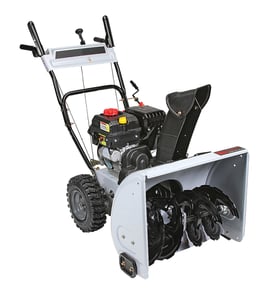


Where is the serial number on a snowblower?
On the Craftsman snow thrower model 247881732, the serial number is typically printed on the model and serial number ID label (often called the rating plate). You’ll usually find that label on the rear of the unit near the handles or frame, or on the side of the housing.
Where to look first (fast checks)
- Behind the engine, on the rear frame crossmember
- On the back of the snowblower near the handle supports
- On the side of the main housing (near the wheels)
- Near the chute base area (on some builds)
- Under a service cover or near the belt cover area (less common)
For model-specific label location diagrams and identification tips, use the 247881732 manual.
What the label usually includes
Most Craftsman gas snowblowers use one label that includes multiple identifiers. Here’s what you’ll commonly see:
| Label item | What it’s used for | Example format |
|---|---|---|
| Model number | Identifies the exact machine family | 247881732 |
| Serial number | Identifies your specific unit | Letters and numbers |
| Date code (if present) | Helps determine production run | Varies |
Tips for reading and recording the serial number
- Wipe the label with a damp cloth first; packed snow and salt film can hide characters.
- Use a flashlight and take a photo; zooming in often makes faded print readable.
- Write it down exactly, including dashes and any letters.
- If the label is damaged, check for a duplicate label on the frame or housing.
Why it matters
We use the serial number (along with the model number) to help match the correct Craftsman snowblower parts and diagrams, especially when there are mid-production changes.
Last updated: January 2026
How many years should a snowblower last?
A Craftsman gas snowblower like model 247881732 should last 15 to 20 years with normal residential use and consistent maintenance; neglected fuel care, belt wear, and corrosion can shorten that to around 10 years. For model-specific maintenance intervals, use the 247881732 owner’s manual.
What most affects lifespan
- Fuel habits: fresh gas, stabilizer for storage, and a clean carburetor prevent hard-start and rough-run issues.
- Oil changes and lubrication: reduces engine and drive wear.
- Belt condition and adjustment: worn belts slip, overheat, and reduce throwing power.
- Storage and rust prevention: dry storage protects the auger housing, chute, and fasteners.
- How it’s used: repeated heavy, wet snow and gravel ingestion accelerate wear.
Typical lifespan ranges (what we see most often)
| Snowblower type | Typical lifespan | Notes |
|---|---|---|
| Gas (2-stage or larger) | 15 to 20 years | Longest life when maintained and stored dry |
| Electric corded | 10 to 15 years | Fewer engine-related repairs |
| Battery-powered | 10 to 15 years | Tool life is similar, but batteries may need replacement sooner |
Maintenance that helps you reach 15 to 20 years
- Follow seasonal prep and storage steps in the 247881732 owner’s manual.
- Replace worn drive components before they damage other parts.
- If your auger performance drops or you smell burning rubber, inspect the auger belt; this model uses an auger drive belt such as the mtd snowblower auger drive belt, 1/2 x 35-1/4-in 256963.
- Use our guide how to make your snowblower last longer for a simple yearly checklist.
Why it matters
A snowblower usually “fails early” from preventable issues (stale fuel, neglected oil, belt slip, rust). Keeping up with basic service protects the engine, auger drive, and traction drive so you avoid expensive mid-season breakdowns.
Last updated: January 2026
Is a 2 stage or 3 stage snowblower better?
A 2-stage snowblower is the better choice for most owners because it balances power, cost, and maintenance; a 3-stage is better only if you regularly face deep, heavy, icy snow and want faster intake and throwing. For Craftsman model 247881732, the stage type is best confirmed in the 247881732 manual.
2-stage vs 3-stage: what changes
- 2-stage: auger pulls snow in, then an impeller throws it out the chute.
- 3-stage: adds an accelerator/collector in front of the impeller to move snow faster.
- 3-stage units typically clear deep drifts and packed snow faster.
- 2-stage units typically have fewer moving parts and simpler service.
- Both are designed for paved driveways and larger areas than single-stage machines.
Quick comparison
| Feature | 2-stage snowblower | 3-stage snowblower |
|---|---|---|
| Best for | Most driveways, typical storms | Frequent heavy, wet, icy snow and deep drifts |
| Speed in deep snow | Good | Faster |
| Complexity | Lower | Higher |
| Maintenance | Usually simpler | Usually more involved |
| Cost | Lower | Higher |
How we recommend choosing
- Choose 2-stage if you want strong performance with better value for most winters.
- Choose 3-stage if you often hit end-of-driveway plow berms, heavy slush, or repeated storms where speed matters.
- Consider your snow type (powder vs wet), average depth, and driveway size.
- If you already own the machine, focus on keeping the auger and drive systems working at full output (a worn belt can reduce throwing power).
Why it matters
The “better” snowblower is the one that matches your conditions; buying more stages than you need can add cost and upkeep, while too few stages can mean slower clearing and more clogging.
Last updated: January 2026
Can you use 10W30 instead of 5W30 in a snowblower?
Yes, you can usually use 10W-30 in place of 5W-30 in a Craftsman snow thrower model 247881732, but we recommend following the oil viscosity and temperature guidance in the 247881732 owner’s manual. In colder weather, 5W-30 typically cranks and lubricates faster at startup than 10W-30.
What changes when you switch from 5W-30 to 10W-30?
The main difference is cold-flow performance. The “W” rating describes how the oil behaves in winter temperatures.
- 10W-30 is thicker at cold start than 5W-30, so starting can be harder in freezing conditions.
- Once warm, both are “30 weight”, so protection is similar at operating temperature.
- Cold lubrication matters most right after startup, when wear risk is highest.
- If you run in very cold temps, 5W-30 is the safer choice for easier starting and faster oil circulation.
Quick temperature guidance (general)
Use the manual’s chart if it lists one; if it does not, this is a practical rule of thumb for most small snowblower engines.
| Outside temperature at start-up | Better choice | Why |
|---|---|---|
| Below 0°F (-18°C) | 5W-30 | Faster cranking and quicker oil flow |
| 0°F to 32°F (-18°C to 0°C) | 5W-30 | More reliable cold starts |
| Above 32°F (0°C) | 10W-30 or 5W-30 | Either typically works well |
Best practices if you decide to use 10W-30
- Check oil level on a level surface before each use.
- Warm the engine briefly, then recheck for proper level (do not overfill).
- Change oil on schedule; short-run winter use can contaminate oil faster.
- If starting becomes sluggish, switch back to 5W-30 for the season.
Why it matters
Snowblowers see cold starts, short run times, and heavy load. Using the viscosity that matches your typical starting temperature helps protect the engine and reduces hard-start complaints.
Last updated: January 2026