Installation guide
 Owner’s manual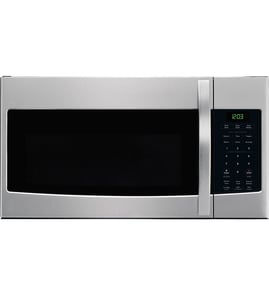

How many cubic feet is a Kenmore Model 72185032010 microwave?
The Kenmore microwave/hood combo model 72185032010 has a 1.7 cubic foot oven capacity. This is the interior cooking space, not the exterior size, and it helps you judge what dish sizes and cookware heights will fit comfortably.
How to confirm capacity and fit
Use the capacity as a quick guide, then verify clearances and recommended cookware in the 72185032010 owner's manual.
- Measure your most-used dishes (diameter and height) before buying new cookware
- Leave space around food for steam and airflow for more even heating
- Avoid oversized, tall containers that can contact the ceiling or stirrer cover area
- If a dish rotates close to the walls, use a smaller plate or reduce load size
What 1.7 cu. ft. typically means in real use
Most 1.7 cu. ft. over-the-range microwaves handle everyday family portions and common casserole dishes.
| Item type | Typical fit in a 1.7 cu. ft. microwave | Practical tip |
|---|---|---|
| Dinner plate | Usually fits standard sizes | Center the plate on the turntable |
| Casserole dish | Often fits medium rectangular/oval dishes | Keep edges away from side walls |
| Tall mug/bowl | Usually fits | Watch for boil-over and splatter |
Why it matters
Capacity affects what you can cook and reheat efficiently. If you routinely heat large platters or tall containers, knowing the 1.7 cu. ft. capacity helps prevent turntable interference, uneven heating, and splatter cleanup.
Last updated: January 2026
Are all over-the-range microwaves 30 inches wide?
No. Most over-the-range microwaves are built to fit a standard 30-inch cabinet opening, but not all models are exactly 30 inches wide. For the most accurate fit details for Kenmore model 72185032010, confirm the cutout and mounting requirements in the 72185032010 installation guide.
What sizes are common (and what “30-inch” usually means)
Over-the-range microwaves are commonly marketed as “30-inch” because they’re designed for standard cabinetry, not because every unit measures exactly 30 inches.
- Many over-the-range units are designed for a 30-inch wide space
- Some models are slightly under 30 inches to allow easier installation
- Compact and specialty models can be narrower
- Height and depth vary a lot and can affect cabinet clearance and door swing
- Venting setup (recirculating vs. outside vent) can change what fits behind the unit
Fit checklist for Kenmore 72185032010
Use this quick checklist before ordering a replacement microwave or planning a swap.
| What to check | Why it matters |
|---|---|
| Cabinet opening width | Confirms the microwave will physically fit between cabinets |
| Bottom cabinet clearance | Prevents the door from hitting trim or cabinets |
| Depth to the wall | Helps avoid interference with ducting and power cord |
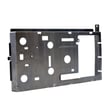
| Mounting plate and bolt pattern | Determines whether existing holes and bracket locations line up |
Why it matters
A microwave that is “30-inch class” can still install differently from another 30-inch class unit. Verifying the opening size, mounting plate location, and venting path helps you avoid re-drilling cabinets, misaligned top bolts, and airflow restrictions.
Related help
If you’re also deciding between models or planning a replacement, the 72185032010 owner's manual is a good place to confirm basic use and ventilation guidance.
Last updated: January 2026
Is Kenmore a good microwave?
Kenmore microwaves are a good choice for most homes because they typically deliver reliable everyday heating, practical features, and solid value. For the Kenmore 72185032010 microwave/hood combo, long-term performance depends most on proper installation, ventilation setup, and routine cleaning; see the 72185032010 owner's manual for model-specific use and care.
What “good” means for a microwave/hood combo
A microwave/hood combo has two jobs: cooking and venting. A unit is “good” when it heats evenly, runs quietly, vents smoke/steam effectively, and holds up to daily door use.
Common strengths we see with Kenmore microwaves:
- Good value for the features you get
- Straightforward cooking performance for reheat and defrost
- Widely available replacement parts for many models
- Practical venting and cooktop lighting on over-the-range units
What to check before you buy or keep using it
These quick checks tell you more than brand reputation alone:
- Fit and venting: confirm cabinet cutout and vent direction match your kitchen (recirculating vs. outside vent)
- Door feel: door should close firmly and consistently (no sagging)
- Fan performance: fan should move air well at each speed
- Turntable operation: tray should rotate smoothly without grinding
- Maintenance access: filters and light bulb should be easy to service
| What you care about | What to look for | Why it matters |
|---|---|---|
| Heating performance | Consistent reheat, no cold spots | Indicates healthy high-voltage system and good airflow |
| Venting | Noticeable smoke/steam capture | Keeps cabinets cleaner and reduces odors |
| Ease of upkeep | Washable grease filter, accessible bulb | Prevents overheating and keeps lighting bright |
| Durability | Solid door latch action | Reduces nuisance shutoffs and wear |
Parts that often affect “good performance” over time
If performance drops, these are common service items on microwave/hood combos:
- Grease filter 5230W1A012E (clogging reduces airflow and can increase heat buildup)
- Microwave light bulb 6912W1Z004A (cooktop visibility)
- Microwave door interlock switch 6600W1K001R (can cause no-start or intermittent operation)
Why it matters
A “good” microwave is really a combination of safe door operation, strong airflow, and consistent heating. Keeping filters clean and ensuring the unit is installed correctly protects the magnetron system and helps the vent fan do its job.
Last updated: January 2026
How big is a Kenmore microwave model 72185032010 in inches?
For Kenmore microwave/hood combo model 72185032010, use the dimension and clearance chart in the 72185032010 installation guide for the exact width, height, depth, and mounting measurements. Most 30-inch over-the-range microwaves are built to fit a 30-inch cabinet span and measure about 29 to 30 inches wide.
What “size” means for an over-the-range microwave
To make sure 72185032010 fits your cabinet and venting setup, focus on these measurements:
- Overall width, height, depth (outside dimensions)
- Top cabinet bolt spacing (hole locations for hanging bolts)
- Rear mounting plate footprint (where the plate lands on the wall)
- Minimum clearances above the cooktop and to surrounding cabinets
- Venting direction space (top vent, rear vent, or recirculating)
Typical size range (for planning)
These ranges help you estimate fit before you confirm the exact specs in the installation guide.
| Measurement | Typical range for 30-inch OTR microwaves | Why it matters |
|---|---|---|
| Width | 29 to 30 in | Matches a 30-inch cabinet opening |
| Height | 16 to 17.5 in | Affects cabinet clearance above the range |
| Depth | 15 to 17 in | Affects how far it projects from cabinets |
Fit checks we recommend before installing
- Measure the cabinet opening width and the bottom-of-cabinet to cooktop distance.
- Confirm whether you are venting outside or recirculating; duct alignment changes the required space.
- Compare your existing unit’s mounting plate and top bolt locations to the guide to avoid re-drilling.
- If the microwave is not heating after installation, review why is my microwave not heating for common causes.
Why it matters
A microwave can be “30-inch class” but still differ in height, depth, bolt spacing, and vent cutouts. Using the installation measurements for model 72185032010 prevents cabinet interference, misaligned ducting, and extra wall repairs.
Last updated: January 2026