Installation guide
 Owner’s manual
 Error Codes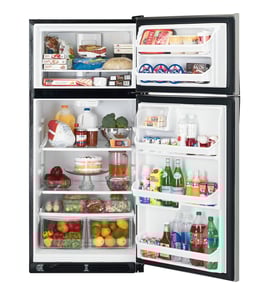




What are the disadvantages of a top mount fridge?
Top-mount refrigerators like the Frigidaire FFHT1817LS9 are reliable and space-efficient, but the main disadvantages are less convenient fresh-food access (you bend more), fewer premium organization features, and fewer built-in dispenser options compared with many bottom-freezer designs. See the FFHT1817LS9 owner's manual for model-specific features and setup.
Common disadvantages (what most owners notice)
- Fresh-food compartment is lower: you bend more to reach everyday items.
- Freezer is at eye level: great for frozen foods, but it pushes fresh foods down.
- Fewer “premium” storage options: many top-mounts have simpler bins, rails, and drawer layouts.
- Less common to have external water/ice: many top-mount models do not include a door dispenser.
- Door alignment and sealing matter more than you think: if the cabinet is not level, doors can swing or seal poorly.
Setup details that can reduce the downsides
A top-mount feels better day-to-day when it is installed correctly and the doors seal tightly. In the FFHT1817LS9 installation guide, we call out key checks like door sealing on all sides and leveling the cabinet with a slight tilt back.
- Keep the refrigerator level side-to-side
- Maintain a slight tilt back so doors close more easily
- Confirm the door gasket seals all the way around
- Leave proper air clearances (typical guidance is small side/top clearance and about 1 inch at the back)
Quick comparison: top-mount vs bottom-freezer
| Feature | Top-mount (FFHT1817LS9 style) | Bottom-freezer (typical) |
|---|---|---|
| Fresh-food access | Lower, more bending | Higher, easier access |
| Freezer access | Higher, easier access | Lower, more bending |
| Organization | Often simpler | Often more flexible |
| Dispensers | Less common | More common |
Why it matters
Choosing the right layout affects comfort and food waste. If you use fresh foods daily, bending for produce and leftovers can be the biggest annoyance. If you use frozen foods often, a top-mount can feel more convenient.
Last updated: January 2026
Is a top mount or bottom mount fridge better?
For most households, a bottom-mount refrigerator is “better” for day-to-day convenience because the fresh-food section sits at eye level, so you bend less. A top-mount like the Frigidaire FFHT1817LS9 is often a better value and can be simpler to live with if you use the freezer frequently.
Quick comparison: top mount vs bottom mount
| Feature | Top mount (freezer on top) | Bottom mount (freezer on bottom) |
|---|---|---|
| Fresh-food access | Lower; more bending | Higher; less bending |
| Freezer access | Easy for frequent freezer use | Drawer style; can be easier to organize |
| Typical cost | Usually lower | Usually higher |
| Complexity | Often simpler layouts | Often more features and parts |
When a top-mount fridge is the better choice
A top-mount refrigerator like FFHT1817LS9 is a strong fit when you want straightforward storage and lower upfront cost.
- You use the freezer daily and want it at chest or eye level
- You prefer a simpler design with fewer “extras” to maintain
- You want a budget-friendly replacement that still cools reliably
- You have tighter kitchen space and want a classic door swing layout
When a bottom-mount fridge is the better choice
Bottom-mount models are built around fresh-food convenience.
- You cook often and access the refrigerator section many times per day
- You want less bending for produce, dairy, and leftovers
- You like freezer drawers for grouping frozen foods
- You want easier access to crisper drawers and shelves
Why it matters
The “better” style is the one that matches how you actually use food storage. If you are in the refrigerator section far more than the freezer, bottom-mount ergonomics usually win. If you are in the freezer constantly, top-mount access can be more practical.
Setup tip that affects either style
Proper leveling and door sealing matter more than mount style for temperature stability and energy use. We recommend following the leveling and door-seal checks in the FFHT1817LS9 installation guide.
Last updated: January 2026
What is the life expectancy of a top freezer refrigerator?
A top-freezer (top-mount) refrigerator like the Frigidaire FFHT1817LS9 typically lasts 10 to 15 years. With good airflow, clean condenser coils, and tight door seals, many units reach the upper end of that range while maintaining stable fresh food and freezer temperatures.
What affects lifespan the most
- Condenser coil cleanliness: dust buildup makes the compressor run hotter and longer.
- Door seal condition: air leaks force longer run times and can cause frost issues.
- Leveling and door alignment: helps doors close fully and prevents gasket wear.
- Temperature settings and adjustments: make changes gradually and allow time to stabilize.
- Usage habits: frequent door openings and overpacking reduce airflow.
Maintenance checklist (simple, high impact)
Use this schedule to keep your FFHT1817LS9 running efficiently.
| Task | How often | Why it helps |
|---|---|---|
| Clean condenser area | Every 6 to 12 months | Reduces compressor workload |
| Check door seals for full contact | Monthly | Prevents warm air leaks |
| Confirm cabinet is level and stable | After moving, then yearly | Improves sealing and drainage |
| Wait before re-adjusting controls | 24 hours between changes | Prevents over-correcting temps |
Signs your refrigerator is nearing end of life
- Compressor runs almost constantly, even after coil cleaning
- Temperatures swing (food freezing in fresh food section or freezer warming)
- Excess frost or recurring defrost problems
- Door won’t seal consistently, even after leveling and alignment
- Unusual noises that persist beyond normal operating sounds
Model-specific tips for FFHT1817LS9
- Follow the leveling guidance in the FFHT1817LS9 installation guide; the cabinet should sit solidly on all corners and be slightly tilted front-to-back so doors close reliably.
- If you notice air leaks or moisture around the door, a worn gasket is a common cause; see Frigidaire refrigerator door gasket (black) 241872512 as an example of a correct-fit replacement option for this model.
Why it matters
A refrigerator that seals well and breathes properly runs fewer hours per day. That reduces wear on the compressor and defrost system, which are the most expensive components to repair.
Last updated: January 2026
What is the most common problem with a Frigidaire refrigerator?
For the Frigidaire FFHT1817LS9 top-mount refrigerator, the most common issue we see is a cooling complaint (warm fresh food section, weak freezing, or temperature swings). In many cases, the fix is basic airflow and sealing: correct control settings, good door seal contact, and clean heat rejection.
Most common causes to check first
Start with the items that most often create “not cold enough” symptoms and are easiest to confirm.
- Verify the temperature controls and then wait a full 24 hours after any change (this is normal for this style of refrigerator).
- Make sure the doors seal completely to the cabinet on all sides.
- Confirm the refrigerator is level and tilted about 1/4 inch (6 mm) front to back so doors close reliably.
- Check for blocked vents and overloaded shelves that restrict air circulation.
- If equipped with an ice maker, confirm the water supply is connected and there are no leaks at connections (recheck after 24 hours).
Quick symptom-to-likely-cause guide
| Symptom | Most likely cause | What to do next |
|---|---|---|
| Fresh food warm, freezer OK | Airflow restriction or door not sealing | Clear vents, reduce overpacking, check gasket contact |
| Freezer warm too | Dirty condenser area, poor airflow, or fan issue | Clean condenser area, listen for fan operation |
| Frost buildup, temps drift | Door left ajar or sealing problem | Inspect gasket, level cabinet, confirm doors close |
| Ice maker not working (if equipped) | Water supply not connected or turned off | Connect supply, check for leaks, turn ice maker ON |
Parts that commonly relate to cooling and sealing
If you confirm a mechanical issue, these are common repair areas for this model family.
- Frigidaire refrigerator door gasket (black) 241872512 (torn, warped, or not sealing)
- Refrigerator evaporator fan motor 241854301 (no airflow from freezer to fresh food)
- Refrigerator defrost heater 242044008 (heavy frost restricting airflow)
- Refrigerator defrost bi-metal thermostat 5303918202 (defrost system not cycling correctly)
Why it matters
Cooling problems usually come from airflow, leveling, or sealing. Fixing those early helps prevent food spoilage, reduces compressor run time, and keeps temperatures stable.
Helpful reference
Use the FFHT1817LS9 installation guide to confirm leveling targets, door seal checks, and the 24-hour adjustment guidance.
Last updated: January 2026