Owner’s manual
 View engine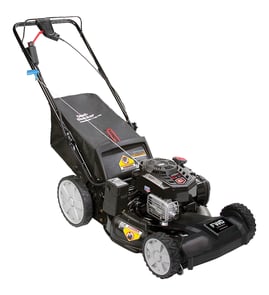




Are gas lawn mowers being phased out?
Gas walk-behind mowers like the Husqvarna 96795910100 are not disappearing overnight, but new-sales restrictions in some areas and growing demand for battery mowers are gradually reducing how common gas models are for typical residential mowing.
What “phased out” usually means
Most changes happen in stages, and they vary by location:
- Some regions restrict new sales of certain gas-powered outdoor equipment.
- Existing gas mowers can typically still be used, maintained, and repaired.
- Retailers may stock fewer gas models as electric options expand.
- Commercial and heavy-duty use often keeps gas equipment in service longer.
For model-specific operation and safety guidance (fuel handling, muffler heat, spark arrester notes, blade safety), follow the 96795910100 owner's manual.
What to do if you plan to keep your gas mower
Keeping a gas mower reliable is mostly about routine maintenance and safe operation:
- Use fresh fuel and avoid long-term storage with fuel in the tank.
- Keep the blade in good condition; replace damaged blades immediately.
- Inspect the muffler regularly and keep it secured (hot mufflers are a burn and fire hazard).
- Disconnect the spark plug wire before maintenance.
- If you mow near dry brush or unimproved land, confirm spark arrester requirements for your area.
If you are replacing worn hardware during service, match what your mower uses. Common examples on this model’s parts list include the lawn mower nut 532409149 and the Husqvarna e-ring 812000058.
Gas vs. battery: quick comparison
| Feature | Gas walk-behind mower | Battery walk-behind mower |
|---|---|---|
| Maintenance | More (fuel, oil, tune-ups) | Less (battery care, blade) |
| Noise and exhaust | Louder; exhaust present | Quieter; no exhaust |
| Runtime | Refill and keep going | Limited by battery capacity |
| Long-term availability | Gradually declining in some markets | Increasing in most markets |
Why it matters
If your area tightens rules on new gas mower sales, the biggest impact is future purchasing choices, not your ability to keep a working Husqvarna 96795910100 running. Having the correct parts and following safe service steps helps extend the mower’s usable life.
Last updated: January 2026
What are the most common issues with 96795910100?
The most common problems we see on the Husqvarna 96795910100 gas walk-behind mower are drive system issues (won’t self-propel or slips), poor cutting (uneven cut or clumping), and starting or control-handle problems. Use the 96795910100 owner's manual for the correct adjustments and safety steps.
Common symptoms and what usually causes them
- Won’t self-propel or drive is weak: worn or stretched ground drive belt, idler pulley wear, transmission wear, or a loose cable/adjustment.
- Uneven cut or poor mulching/bagging: dull or bent blade, deck baffle damage, deck packed with wet grass, or cutting height set unevenly.
- Vibration or loud rattling: damaged blade, loose fasteners, or debris wrapped around the blade area.
- Grass bagging problems: bag frame not seated, rear door not closing, or airflow restricted by buildup.
- Control handle issues: bail control bar not returning smoothly or cable routing/retention problems.
Parts on this model that often relate to these issues
If your symptom matches, these model-specific parts are common inspection points:
- Lawn mower ground drive belt, 3/8 x 63-1/2-in 580364609 for slipping or no-drive complaints
- Lawn mower idler pulley 587973001 or Husqvarna lawn mower idler pulley 587969201 for squeal, belt wear, or inconsistent drive
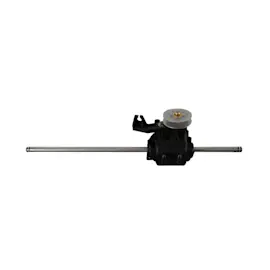
- Lawn mower transmission assembly 586137601 when drive is lost even with a good belt and pulleys
- Blade.21.rea 586859604 for poor cut quality or vibration
- Husqvarna lawn mower deck baffle 587081001 when mulching/bagging performance drops
Quick checks we recommend before replacing parts
- Shut off the engine, disconnect the spark plug wire, and tip the mower safely (per the manual).
- Clear packed grass from the deck and discharge area.
- Inspect the blade for bends, cracks, and heavy nicks.
- Check belt condition: glazing, cracking, fraying, or slack.
- Spin pulleys by hand; they should turn smoothly without wobble.
Symptom-to-fix guide
| Symptom | Most likely area | Typical fix |
|---|---|---|
| No self-propel | Belt/pulleys/cable | Adjust cable; replace belt or idler pulley |
| Uneven cut | Blade/deck height | Sharpen or replace blade; level height |
| Clumping | Deck buildup/baffle | Clean deck; inspect baffle |
| Excess vibration | Blade/fasteners | Replace blade; tighten hardware |
Why it matters
Drive and cutting problems usually get worse quickly on a walk-behind mower; a slipping belt can overheat and wear pulleys, and a damaged blade can stress the crankshaft and deck components.
Last updated: March 2026
What octane gas should I use in my lawn mower?
Use fresh, clean, regular unleaded gasoline with a minimum of 87 octane in your Husqvarna gas lawn mower model 96795910100. Do not mix oil with gasoline, and buy only what you can use within about 30 days to keep fuel fresh (see the 96795910100 owner's manual).
Fuel type and fueling tips
For the best starting and smooth running, we recommend:
- Use regular unleaded fuel (87 octane minimum).
- Use fresh fuel; purchase amounts you can use within 30 days.
- Do not mix oil into the gasoline (this is not a 2-stroke fuel mix).
- Fill the tank to the bottom of the filler neck; do not overfill.
- Refuel only after the engine is off and cooled for a few minutes.
What to use (quick guide)
| Fuel choice | OK for 96795910100? | When it makes sense |
|---|---|---|
| Regular unleaded 87 | Yes (recommended) | Normal mowing and storage cycles |
| Mid-grade 89 | Yes | If that is what is available; no special benefit needed |
| Premium 91-93 | Yes | Not required; typically no performance gain in small engines |
| Old fuel (over ~30 days) | No | Can cause hard starting and rough running |
| Gas mixed with oil | No | Can foul the spark plug and smoke excessively |
Why it matters
Using the correct octane and keeping fuel fresh helps prevent hard starting, surging, and poor power under load. Fresh 87-octane regular unleaded is the simplest way to protect the carburetor and keep your Husqvarna mower running consistently.
Last updated: January 2026