 Owner’s manual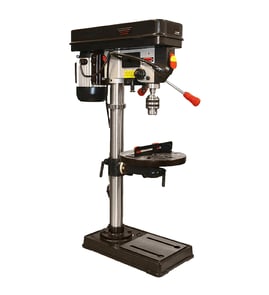

What are 5 important rules for a drill press?
For the Craftsman drill press model 12434985, five important rules are: remove adjusting keys before starting, keep guards in place, clamp the work securely, wear proper eye protection (and avoid loose clothing or gloves), and unplug the drill press before changing bits or doing any setup/adjustments. See the owner's manual for the full safety list.
5 rules we recommend following every time
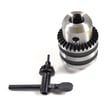
- Remove the chuck key and any adjusting wrenches before turning the drill press ON.
- Keep guards in place and working; do not operate with missing or damaged guards.
- Secure the workpiece with clamps or a vise; never drill freehand.
- Wear eye protection (add a dust mask and hearing protection when needed); do not wear gloves, neckties, or loose clothing.
- Turn the switch OFF and unplug before installing/removing a drill bit, accessory, or attachment, and before any setup work.
Quick “before you drill” checklist
| Step | What to do | What it prevents |
|---|---|---|
| Clear keys | Remove chuck key, hex keys, wrenches | Accidental ejection and injury |
| Clamp it | Clamp or vise the workpiece to the table | Spinning workpiece, bit grab |
| Lock it | Tighten table/head locks | Movement and misalignment |
| PPE | Safety glasses (plus mask/ear protection as needed) | Eye and dust exposure |
| Power control | Unplug for bit changes and adjustments | Accidental starting |
Why it matters
A drill press can “grab” a bit and spin the workpiece at high speed if the material is not clamped or if the wrong setup is used. Following these rules reduces kickback, broken bits, and hand injuries while improving hole accuracy.
Extra safety limits called out for this model
- Keep hands out of the drill bit path; avoid awkward hand positions.
- Do not use extra-long bits beyond the manual’s stated limits.
- Do not use prohibited accessories (such as fly cutters, wire wheels, router bits, or rotary planers) on this drill press.
Last updated: February 2026
What is a good horsepower for a drill press?
A good horsepower depends on what you drill most often. For the Craftsman drill press model 12434985, the operator’s manual lists a 1/2 HP motor, which is a solid choice for typical home shop drilling in wood and light to moderate metal when you use the correct bit and speed settings (see the owner's manual).
How to choose the right HP for your work
Horsepower matters most when you’re using larger bits, drilling harder metals, or pushing higher feed pressure.
- 1/3 to 1/2 HP: general DIY, woodworking, plastics, light metal drilling
- 3/4 HP: frequent drilling in metal, larger twist bits, more demanding shop use
- 1 HP and up: heavy-duty drilling, larger hole saws/Forstner bits, tougher materials and longer duty cycles
- If you often drill large diameter holes, power helps, but clamping and speed selection matter just as much
- More HP does not replace sharp bits, correct RPM, and proper feed rate
What your Craftsman 12434985 is built to handle
From the manual, this drill press is designed around a 1/2 HP motor and a 12-speed pulley system.
| Spec (model 12434985) | What it means for you |
|---|---|
| Motor: 1/2 HP | Good all-around power for home shop drilling |
| Speeds: 355 to 3065 RPM (12 speeds) | Lets you slow down for steel, speed up for wood |
| Spindle travel: 2.44 in. | Works well for most common drilling depths |
| Chuck capacity: 0.63 in. (16 mm) | Accepts many common bit sizes |
Getting better results without “more horsepower”
These steps reduce stalling, chatter, and bit grabbing, especially in metal.
- Use the recommended speed for the bit size and material (the manual includes a speed chart)
- Clamp the workpiece for large holes so the bit cannot grab and spin the material
- Let the spindle reach full speed before contacting the work
- If you hear unusual noise or feel excessive vibration, stop and unplug before adjusting
- Use sharp bits and cutting fluid for steel and aluminum (when appropriate)
Why it matters
Choosing the right horsepower helps you drill cleaner holes with less burning, less bit wandering, and fewer stalls. Just as important, matching RPM to the material improves safety and protects the motor, belts, and chuck.
Last updated: February 2026
Where can I buy Craftsman replacement parts?
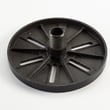
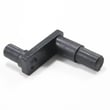
You can buy replacement parts for your Craftsman drill press model 12434985 through our model-based parts lookup and diagrams; the fastest way to get the right item is to match the part name and reference number shown in the owner's manual.
Best way to get the correct part for model 12434985
We recommend using the model number first, then confirming the part in the parts diagram/parts list so you do not order a similar-looking part that will not fit.
- Find the model number (12434985) on your drill press ID label
- Use the parts diagram and parts list to identify the exact item you need
- Match the part description to your symptom (for example, power issue vs. feed handle issue)
- Verify electrical items by testing before replacing (cords, terminals, switches)
- Keep hardware grouped by assembly (handles, collars, clamp ring, bolts) to avoid mix-ups
Common drill press parts people replace
These are frequently involved when a drill press will not run, runs intermittently, or has control/adjustment issues.
| Symptom | Parts to check first | What to look for |
|---|---|---|
| Won’t power on | Line cord, terminals, wiring | Cuts, loose connections, heat damage |
| Power cuts out | Cord/connection points | Intermittent continuity, loose spades |
| Feed/adjustment feels rough | Handle assembly, gear shaft, pin | Binding, missing fasteners, wear |
Quick safety and troubleshooting tips
- Unplug the drill press before removing covers or touching wiring
- If you suspect an electrical problem, test for continuity before buying parts
- Replace damaged wires and connectors instead of taping over breaks
Helpful DIY reference
If you are diagnosing a power or wiring issue, our how to use a multimeter to test electrical parts video walks through safe, basic testing steps.
Why it matters
Ordering by model and diagram prevents wrong-part returns and gets your Craftsman drill press back to accurate, safe operation faster, especially for electrical parts and handle/feed components.
Last updated: February 2026
Who made Craftsman drill presses?
Craftsman drill presses were made by multiple OEM manufacturers over the years because Craftsman is a brand, not a single factory. For Craftsman model 12434985, the operator’s manual identifies the tool and lists Sears Brands Management Corporation for documentation and warranty, but the actual OEM builder varies by production run; use the model and data plate to identify it. See the 12434985 owner's manual for the model identification and specifications.
How we identify the maker on a Craftsman drill press
Use the information on the machine first, then match it to the documentation.
- Find the full model number on the nameplate (12434985 for this unit).
- Check for a manufacturer line such as “Manufactured for” or “Made in” on the data plate.
- Record any additional codes (date code, serial number, or factory code) printed near the model.
- Compare the nameplate details to the parts list and diagrams in the manual.
- If you are sourcing parts, match by model number and the exact part description, not by appearance.
What the 12434985 manual confirms (and what it does not)
The manual is excellent for specs, setup, and troubleshooting; it is not intended to name the OEM manufacturer.
| Manual content | What it helps you do |
|---|---|
| Model identification (124.34985) | Confirms you have the correct documentation for your drill press |
| Specifications | Verifies capacity, speeds, and key dimensions for setup and use |
| Parts list and diagrams | Helps match the correct components when servicing |
| Warranty/document owner info | Tells you who issued the warranty paperwork (not the factory) |
Model-specific specs we use to match parts and accessories
From the manual for Craftsman 12434985:
- Motor: 1/2 HP
- Speeds: 12 speeds (355 to 3065 RPM)
- Spindle travel: 2.44 in. (62 mm)
- Spindle taper: MT2
- Chuck capacity: 0.63 in. (16 mm)
Why it matters
Craftsman drill presses can look similar across years, but they can use different chucks, pulleys, switches, belts, and quill parts. Identifying by model number and specs prevents mismatched parts and unsafe setups.
Last updated: February 2026