Owner’s manual


How to date a Craftsman table saw?
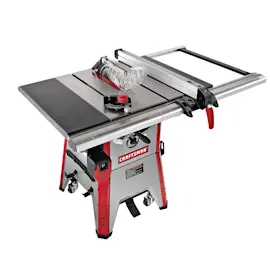
On a Craftsman table saw, the most reliable way to date it is by using the serial number and the manufacturer code on the saw’s ID label; for model 137.218073, we recommend confirming the serial format and label location in the Craftsman 137218073 operator’s manual.
Look for the ID label (data plate) on the saw body, typically:
- On the rear of the saw cabinet or base
- Near the motor housing area
- On the leg set or stand assembly
- Near the switch box area
Craftsman table saw serial formats vary by manufacturer and era. A common pattern is that the first two digits of the serial number indicate the year, but you should confirm the format on your specific label before relying on it.
- If the serial begins with two digits that look like a year (example:
09xxxxxx), that often indicates 2009 - Some labels include a date code separate from the serial number
- The model number (137.218073) identifies the design family, not the build date
Use these checks before you finalize the date:
- Make sure you are reading the serial number, not the model number
- If the “year” would be in the future or unrealistic, look for a different date code on the label
- If the label includes a manufacturer prefix or letters, the year may not be the first two characters
| Item | What it identifies | What it does not identify |
|---|---|---|
| Model number 137218073 | Saw design and parts compatibility | Exact build month/year |
| Serial number | Production run and often the build date | Parts list by itself |
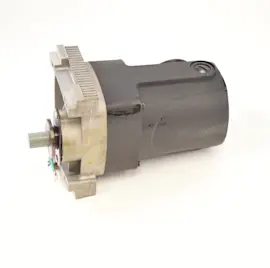
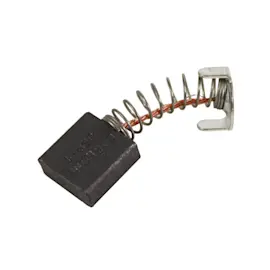
Dating your Craftsman table saw helps us match the correct parts list, confirm motor and switch variations, and avoid ordering the wrong items when you service wear components like carbon brushes, power cord, or the switch assembly.
Last updated: February 2026
How to change old Craftsman table saw blade?
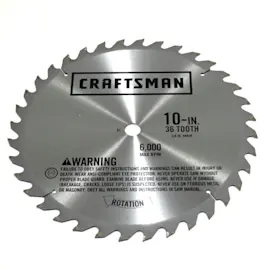
To change the blade on your Craftsman table saw model 137218073, unplug the saw, remove the table insert and blade guard, then loosen the arbor nut with the supplied blade wrenches and swap in the new blade with the teeth facing the correct direction. Use the steps in the 137218073 owner's manual for the exact guard and insert removal details.
- Turn the switch OFF and remove the switch key
- Unplug the power cord from the outlet
- Wear cut-resistant gloves when handling the blade
- Keep the blade at maximum height only while you are working, then lower it when finished
- Reinstall the blade guard, riving knife, anti-kickback pawls, and table insert before cutting
- Remove the table insert, then raise the blade to maximum height using the elevation handwheel.
- Remove the blade guard and anti-kickback pawls assembly.
- Use the two blade wrenches stored on the saw (the manual shows the storage location) to hold the arbor and loosen the arbor nut.
- Remove the arbor nut and outer washer/flange, then slide the old blade off the arbor.
- Install the new blade on the arbor.
- Reinstall the washer/flange and arbor nut; tighten securely (snug plus a firm wrench pull).
- Reinstall the guard assembly and table insert; verify the blade spins freely by hand before plugging in.
- Blade is seated flat on the arbor (no wobble)
- Guard and riving knife are aligned and not rubbing the blade
- Table insert sits flush with the table
| Check | What you want | If not |
|---|---|---|
| Blade direction | Teeth point toward the front at the top of the blade | Flip the blade around |
| Free spin | No contact with insert/guard | Re-seat insert, recheck guard/riving knife |
| Cut quality | Smooth, square cut | Clean/replace blade; check alignment |
A correctly installed blade and properly reinstalled safety assemblies reduce binding and kickback risk, and they help your Craftsman 137218073 make cleaner, more accurate rip cuts and crosscuts.
For more detail and photos, use our guide: how to replace a table saw blade.
Last updated: February 2026
How do I get rid of an old table saw?
If you’re getting rid of a Craftsman table saw model 137218073, the safest approach is to remove the blade, secure or remove the switch key, and then choose a disposal path that keeps the saw out of the trash stream when possible (donation, resale, or recycling).
- Give it away or sell it locally: Many DIYers want a starter saw for parts or light use.
- Donate (if it runs and has basic guards): Consider community workshops, schools, or maker spaces.
- Recycle as e-waste/scrap: Most of the saw is metal; the motor and corded components often qualify for e-waste handling.
- Municipal bulky-item pickup: Use this when donation or recycling is not available.
- Parts salvage: Keep accessories (rip fence, miter gauge, blade guard) together so the next owner can use it safely.
We recommend doing these steps based on the safety and maintenance guidance in the Craftsman 137218073 owner’s manual.
- Turn the switch OFF and unplug the saw.
- Remove the switch key (prevents accidental starting).
- Remove the blade and store it separately.
- Remove loose accessories (rip fence, miter gauge, guard assembly) and bag the hardware.
- Vacuum or clean out sawdust buildup (helps reduce mess and fire risk during transport).
| Your saw’s condition | Best choice | Why |
|---|---|---|
| Runs, cuts straight, has guard parts | Donate or sell | Highest reuse value |
| Runs but needs tune-up | Give away with disclosure | Someone may repair it |
| Won’t start, trips breaker, or smokes | Recycle/e-waste | Safer than resale |
| Missing key safety parts | Recycle or parts-only giveaway | Reduces injury risk |
Table saws are heavy, have sharp components, and can start unexpectedly if the switch is bumped. Disabling the saw (unplugging and removing the switch key) and removing the blade helps protect you during loading and protects the next owner during setup.
If you want to include a helpful note for the next owner, point them to how to use a table saw safely and how to replace a table saw blade.
Last updated: February 2026
Can you cut a 4x4 with a 10 inch table saw?
Yes, a 10-inch table saw like the Craftsman 137218073 can cut a 4x4 in a single pass when the blade is set to full height; most 10-inch saws reach about 3-1/2 inches of max cut depth, which matches a standard 4x4’s actual thickness.
- Confirm the blade is a 10-inch blade and is sharp and clean.
- Set blade height so the gullets clear the top of the wood (typically about 1/4 inch above the workpiece).
- Use the riving knife and blade guard for through cuts.
- Use a push stick or push block to keep hands away from the blade.
- Support the 4x4 so it stays flat to the table and tight to the fence.
Your saw is designed to be used with a matched blade and riving knife setup; the manual notes a 10-inch blade and specifies that the blade kerf must be wider than the riving knife thickness. For normal through cuts, keep the guard and anti-kickback parts installed; remove them only for specific non-through operations.
| Cut type | Can you use blade guard and anti-kickback? | Typical example |
|---|---|---|
| Through cut | Yes (recommended) | Cutting a 4x4 to length |
| Non-through cut | No (removed for this operation) | Grooves, rabbets |
A 4x4 is thick enough to load the motor and increase binding risk if the blade is dull or the fence is out of alignment. Using the riving knife, proper blade height, and push tools helps reduce kickback and improves cut quality.
- Use our how to replace a table saw blade steps if the blade is worn or damaged.
- If the cut is not square, follow table saw bad angle cuts to check alignment.
For model-specific operating and safety details, follow the Craftsman 137218073 owner’s manual.
Last updated: February 2026
How much is a Craftsman 10 professional table saw?
Pricing for a Craftsman 10-inch “professional” table saw varies widely by condition, included accessories (stand, rip fence, blade guard), and whether it’s new or used. For the Craftsman model 137.218073, we recommend using the exact model number to compare current listings and to confirm you’re pricing the same saw configuration shown in the Craftsman 137218073 operator’s manual.
- Exact model number: 137.218073 (often written as 137.218073 on the nameplate)
- Included safety parts: blade guard assembly and riving knife (commonly removed or missing)
- Stand and mobility parts: leg set, wheels, locking handles
- Cutting features: Laser Trac guide (battery-powered laser line) and working switch box
- Blade setup: this saw uses a 10-inch blade; blade kerf must match the riving knife requirements
These ranges help you sanity-check a listing; local demand and condition can move the number.
| Condition / package | Typical range | Notes |
|---|---|---|
| Used, tool only | $75 to $150 | Often missing guard/riving knife or needs alignment |
| Used, complete with stand and guards | $150 to $300 | Best value if all safety parts are included |
| Refurbished or “like new” | $250 to $450 | Price depends heavily on accessories and warranty |
Two “Craftsman 10-inch table saw” listings can be completely different tools. Matching the 137218073 model and verifying key assemblies (blade guard, riving knife, rip fence) prevents overpaying for a saw that needs immediate parts or safety fixes.
From the manual for model 137.218073:
- Supplied blade: 10-inch diameter
- Blade body thickness: 0.07 in.; kerf: 0.10 in.
- Riving knife thickness: 0.09 in.
Last updated: February 2026
Are Craftsman table saws any good?
Yes. Craftsman table saws are a solid choice for most DIYers and hobby woodworkers because they deliver reliable basic ripping and crosscutting at a reasonable price; with the Craftsman 137218073 specifically, following the setup, adjustment, and safety steps in the Craftsman 137218073 operator’s manual is what makes it cut accurately and run safely.
A table saw is only as good as its alignment, blade condition, and how it’s used. This model is designed for wood and wood-like products, and it’s built around standard table saw safety systems (blade guard, riving knife, anti-kickback pawls) that should be used for through-cuts.
Where it performs well
- Accurate basic cuts after proper assembly and blade adjustment
- Portable, space-friendly footprint with a leg set
- Good capability for common DIY tasks (ripping, crosscutting, sheet goods breakdown)
Where owners often need extra attention
- Fence and miter gauge alignment (critical for straight, repeatable cuts)
- Dust management (vacuuming the dust port and clearing interior sawdust)
- Blade selection and blade changes for cleaner cuts
- Mount the saw securely on its stand or a bench so it cannot shift during a cut.
- Use the blade guard, riving knife, and anti-kickback pawls for through-sawing.
- Never cut freehand; guide the work with the rip fence or miter gauge.
- Use a push stick or push block for narrow rips.
- Keep the interior clear of sawdust; connect a shop vacuum to the dust port.
| Goal | Do this first | When to consider upgrades |
|---|---|---|
| Straighter rips | Align fence and blade; verify blade is sharp | Add outfeed support for long stock |
| Cleaner cuts | Install a quality blade matched to material | Add better dust collection setup |
| Safer handling | Use guard, riving knife, push stick | Add featherboards for control |
For step-by-step blade service, use our how to replace a table saw blade guide.
Most “bad saw” complaints come from misalignment, a dull blade, or unsafe technique that causes burning, wandering cuts, or kickback. A properly adjusted Craftsman 137218073 with the correct blade and safe feed control produces dependable results.
Last updated: February 2026