Owner’s manual
 Error Codes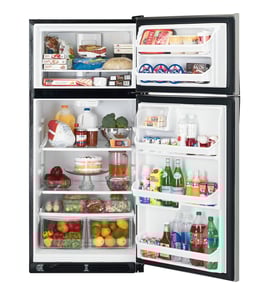





What is the life expectancy of a GE refrigerator?
A GE refrigerator like model GTS18HGNFRWW typically lasts 12 to 15 years. With consistent care (clean condenser coils, keep door gaskets sealing, and maintain proper temperatures), many top-mount refrigerators reach the upper end of that range.
What affects refrigerator lifespan the most
A refrigerator’s compressor and sealed system do the heavy lifting, but day-to-day maintenance usually determines how hard those components have to work.
- Keep condenser coils clean so the compressor runs cooler and cycles less
- Make sure doors close fully and gaskets seal all the way around
- Avoid overpacking; blocked airflow makes cooling uneven
- Set stable temps (about 37°F fresh food, 0°F freezer)
- Level the cabinet so doors self-close and don’t hang open
- Fix unusual noises early (fans, ice maker, or defrost issues)
Quick maintenance schedule (simple and effective)
| Task | How often | Why it helps |
|---|---|---|
| Clean condenser coils | Every 6 to 12 months | Reduces compressor run time and heat stress |
| Check/clean door gaskets | Every 3 to 6 months | Prevents warm air leaks and frost buildup |
| Verify temperatures | Monthly | Prevents overcooling and food spoilage |
| Clear vents and airflow paths | Ongoing | Keeps evaporator airflow consistent |
Common “wear” parts that can shorten life if ignored
When airflow or defrost performance drops, the refrigerator runs longer and harder, which reduces overall life.
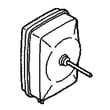
- Evaporator fan issues (warm fridge, noisy freezer): evaporator fan motor WR60X31522
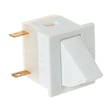
- Door not sensing closed (lights stay on, warm temps): refrigerator door switch WR23X31507
- Frost buildup from defrost problems: refrigerator defrost heater assembly WR55X31113
- Poor door seal causing moisture and frost: refrigerator freezer door gasket WR14X27230
Why it matters
If your GE top-freezer refrigerator is running constantly, frosting up, or struggling to hold temperature, it is usually a maintenance or airflow problem first. Correcting that early reduces compressor strain and helps you get the full expected service life.
For model-specific care and cleaning guidance, use the GTS18HGNFRWW owner’s manual.
Last updated: February 2026
What is the most common problem with a GE refrigerator?
The most common problem we see with GE refrigerators like model GTS18HGNFRWW is a cooling complaint (warm fridge, warm freezer, or temperature swings). In most cases, the root cause is restricted airflow or heat not being removed efficiently, such as dirty condenser coils, blocked air vents, or an evaporator fan issue.
Most common symptoms and what they usually point to
- Fridge section warm but freezer cold: airflow problem (blocked vents, frosted evaporator area, weak evaporator fan)
- Both sections warm: condenser coils clogged, condenser fan problem, or sealed system/compressor issue
- Temps fluctuate: door not sealing, frequent door openings, or fan/defrost problems
- Frost buildup on back wall of freezer: defrost system issue (heater, thermostat/sensor, control)
- Water or ice maker complaints (on some models): water supply/valve, frozen line, or low water pressure
Quick checks we recommend first (no tools)
- Set controls to the recommended mid settings and give the unit 24 hours to stabilize.
- Make sure food packages are not blocking return vents and supply vents.
- Clean condenser coils and confirm the condenser area has good airflow.
- Check door closing and gasket contact all the way around.
- Listen for the evaporator fan running when the compressor is running.
Parts that commonly relate to cooling problems on this model
If the basic checks do not fix the issue, these parts are common suspects on GTS18HGNFRWW:
| Symptom | Common part involved | Example part for this model |
|---|---|---|
| Warm fridge, freezer OK | Evaporator fan not moving air | Evaporator fan motor WR60X31522 |
| Frosted freezer back panel | Defrost heat not clearing frost | Refrigerator defrost heater assembly WR55X31113 |
| Water not filling ice maker (if equipped) | Valve not opening consistently | Refrigerator water inlet valve WR57X32213 |
Why it matters
Cooling issues usually start small (longer run times, mild warming) and then get worse as airflow gets restricted or frost builds up. Catching it early helps protect food, reduces energy use, and prevents secondary problems like ice buildup and fan noise.
Model-specific tip from the manual
For models with an ice maker/water line, follow the water line guidance and safety notes in the GTS18HGNFRWW owner’s manual (for example, use cold water only and follow the recommended installation practices).
Last updated: February 2026
What brand of refrigerator has the least problems?
For fewer refrigerator problems, we see the best results with mainstream brands that keep the design simple; in top-freezer models like the GE GTS18HGNFRWW, avoiding complex in-door ice and water features reduces the most common service calls. Use the GTS18HGNFRWW owner's manual to confirm features and care steps for your exact refrigerator.
Brands that typically have fewer service issues
These brands are consistently strong choices for reliability and long-term parts support:
- Whirlpool: dependable in basic top-freezer and side-by-side designs
- GE: strong reliability in traditional configurations; broad service network
- Bosch: often reliable, especially in simpler layouts
- Sub-Zero (premium): long service life, but higher purchase and repair costs
What matters more than the brand name
In real-world repairs, the feature set and maintenance habits drive most “problem” calls.
- Choose fewer water and ice components to reduce leaks, clogs, and no-ice complaints
- Keep door gaskets clean and sealing to prevent frost and temperature swings
- Allow about 24 hours after installation or a power outage for temperatures to stabilize
- Expect some modern compressor and fan noises; many are normal operating sounds
- Keep vents and airflow paths clear so the evaporator fan can circulate cold air properly
Quick comparison: simpler designs usually win
| Configuration | Typical problem rate | Common reason |
|---|---|---|
| Top-freezer, no dispenser | Lowest | Fewer valves, lines, switches, and seals |
| Ice maker only (no door dispenser) | Low to medium | Adds components but stays simpler |
| In-door ice and water | Highest | More moving parts and water-system failure points |
Why it matters
Most refrigerator breakdowns trace back to added complexity (ice and water systems), poor door sealing, or restricted airflow. Keeping the design simple and following the care guidance in your manual reduces those failure points.
If you are diagnosing water or ice issues on a GE refrigerator, our how to diagnose a faulty refrigerator water inlet valve guide helps you pinpoint whether the supply, valve, or ice maker is causing the symptom.
Last updated: February 2026