 Error Codes





What brand of dryer has the least problems?
No brand is “problem-free,” and we can’t identify a single least-problem dryer brand from the model-specific information for GE model GFD65ESPN1SN. In practice, reliability depends more on dryer type (electric vs. gas), venting, load habits, and maintenance than the logo on the door.
What we recommend (reliability-first)
To minimize problems across any brand, we focus on the items that most often cause service calls:
- Keep the lint screen and exhaust path clean to prevent overheating and long dry times.
- Use the correct cycle and avoid overloading; heavy loads strain the drum support system.
- Level the dryer to reduce vibration and premature wear.
- Address new noises early; worn rollers and idlers can damage the belt.
- Fix airflow restrictions first when clothes take too long to dry.
Common “problem areas” that matter more than brand
Even a well-built dryer can act up if these areas are neglected.
| Area | What you might notice | Typical fix path |
|---|---|---|
| Airflow and venting | Long dry times, hot cabinet | Clean venting, check duct routing |
| Drum support system | Thumping, squealing, rumbling | Inspect rollers, idler, belt |
| Heating control | No heat, overheating, shuts off | Test thermostats, heater circuit |
| Door closure | Won’t start, stops mid-cycle | Check door switch/latch alignment |
GE GFD65ESPN1SN parts that commonly relate to “problems”
If your goal is fewer breakdowns, these are the kinds of wear items we typically inspect first on this GE dryer:
- Dryer drum support roller assembly WE03X10016 (helps support the drum; worn rollers can cause noise and belt wear)
- Dryer idler assembly WE03X30657 (maintains belt tension; failure can cause squealing or a non-tumbling drum)
- Dryer drum belt WE03X29704 (a stretched or broken belt stops the drum)
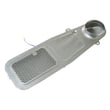
- Dryer lint screen WE16X32537 (restricted lint screen reduces airflow and drying performance)
Why it matters
Most “least problems” decisions come down to total cost of ownership. A dryer that is properly vented, cleaned, and not overloaded typically has fewer heat-related shutdowns, fewer noise complaints, and longer life from the drum belt and support components.
If you’re troubleshooting a specific symptom on this GE model, our dryer common questions guide can help you narrow it down quickly.
Last updated: January 2026
What is the lifespan of a GE dryer?
A GE dryer like model GFD65ESPN1SN typically lasts 13 years with normal household use and basic maintenance. Keeping airflow strong (clean lint and venting) and fixing wear items early helps the motor, heater, and drum support system reach that expected life.
What affects lifespan the most
- Vent restriction (long runs, crushed flex duct, clogged wall cap) increases heat and run time
- Lint buildup inside the cabinet or blower housing raises operating temperature
- Overloading strains the drum belt, idler, and drum rollers
- Frequent high-heat cycles accelerate wear on thermostats and the heater
- Moisture sensor residue can cause longer cycles and extra wear
Maintenance that helps your GFD65ESPN1SN last longer
- Clean the lint screen every load; replace a torn or warped screen such as the dryer lint screen WE16X32537.
- Check and clean the exhaust path (duct, wall cap, and internal ducting) at least yearly.
- If drying time increases, address airflow first; see dryer takes a long time to dry.
- If you hear thumping, squealing, or rumbling, inspect drum support parts early (rollers, idler, belt).
Common wear parts and what they usually mean
| Symptom | Likely wear area | Example compatible part for this model |
|---|---|---|
| Thumping or rumbling | Drum support rollers | Dryer drum support roller assembly WE03X10016 |
| Squealing | Idler pulley assembly | Dryer idler assembly WE03X30657 |
| Drum not turning | Drive belt | Dryer drum belt WE03X29704 |
| No heat or overheating | Heating and temperature control | Dryer heater assembly WE11X29790 or high limit thermostat WE04X29793 |
Why it matters
A dryer that is forced to run hot or run long to dry clothes wears out faster and can damage expensive components. Simple airflow and lint maintenance often prevents “no heat,” “long dry time,” and noise problems that shorten service life.
Last updated: January 2026
What is the most common problem with a GE dryer?
For the GE GFD65ESPN1SN dryer, the most common service issue we see is no heat or weak heat, which is often tied to the heater circuit (especially a failed heating element or a safety thermostat opening due to restricted airflow). Start by confirming strong airflow and correct power.
What to check first (fast, high-impact)
- Clean the lint screen and confirm it is not coated with fabric softener residue.
- Verify strong airflow at the outside vent hood; weak airflow points to a vent restriction.
- Confirm the dryer is getting full power (many electric dryers can run but not heat if one leg of power is missing).
- Run a timed dry cycle (not an auto cycle) to rule out sensor or control logic.
- If the drum turns and airflow is good but there is still no heat, suspect the heater circuit.
Parts that commonly cause “runs but won’t heat”
If airflow and power check out, these parts are frequent culprits on GE electric dryers like model GFD65ESPN1SN:
- Dryer heater assembly WE11X29790
- High limit thermostat WE04X29793
- Dryer outlet backup thermostat WE04X10190
Quick symptom-to-part guide
| Symptom | Most likely area | Common related part |
|---|---|---|
| Drum runs, no heat | Heater circuit open | Dryer heater assembly |
| Heats briefly, then stops | Overheating from poor airflow | High limit thermostat |
| No heat after vent issue | Safety thermostat opened | Outlet backup thermostat |
Why it matters
A dryer that tumbles but does not heat wastes time and energy, and restricted venting can overheat the heater housing and trip safety thermostats. Fixing airflow first helps prevent repeat failures after replacing parts.
Helpful DIY resources
Last updated: January 2026





