






How to check GE washer model?
To check your GE washer model, we look for the model/serial tag on the washer cabinet and match the printed model number to the format used on GE units. For this parts list, the correct model number is GTW325ASW0WW; using the exact model helps you get the right GE washer parts.
Where to find the model number on a GE top-load washer
Most GE top-load washers place the model/serial label in one of these spots:
- Under the lid, around the lid opening (top rim of the cabinet)
- On the back of the control panel area (rear console)
- On the back panel of the washer cabinet
- Along the side of the cabinet near the top
Tip: Write the model number exactly as shown, including all letters and numbers.
What the model number tells us (and why it matters)
The model number identifies the exact design version of your washer, which controls which parts fit and which troubleshooting steps apply.
- Confirms the correct parts catalog for your washer
- Prevents ordering look-alike parts that do not fit
- Helps narrow down symptoms to common failures for that platform
- Makes error code lookups more accurate
Quick check: model number vs. serial number
| Item | What it’s used for | Example for this washer |
|---|---|---|
| Model number | Parts compatibility and repair info | GTW325ASW0WW |
| Serial number | Production run and manufacturing date | Varies by unit |
If the washer won’t run and you’re checking the model for troubleshooting
Once you confirm the model, use GE top-load error code resources to pinpoint the failure faster. A common no-start cause on many top-load designs is a lid lock issue; if your lid will not latch or the washer stops immediately, the lid lock circuit is a good place to start.
- Check for an error code and record it before unplugging
- Confirm the lid closes fully and the strike is not broken
- Power reset: unplug for 2 minutes, then retry
- If symptoms point to the lid lock, compare your part to lid lock & harness tl27 washer WH08X37859
- For code definitions and next steps, use GE gtw top load washer error codes
Why it matters
Using the exact model number (GTW325ASW0WW) keeps repairs accurate, especially for electrical parts like a control board, shifter, or lid lock where similar-looking versions can be wired differently.
Last updated: February 2026
What is the average lifespan of a GE washing machine?
A GE washing machine typically lasts 10 to 14 years. For your GE GTW325ASW0WW top-load washer, consistent care (correct load size, proper detergent, and keeping the tub clean) helps you reach the high end of that range and avoid early wear on drive and drain components.
What affects washer lifespan the most
- Overloading (stresses the drive system and suspension)
- Frequent heavy cycles (more heat, torque, and vibration over time)
- Poor leveling (increases out-of-balance shaking and wear)
- Hard water and excess detergent (buildup, odors, and poor rinsing)
- Ignoring early symptoms (small issues become major repairs)
Maintenance habits that extend life
- Keep loads balanced; mix items and avoid washing one heavy item alone.
- Use HE detergent and measure carefully to reduce residue.
- Run a monthly cleaning routine; follow guidance from how to clean and maintain your washing machine.
- Check hoses and the drain path for kinks; replace a damaged hose such as washer drain hose WH41X32477 if it’s leaking or collapsing.
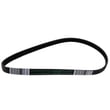
- If you notice burning rubber smell or weak agitation/spin, inspect the belt; a worn belt like washer drive belt WH01X27538 can slip and accelerate wear.
Quick symptom-to-part check (common on top-load washers)
| Symptom | Most likely area | Example part for GTW325ASW0WW |
|---|---|---|
| Won’t drain or drains slowly | Drain system | Drain pump, drain hose |
| Loud banging, tub off-center | Suspension | Suspension rod and spring assembly |
| Weak spin or squeal | Drive system | Drive belt, motor pulley |
| Stops mid-cycle, odd behavior | Controls/sensing | Speed sensor, main control board |
Why it matters
Washer failures often start as vibration, draining, or drive issues. Catching those early can prevent damage to higher-cost assemblies (like the gear case) and helps your GE washer reach its normal service life.
Last updated: February 2026
What is the most common problem with GE washers?
The most common GE washer problem is a no-drain or no-spin condition. On the GE GTW325ASW0WW top-load washer, this usually traces to a drain restriction, a failing drain pump, or a drive system issue that prevents the basket from reaching spin speed.
Most common symptoms we see
- Washer stops with water still in the tub
- Clothes come out dripping wet after the cycle
- Humming sound during drain (pump running but not moving water)
- Slow drain, gurgling, or intermittent draining
- Spin starts, then stops or never ramps up
What to check first (fast, no-parts steps)
- Drain path: Make sure the drain hose is not kinked, crushed, or shoved too far down the standpipe.
- Load and balance: Redistribute bulky items (blankets, towels) and retry a Drain/Spin.
- House drain: Confirm the standpipe or laundry sink is not backing up.
- Power reset: Unplug for 2 minutes, then retry a cycle.
Parts that commonly fix no-drain or no-spin on this model
If the basics look good, these are the most common repair directions for GTW325ASW0WW:
| Symptom | Most likely area | Common part to inspect/replace |
|---|---|---|
| Won’t drain, tub full of water | Drain system | GE washer drain pump assembly WH23X28418 |
| Drains but won’t spin well | Drive system | Washer drive belt WH01X27538 |
| Loud banging, off-balance, weak spin | Suspension | Washer suspension rod and spring assembly WH16X26911 |
Why it matters
A washer that cannot drain or spin leaves water in the tub, keeps detergent and soil in fabrics, and can strain the motor and control system. Fixing the root cause early often prevents bigger repairs later.
Helpful troubleshooting reference
If your washer is showing an error code, use GE gtw top load washer error codes to match the code to the most likely failure (drain, lid lock, speed sensing, or control).
Last updated: February 2026
Why is my GE washing machine not draining water?
If your GE GTW325ASW0WW washer isn’t draining, the most common causes are a clogged drain path (hose or pump), a failed drain pump, or a control or lid-lock related issue that prevents the drain/spin portion of the cycle from running.
Quick checks we recommend first
- Unplug the washer for safety.
- Make sure the drain hose isn’t kinked, crushed, or shoved too far down the standpipe.
- Check for a clog where the drain hose connects to the home drain.
- Run a Drain/Spin cycle and listen: a steady hum with little or no water movement often points to a blocked or failing pump.
- If the tub is full, bail out water first so you can safely inspect hoses and the pump area.
Parts that commonly fix “won’t drain” on this model
If the drain path is clear but the washer still won’t pump out, these model-matched parts are the most likely fixes:
| Symptom | Most likely cause | Model-matched part to check |
|---|---|---|
| Hums but won’t move water | Pump jammed or failing | GE washer drain pump assembly WH23X28418 |
| Drains slowly or intermittently | Partial blockage, weak pump | GE washer drain pump assembly WH23X28418 |
| Won’t advance to spin/drain | Control not commanding drain | Main control board w/instructions tl was WH22X38438 |
How we narrow it down (fast)
- Clog vs. bad pump: If you clear the hose and the pump still only hums or drains very weakly, the pump is the next step.
- Control-related: If the washer won’t enter drain/spin at all (no pump sound), the issue can be wiring, lid-lock circuit, or the main control.
- After a repair: If the washer behaves oddly after replacing a part, calibration can help; see how to calibrate a washer after a repair video.
Why it matters
A washer that can’t drain can’t spin properly, so clothes stay soaking wet and the pump can overheat if it runs while restricted. Fixing the drain issue quickly helps prevent repeat clogs and reduces strain on the drive system.
Last updated: February 2026


