Owner’s manual

What are the most common issues with 3?
The most common issues we see on the Afg 3 elliptical are loose or squeaking moving parts, console or display problems, incorrect speed readings, and resistance that will not change. Most problems trace back to loose hardware, worn pivot points, or a sensor or console connection that needs attention.
- Handle bars feel loose or wobbly: loose fasteners at the pivot points, worn bushings, or play in the linkage
- Squeaking noise while pedaling: dry pivot points, loose bolts, or worn rollers/bearings
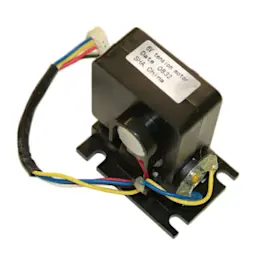
- Resistance will not change: resistance motor issue, wiring connection problem, or console control problem
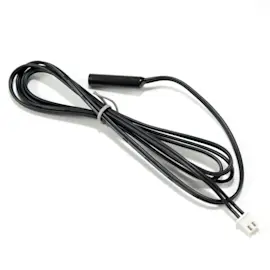
- Incorrect speed displayed: reed switch alignment, magnet position, or a loose sensor wire
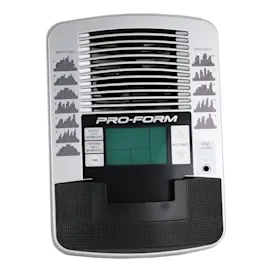
- Console is dim or will not turn on: power supply/batteries (if equipped), console wiring, or console failure
- Unplug the elliptical (or remove batteries if your console uses them).
- Re-tighten frame, handlebar, and pedal arm fasteners in the sequence shown in the owner's manual.
- Inspect wiring harness connections at the console mast and near moving joints; reseat any loose connectors.
- Check for rubbing, wobble, or side-to-side play at pivots; lubricate only where the manual allows.
| Symptom | Most likely area | Best next step |
|---|---|---|
| Handle bars are loose | Pivot hardware/linkage | Tighten and inspect for wear; follow elliptical handle bars are loose |
| Squeaking noise | Pivots/rollers/fasteners | Tighten, inspect, and lubricate as allowed; see elliptical making squeaking noise |
| Resistance will not change | Resistance motor or wiring | Run resistance test steps; see elliptical pedal resistance won't change |
| Incorrect speed | Reed switch/magnet | Verify alignment and gap; see how to adjust an elliptical reed switch |
| Console dim/no power | Console power/wiring | Check power source and connections; see elliptical console display is dim |
On an elliptical, small amounts of looseness or misalignment quickly turn into noise, inaccurate readings, and premature wear on moving joints. Catching these early keeps workouts smooth and protects the drive and resistance system.
Last updated: March 2026
What is the average lifespan of 3?
An Afg elliptical like model 3 typically lasts 7 to 12 years with regular home use and basic maintenance. Lifespan depends most on how often it’s used, how well bolts stay tightened, and whether moving joints are kept clean and lubricated per the owner's manual.
- Light use (1 to 3 workouts/week): 10 to 12 years
- Moderate use (4 to 6 workouts/week): 8 to 10 years
- Heavy use (daily, multiple users): 7 to 9 years
- High sweat/dust environment: expect the lower end of the range
Most elliptical machines reach the end of their “like-new” feel before they stop working. Common wear points include:
- Pedal arm and crank bushings or bearings (play, clicking, wobble)
- Drive belt or pulley surfaces (slip, thump)
- Resistance system (inconsistent levels)
- Console buttons or display (dim, intermittent)
- Hardware loosening over time (handlebars, uprights)
Use these habits to keep your Afg model 3 running smoothly:
- Re-tighten frame, pedal, and handlebar fasteners on a schedule
- Keep rails and pivot points clean; wipe sweat after each workout
- Lubricate only where the manual specifies (avoid over-lubricating)
- Level the machine so it does not rock on the floor
- Address squeaks and looseness early before parts oval out
| Maintenance item | Good interval | What it prevents |
|---|---|---|
| Bolt check and re-torque | Monthly | Looseness, frame wear |
| Cleaning contact points | Weekly | Squeaks, premature wear |
| Leveling check | As needed | Rocking, uneven stress |
| Inspect moving joints | Every 3 to 6 months | Clicking, wobble |
A loose or unlevel elliptical puts extra load on the crank, pedal arms, and resistance system; that accelerates wear and shortens overall lifespan.
Last updated: March 2026
How do I find the model number on my 3?
For your Afg elliptical, the model number is printed on the machine’s ID label (rating plate). On most ellipticals, that label is on the frame near the front stabilizer, rear base, or underneath a side cover; match it to the format shown in the [owner's manual].
Check these common label locations first:
- Front base tube near the transport wheels
- Rear stabilizer bar (back foot)
- Main frame upright (near the pedal arms)
- Under a plastic shroud or side cover by the flywheel
- Underside of the frame (use a flashlight)
The ID label usually includes several fields. Record them exactly as printed:
- Model number (the key for parts lookup)
- Serial number (helps identify production run)
- Brand (Afg)
- Electrical rating (if your unit has an AC adapter)
| Label field | Why it matters | Example format |
|---|---|---|
| Model number | Ensures correct diagrams and parts | Letters and numbers (varies) |
| Serial number | Helps confirm the exact version | Longer number/letter string |
Using the correct model number prevents ordering the wrong console, resistance motor, pedal arm hardware, or covers. Ellipticals often have multiple revisions that look similar but use different parts.
Use these steps to narrow it down:
- Check the underside of the frame for a second sticker
- Look inside the shroud area for a label (unplug power first)
- Compare your console layout and frame style to the diagrams in the [owner's manual]
- Use the serial number (if readable) to help confirm the correct model listing
Last updated: March 2026