Owner’s manual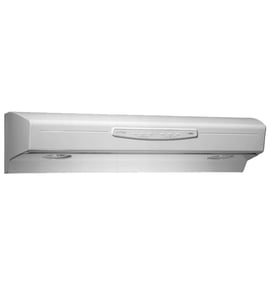
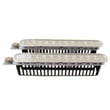


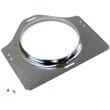

What are the disadvantages of recirculating hoods?
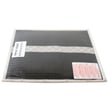
Recirculating (non-ducted) hoods like the Broan BCDF130SS can reduce odors and capture grease, but they do not exhaust air outdoors. That means heat and moisture stay in the kitchen, and you must replace the recirculation filters regularly to keep performance strong (typically every 3 to 6 months).
Main disadvantages to expect
- Less effective odor and smoke removal than ducted venting because air is filtered and returned to the room.
- Humidity and heat remain indoors, which can contribute to lingering cooking moisture.
- Ongoing filter cost and maintenance; non-ducted recirculation filters need routine replacement.
- Performance drops quickly with heavy cooking (frying, wok cooking) unless filters are changed more often.
- More cleaning required; grease filters and the fan blade should be cleaned frequently to prevent buildup.
Filter and maintenance schedule (typical)
The manual guidance for this model is clear: grease filters need frequent cleaning, and non-ducted recirculation filters are consumables.
| Item | What it does | What you do | How often |
|---|---|---|---|
| Grease filters (metal) | Captures grease | Clean with warm detergent; dishwasher safe | Frequently |
| Non-ducted recirculation filters | Helps reduce odors | Replace | Every 3 to 6 months |
| Fan blade | Moves air through hood | Wipe/clean with warm detergent solution | Frequently |
For the exact maintenance and installation details for BCDF130SS, follow the BCDF130SS owner's manual.
Why it matters
If your goal is maximum removal of smoke, moisture, and cooking odors, ducting air outside is the most effective approach. Recirculating setups are often chosen when exterior ducting is not practical, but they rely heavily on clean filters and good airflow to work well.
When a recirculating hood is still a good choice
- You cannot run ductwork to an exterior wall or roof.
- You want a simpler installation with fewer structural changes.
- You cook lightly most days and stay on top of filter changes.
Last updated: February 2026
How to find broan range hood model number?
On a Broan BCDF130SS range hood, the model number is printed on the rating label inside the hood area. We typically find it on an inner side wall (left or right) or near the wiring and light assembly area; match the full model number exactly.
Where to look on the hood
Check these common label locations (use a flashlight):
- Inside the hood canopy, on the left interior wall
- Inside the hood canopy, on the right interior wall
- Near the blower (fan) housing or motor mounting area
- Near the light housing or lens area
- On a metal tag that also lists the serial number
What to write down (and why)
Record the key identifiers exactly as shown:
- Model number (for example: BCDF130SS)
- Serial number (helps confirm production run and correct parts)
- Any series information (the manual references BCDF series)
Quick ID checklist
| Item on label | Example | Why it matters |
|---|---|---|
| Model number | BCDF130SS | Ensures correct parts diagrams and fit |
| Serial number | Varies | Helps confirm exact version |
| Series | BCDF | Helps narrow documentation and parts |
If the label is hard to read
Grease and heat can fade labels over time. These steps usually make it readable:
- Turn power off at the breaker before reaching inside the hood
- Wipe the label gently with a damp cloth and a drop of dish soap
- Take a close-up photo and zoom in
- Compare the characters carefully (B vs 8, D vs O)
Why it matters
The model number is the fastest way to get the right Broan range hood parts (filters, damper, motor, control board) and to follow the correct installation and care instructions for your exact hood.
For label location diagrams and identification details, use the BCDF130SS owner's manual.
Last updated: February 2026
What's the best CFM for a range hood?
For the Broan BCDF130SS range hood, the “best” CFM is the lowest airflow that still clears smoke and odors for your cooking style; for most homes, that lands in the 300 to 600 CFM range. We recommend confirming your hood’s rated airflow and installation requirements in the BCDF130SS installation, use and care manual.
Quick way to choose the right CFM
Use these practical rules of thumb to match airflow to your kitchen and cooking habits:
- Light cooking (simmering, low smoke): 250 to 350 CFM
- Everyday cooking (some frying, occasional smoke): 350 to 500 CFM
- Heavy cooking (high-heat searing, wok, frequent smoke): 500 to 900 CFM
- If your hood is ducted: you can typically use higher CFM effectively
- If your hood is non-ducted (recirculating): focus on filter condition and fit; airflow alone will not fix odors
What affects “best” performance (not just CFM)
CFM is only one part of good ventilation. These factors often matter more day to day:
| Factor | What to aim for | Why it matters |
|---|---|---|
| Ducting (ducted installs) | Short, straight run with minimal elbows | Reduces airflow loss and noise |
| Damper operation | Damper flap opens freely | Prevents restricted exhaust |
| Filter maintenance | Clean grease filters often | Keeps airflow and capture strong |
| Hood height and coverage | Hood centered over cooking surface | Improves smoke capture |
If you suspect restricted exhaust, inspect the damper and duct connection; the BCDF series installation instructions show correct damper orientation and opening direction.
Maintenance tips that keep airflow strong
Good maintenance can make a moderate-CFM hood work like a stronger one:
- Wash grease filters frequently using warm water and mild detergent (dishwasher safe for all-metal filters).
- Keep the fan area clean so grease does not load the blower wheel.
- For non-ducted setups, replace the recirculation filter on schedule; consider the range hood non-ducted filter, 2-pack S97020466 if your BCDF130SS is configured for recirculation.
- Clean stainless surfaces with mild soap and water; avoid abrasive cleaners.
Why it matters
Oversizing CFM can increase noise and may require makeup air in some installations; undersizing leaves smoke and odors behind. Choosing a realistic CFM target, then keeping filters and ducting in good shape, gives the best real-world results.
Last updated: February 2026
What are the disadvantages of ventless hoods?
Ventless (non-ducted) range hoods recirculate air back into the kitchen instead of sending it outdoors, so they remove less heat, moisture, and smoke than a ducted setup. For the Broan BCDF130SS, performance depends heavily on keeping the correct filters clean and replaced on schedule (see the BCDF130SS owner's manual).
Main disadvantages (what you will notice)
- Weaker odor and smoke removal: Recirculating hoods rely on filtration, so lingering cooking smells are more common.
- Less moisture and heat reduction: Steam and heat stay in the room, which can make the kitchen feel warmer and more humid.
- Filter maintenance is mandatory: Grease and odor filters must be cleaned or replaced regularly to keep airflow and capture performance.
- More noise for the same “real” ventilation: You may need higher fan speeds to get acceptable results.
- Not ideal for high-heat cooking: Searing, frying, and wok cooking typically overwhelm ventless systems faster.
Ducted vs. ventless: quick comparison
| Feature | Ventless (recirculating) | Ducted (to outdoors) |
|---|---|---|
| Where air goes | Back into kitchen | Outside the home |
| Odor control | Moderate (filter-dependent) | Strong |
| Moisture/heat removal | Low | High |
| Maintenance | Frequent filter care | Periodic duct and filter care |
How to reduce the downsides on BCDF130SS
- Run the hood before you start cooking and keep it on a few minutes after.
- Clean grease filters often; grease buildup reduces airflow and increases mess.
- If your BCDF130SS is set up as non-ducted, replace the charcoal-style filter as needed; the range hood non-ducted filter, 2-pack S97020466 is the model-matched option.
- Use the right fan speed for the job; high heat needs higher airflow.
- If airflow seems weak, use the troubleshooting steps in range hood fan not pulling much air.
Why it matters
Ventless hoods are popular when ducting outside is difficult, but they trade convenience for performance. Keeping filters clean helps protect the fan motor, improves capture, and reduces lingering odors.
Last updated: February 2026
Is Broan a good brand for range hoods?
Yes. Broan is a solid, reliable brand for residential range hoods, and the Broan BCDF130SS series is built around practical ventilation, straightforward controls, and serviceable components. Long-term performance depends most on correct installation and routine filter and fan maintenance.
What “good” means for a range hood
A good range hood consistently removes smoke, grease, and odors while staying safe and easy to maintain. For Broan hoods like BCDF130SS, we focus on these real-world factors:
- Ventilation performance: steady airflow when the ducting (or recirculation setup) is correct
- Noise level: most hoods get louder on higher fan speeds; that is normal
- Serviceability: common wear parts (filters, motor, controls, lighting) are replaceable
- Cleaning and finish durability: stainless steel holds up well when cleaned correctly
- Parts support: availability of genuine replacement parts helps extend the hood’s life
Maintenance that keeps a Broan hood performing well
The BCDF series manual calls out regular cleaning and filter care as key to performance and appearance. Use the BCDF130SS owner’s manual for the exact cleaning and maintenance schedule.
- Wash stainless surfaces with warm water and mild soap; rinse and dry completely
- Clean in the direction of the stainless grain
- Avoid harsh or abrasive cleaners and any cleaner containing bleach
- Keep grease filters clean so airflow stays strong
- Replace non-ducted (recirculating) filters on schedule if your hood is set up for non-ducted use
Common “wear” items (and what they affect)
| Part | What you’ll notice when it’s failing | Example for BCDF130SS |
|---|---|---|
| Non-ducted filter | Odors linger, reduced recirculation effectiveness | Range hood non-ducted filter, 2-pack S97020466 |
| Fan motor | Weak airflow, intermittent fan, unusual motor noise | Range hood fan motor assembly |
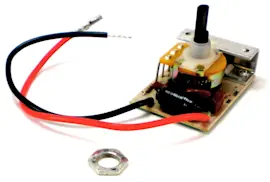
| Touch control board | Buttons unresponsive, fan or lights act erratically | Range hood touch control board |
Why it matters
Brand quality helps, but installation and upkeep decide whether a hood actually clears the air and stays quiet enough for daily cooking. Keeping filters clean and using the right cleaning method protects airflow, reduces strain on the fan motor, and preserves the stainless finish.
Last updated: February 2026
Do ventless range hoods really work?
Yes; ventless (non-ducted) range hoods can work well for reducing cooking odors and some smoke by filtering and recirculating air, but they do not remove heat and moisture as effectively as a ducted hood. For the Broan BCDF130SS, performance depends heavily on using the correct filters and keeping them clean per the BCDF130SS owner's manual.
What a ventless hood does (and does not do)
A ventless hood pulls air through filters, then returns it to the kitchen.
- Helps with: odors, light smoke, airborne grease particles
- Does not fully solve: humidity/steam buildup, strong smoke events, heat removal
- Works best when: you turn the hood on before cooking and let it run a few minutes after cooking
- Needs maintenance: filters must be cleaned or replaced on schedule
Ducted vs. ventless: quick comparison
| Feature | Ventless (recirculating) | Ducted (to outside) |
|---|---|---|
| Odor reduction | Good with fresh filters | Best |
| Grease control | Good with clean grease filters | Best |
| Moisture removal | Limited | Best |
| Installation | Often easier | Requires ducting |
How to get the best results with a ventless setup
These steps make the biggest real-world difference on a Broan range hood like the BCDF130SS:
- Clean the grease filters frequently using warm detergent solution (dishwasher-safe metal filters are common).
- Replace the non-ducted (charcoal-style) filter on schedule; a saturated filter stops controlling odors.
- Run the blower on HIGH for frying or high-heat searing.
- Keep the fan and intake area free of construction dust and grease buildup.
- Mount height matters; most installations target 18 to 24 inches above the cooking surface (follow your cooking appliance requirements).
Common replacement part for ventless operation: Range hood non-ducted filter, 2-pack S97020466.
Why it matters
A ventless hood is a practical option when you cannot duct to the outside, but it is a filter-dependent system. If odors linger or airflow feels weak, the fix is usually filter maintenance first, then checking the blower and controls.
For fan performance troubleshooting, use range hood fan not pulling much air.
Last updated: February 2026
What are the parts of a range hood called?
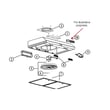
On the Broan BCDF130SS range hood, the main parts are the hood canopy (housing), blower and motor, fan blade, grease filters, lighting, and the control switches or control board. Your exact configuration depends on whether the hood is ducted or set up for non-ducted recirculation.
Common range hood parts and what they do
Most range hoods, including the BCDF series, use these core components:
- Hood canopy (shell): captures smoke, steam, and grease above the cooktop
- Blower (fan) and motor: moves air through the hood and into ducting or a filter path
- Fan blade: spins to pull air; can get noisy if bent or coated with grease
- Grease filters: trap grease before it reaches the blower and ductwork
- Non-ducted recirculation filter (if equipped): reduces odors when air is returned to the kitchen
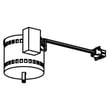
- Lights (LED modules) and light assembly: illuminates the cooktop
- Controls: blower switch, light switch, and on some versions an electronic control board
- Vent damper and duct connector (ducted setups): helps prevent backdrafts and connects to ducting
For model-specific diagrams, part names, and maintenance details, use the BCDF130SS owner's manual.
Parts you can replace on the BCDF130SS
These are examples of replaceable parts commonly serviced on this model:
| Part | What it affects | Common symptom |
|---|---|---|
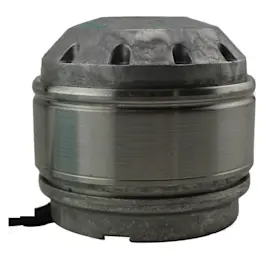
| Range hood fan motor assembly S97020408 | Blower operation | Fan does not run, hums, or runs weak |
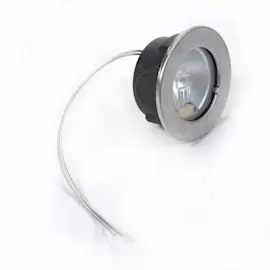
| Range hood light assembly S97020444 | Cooktop lighting | Lights flicker or do not turn on |
| Broan range hood vent damper SR680508 | Airflow and backdraft prevention | Rattling, poor exhaust, outside air coming in |
| Range hood non-ducted filter, 2-pack S97020466 | Odor reduction (recirculating) | Odors linger, airflow seems restricted |
Why it matters
Knowing the correct part names helps you match symptoms to the right repair. For example, poor airflow is often filter-related, while unusual noise can point to the fan blade or motor. The manual also calls out routine care like cleaning grease filters frequently to keep performance strong.
Last updated: February 2026