





How do I find the specs for my Briggs & Stratton engine?
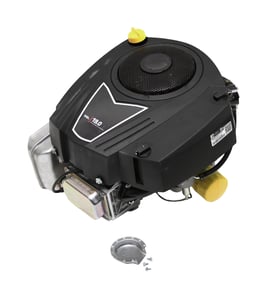
For your Briggs lawn and garden engine model 31P777-0296-E1, the fastest way to get the correct specs is to use the engine’s Model, Type, and Code numbers from the ID stamping on the engine. Those numbers tie directly to the exact horsepower family, tune-up parts, oil capacity, and service details.
Where to find the Model, Type, and Code
On most Briggs & Stratton vertical-shaft engines, the ID is stamped or printed on the engine itself. Check these common spots:
- Valve cover area (often on the metal cover or nearby shroud)
- Blower housing (recoil starter housing) or engine shroud
- Muffler heat shield area
- Near the spark plug side of the engine
- A metal tag or label on the engine casing
How to use those numbers to look up specs
Once you have the three identifiers, use them to match the exact build of your engine. That is important because the same model family can have different carburetors, ignition parts, and governor settings.
- Write the numbers down exactly as stamped (including dashes)
- Use the Model to identify the engine family
- Use the Type to identify the configuration (carburetor, crankshaft, controls)
- Use the Code to identify the production build date/version
Quick parts that often confirm you are on the right engine
If you are already shopping parts for 31P777-0296-E1, these common maintenance items help confirm you are in the right place:
| What you are checking | What it affects | Example part on this model page |
|---|---|---|
| Oil filter fitment | Oil system and service interval | Briggs & stratton lawn and garden equipment engine oil filter 696854 |
| Air filter style | Airflow, starting, power | Briggs & statton filter 795115 |
| Fuel filter size | Fuel flow, surging prevention | Briggs & statton fuel filter (red) 298090S |
Why it matters
Using the correct Model, Type, and Code prevents ordering the wrong ignition, carburetor, or gasket set, and it ensures the specs you read (oil type, capacity, tune-up parts) match your exact 31P777-0296-E1 build.
Last updated: February 2026
How do I tell what HP my Briggs and Stratton engine is?
For your Briggs engine model 31P777-0296-E1, the most reliable way to tell horsepower (HP) is to use the engine’s Model, Type, and Code numbers from the blower housing label or stamped tag; those identifiers map to the exact factory rating for that specific build.
Where to find the numbers you need
Look for a sticker or stamped plate on the engine (often on the blower housing, valve cover area, or near the muffler). You’re looking for:
- Model (example format: 31P777)
- Type (a 4-digit group, sometimes with a dash)
- Code (a longer numeric date-style code)
- Any HP or gross torque marking printed on the same label (if present)
How to use those numbers to get the HP rating
Once you have Model, Type, and Code, match them to the engine’s spec listing (online engine lookup tools and parts diagrams use these fields). If you’re already ordering maintenance items for this engine, confirming the exact build also helps you pick the right filter and tune-up parts.
- Record the numbers exactly as shown (include dashes)
- Compare them to the engine identification shown on parts listings for 31P777-0296-E1
- If the label lists gross torque instead of HP, use that value as the performance reference for your mower or tractor setup
Quick reference: what you might see on the label
| Label term | What it means | Why it matters |
|---|---|---|
| Model | Engine family | Gets you into the correct spec group |
| Type | Configuration | Differentiates carburetion, crankshaft, governor, etc. |
| Code | Build date | Confirms the exact production version |
| HP or gross torque | Performance rating | Tells you the engine’s advertised output |
Why it matters
Briggs engines are often sold and serviced by Model, Type, and Code, not just by a single HP number. Two engines that look similar can have different carburetors, ignition parts, or governor settings, so confirming the exact ID prevents wrong-part returns and mismatched performance.
Related part you may replace during identification and service
If you’re doing an oil change while you’re checking the ID tag, use the correct oil filter for this engine: lawn and garden equipment engine oil filter 696854.
Last updated: February 2026
How to find Briggs & Stratton engine parts?
To find the right Briggs engine parts for model 31P777-0296-E1, we match parts by the engine’s exact model, type, and code from the ID label, then cross-check the part category you need (air, fuel, ignition, starter, gaskets). For common maintenance items, you can also start with known-fit parts like the Briggs & stratton lawn and garden equipment engine oil filter 696854.
Step 1: Locate the engine ID information
On Briggs engines, the ID is typically stamped or printed on the blower housing, valve cover area, or near the muffler heat shield. Record all of the following:
- Model (example: 31P777-0296-E1)
- Type (a 4-digit number)
- Code (a longer date-style number)
- Any spec or trim info on the label
Step 2: Use the ID to choose the correct part
Once you have the full ID, pick the part group that matches your symptom or maintenance task:
- Air intake: air filter and pre-filter
- Fuel system: fuel filter, carburetor, inlet fitting
- Ignition: magneto, flywheel key
- Starting system: starter drive, starter motor components
- Sealing: head gasket, crankcase gasket, gasket sets
Common “quick start” maintenance parts for this model
| Maintenance need | What it affects | Example part on this model page |
|---|---|---|
| Oil change protection | Oil cleanliness, engine life | Oil filter |
| Hard starting, surging | Fuel flow | Fuel filter |
| Loss of power, black smoke | Airflow | Air filter, pre-filter |
Why it matters
Briggs engines often have multiple versions that look similar. Using the full model-type-code prevents ordering a carburetor, gasket, or ignition part that bolts on but does not match your exact configuration.
Helpful part examples on this page
These are commonly replaced items; match them to your engine ID and your symptom:
- Briggs & statton filter 795115 (air filter)
- Briggs & stratton lawn & garden engine pre-filter 697015
- Briggs & statton fuel filter (red) 298090S
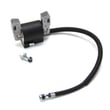
- Briggs & statton magneto 591459
- Briggs & statton key 222698S (flywheel key)
Last updated: February 2026
What are common B&S engine problems?
Common Briggs & Stratton lawn and garden engine problems on model 31P777-0296-E1 come from fuel delivery, air intake, ignition, or basic maintenance. Most no-start, hard-start, surging, and power-loss symptoms are corrected by restoring clean fuel flow, proper airflow, and reliable spark.
Most common symptoms and likely causes
- Won’t start or starts then dies: stale fuel, restricted fuel flow, dirty carburetor passages
- Surging or hunting at idle: restricted air filter, partially clogged main jet, intake air leak
- Runs rough or misfires: fouled spark plug, weak ignition, water-contaminated fuel
- Low power under load: dirty air filter, fuel restriction, low compression
- Oil leak or burning oil smell: worn seals or gaskets, overfilled crankcase, crankcase breather issue
- Backfires through intake or exhaust: valve train issue, sheared flywheel key, timing-related damage
Quick checks we recommend (fastest wins first)
- Drain old fuel and refill with fresh fuel.
- Replace the air filter and pre-filter: filter 795115 and lawn & garden engine pre-filter 697015.
- Replace the inline fuel filter: fuel filter (red) 298090S.
- Inspect the spark plug (condition and gap) and confirm strong spark.
- Clear debris from cooling fins and the blower housing to prevent overheating.
- If the starter slips or grinds, inspect the starter drive and related starter components: starter drive assembly 593934.
Problem-to-part cheat sheet
| Problem you notice | Most common fix | Parts that often apply |
|---|---|---|
| Hard starting after storage | Fresh fuel, clean carb, new filters | Fuel filter (red) 298090S, filter 795115 |
| Surging at idle | Restore airflow, clean carb | Filter 795115, lawn & garden engine pre-filter 697015 |
| Oil seepage at seams | Replace gasket, verify fastener torque | Crankcase gasket 697110 |
| Backfire after hitting an object | Check flywheel key and timing | Flywheel key 222698S |
Why it matters
Fuel restriction and dirty intake parts make the engine run lean; that causes surging, overheating, and hard starting. Keeping filters and gaskets in good shape also protects internal components such as the camshaft and valves.
Last updated: February 2026
What is the lifespan of a B&S engine?
A Briggs engine like model 31P777-0296-E1 typically lasts 500 to 3,000+ operating hours; the biggest difference is maintenance and operating conditions. With clean oil, clean air filtration, and fresh fuel, many lawn and garden engines reach the upper end of that range.
Typical lifespan ranges (what to expect)
Most Briggs lawn and garden engines fall into these practical buckets:
- 500 to 1,000 hours: heavy dust, infrequent oil changes, old fuel, or overheating
- 1,000 to 2,000 hours: average homeowner use with basic maintenance
- 2,000 to 3,000+ hours: consistent maintenance, clean intake air, correct oil level, and good cooling airflow
| Usage and care level | Common outcome | What usually limits life |
|---|---|---|
| Minimal maintenance | Shorter life | Dirty oil, clogged filter, fuel varnish |
| Routine maintenance | Normal life | Wear over time, occasional fuel issues |
| Proactive maintenance | Longer life | Normal wear, eventual compression loss |
Maintenance that adds the most hours
These items have the biggest impact on engine life and starting reliability:
- Change oil on schedule and keep the oil level correct
- Replace the oil filter regularly (if equipped), such as the Briggs & stratton lawn and garden equipment engine oil filter 696854
- Keep the air intake clean; service the air filter and pre-filter (foam) as needed
- Use fresh fuel and a stabilizer for storage; replace the in-line fuel filter when flow is restricted
- Keep cooling fins and the blower housing area clear of grass and debris
- Fix small leaks early (gaskets and seals) so the engine does not run low on oil
Quick signs your engine is nearing end-of-life
These symptoms usually point to internal wear or chronic fuel/air issues:
- Hard starting even with fresh fuel and a clean air filter
- Noticeable loss of power under load (mowing, tilling)
- Excessive oil consumption or blue exhaust smoke
- Low compression symptoms (spins fast, struggles to fire)
- Persistent knocking or metallic noise after oil level is confirmed
Why it matters
Engine lifespan is mostly about preventing accelerated wear. Clean oil protects bearings and the camshaft, clean intake air protects the cylinder and piston rings, and fresh fuel prevents carburetor varnish that causes lean running and overheating.
Last updated: February 2026
What oil does a Briggs and Stratton 6.5 hp engine take?
For a Briggs 6.5 HP-class lawn and garden engine like model 31P777-0296-E1, we use a high-quality SAE 10W-30 as the most common all-around choice for typical mowing temperatures; SAE 30 is also common for consistently warm weather. Check oil level often and change it on schedule to protect the crankshaft and camshaft.
Recommended oil types (what to use when)
- SAE 10W-30: Best all-around choice for most climates and seasonal temperature swings.
- SAE 30: Good for steady warm-weather operation.
- 5W-30 synthetic: Helpful for easier cold starts and wide temperature ranges.
- Avoid mixing random oil types; if you must top off, use the same viscosity already in the crankcase.
Oil change basics (quick checklist)
- Shut the engine off and let it cool.
- Park on a level surface.
- Drain oil into an approved container.
- Replace the oil filter if your engine uses one.
- Refill slowly, then recheck the dipstick level.
A common maintenance part for this engine family is the Briggs & stratton lawn and garden equipment engine oil filter 696854.
Typical service intervals (most small engines)
| Use type | Oil change interval | Notes |
|---|---|---|
| Normal homeowner mowing | Every 25-50 hours or once per season | Change sooner if oil looks dark or smells burnt |
| Dusty, hot, or heavy use | Every 25 hours | Air filter service becomes more important |
Why it matters
Correct viscosity helps the oil film stay strong at operating temperature while still flowing at startup. That reduces wear on internal parts and helps prevent hard starting, smoking, and overheating.
Last updated: February 2026