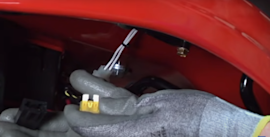
Installation guide
 Owner’s manual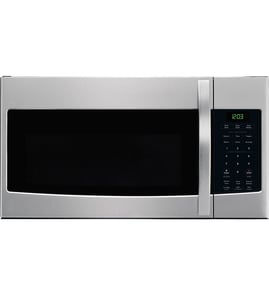



How big is a Kenmore microwave model 66568601890 in inches?
The Kenmore microwave/hood combo model 66568601890 is designed to fit a 30-inch minimum cabinet opening and requires specific clearances above the cooktop; for the exact overall exterior width, height, and depth, we recommend confirming the dimension diagram in the installation guide.
Key fit and clearance dimensions (from the installation requirements)
These are the measurements that matter most for planning an over-the-range install:
- 30 in. minimum opening width in the cabinet space
- 13 1/2 in. minimum clearance from the bottom of the microwave to the cooking surface
- 30 in. minimum from the cooking surface (or countertop) to the top of the wall mounting bracket
- 66 in. minimum mounting height from the floor (installation reference)
Typical exterior size you can expect
Most Kenmore over-the-range microwave/hood combos built for a 30-inch opening have exterior dimensions in this general range:
- Width: about 29 7/8 in. to 30 in.
- Height: about 16 in. to 17 in.
- Depth: about 15 in. to 17 in. (not including handle projection)
Use the installation guide to confirm the exact overall depth and the door swing clearance for your cabinet and backsplash layout.
Quick planning table
| What you are measuring | What to use | Why it matters |
|---|---|---|
| Cabinet opening width | 30 in. minimum | Ensures the microwave fits between cabinets |
| Cooktop-to-microwave clearance | 13 1/2 in. minimum | Protects the unit and improves safe cooking access |
| Cooktop-to-bracket reference | 30 in. minimum | Helps place the wall bracket correctly |
Why it matters
Over-the-range microwaves are sized around a 30-inch cabinet opening, but small differences in depth, door clearance, and mounting height can affect whether the unit clears your backsplash, cabinets, and venting path.
Last updated: February 2026
What is the life expectancy of a Kenmore microwave?
Most Kenmore microwaves typically last 9 to 10 years with normal household use; your Kenmore 66568601890 microwave/hood combo is built for years of dependable operation, but heavy daily cooking, poor airflow, and skipped cleaning can shorten that lifespan. For model-specific care and operating guidance, use the owner's manual.
Typical life expectancy and what affects it
A microwave’s service life depends more on usage and ventilation than the brand name on the door.
- Daily run time: multiple long heat cycles per day wear components faster
- Ventilation and grease: clogged filters and greasy vent paths trap heat
- Power quality: frequent outages or surges stress electrical parts
- Door use: slamming the door can damage the latch and interlock system
- Cleaning habits: food splatter and arcing damage interior surfaces
Signs it’s nearing end of life (or needs repair)
If you see these symptoms, we treat them as repair indicators first, not automatic replacement.
| Symptom | Common area to check | What it can lead to |
|---|---|---|
| Runs but doesn’t heat | High-voltage circuit | No-cook condition, longer run times |
| Stops mid-cycle or goes dead | Safety devices | Intermittent operation |
| Door won’t start unit reliably | Door interlock system | No-start or unsafe operation |
| Loud hum, burning smell, or arcing | Cavity or HV components | Further damage if continued |
For “no heat” complaints, our why is my microwave not heating guide walks through the most common causes.
Parts that commonly fail on over-the-range microwaves
These are frequent repair items for microwave/hood combos like model 66568601890:
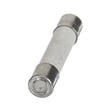
- Thermal fuse W11707984 (opens if overheating occurs)
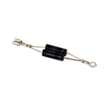
- Diode W11256462 (part of the high-voltage heating circuit)
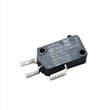
- Primary switch W10211972 (door interlock switch)
- Turntable motor W10642989 (turntable stops turning)
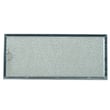
- Filter 6800 (charcoal filter for recirculating vent setups)
Why it matters
Knowing the typical 9 to 10 year lifespan helps you decide whether to troubleshoot and replace a single part (often cost-effective) or plan for replacement when multiple symptoms appear or repairs become frequent.
Last updated: February 2026
What size fuse for Kenmore microwave?
For the Kenmore microwave/hood combo model 66568601890, the home electrical supply should be on a 120-volt, 60 Hz, 15- or 20-amp fused circuit (a time-delay fuse or circuit breaker is recommended). For the microwave’s internal fuse size and type, follow the specifications and replacement steps in the installation guide and owner's manual.
What “15- or 20-amp fused supply” means
This refers to the branch circuit that powers the microwave (your kitchen circuit), not automatically the small fuse inside the microwave.
- Use a dedicated circuit for the microwave/hood combo when possible.
- Use a time-delay fuse or circuit breaker to reduce nuisance trips.
- Confirm the outlet is a properly grounded 3-prong receptacle.
- Do not use an extension cord or adapter.
If you think the internal microwave fuse is blown
A blown internal fuse often shows up as a microwave that is completely dead (no display), or it may stop during operation. Before replacing parts, we check the basics first.
- Verify the outlet has power (try a small appliance).
- Check the home breaker or fuse for the microwave circuit.
- If the unit is dead, inspect door closing and latch alignment.
- If the unit runs but does not heat, focus on heating-circuit components.
Common related parts for “no heat” symptoms (model 66568601890)
| Symptom | Common area to check | Example part available for this model |
|---|---|---|
| Runs but no heat | High-voltage circuit | Diode W11256462 |
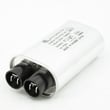
| Runs but no heat | High-voltage circuit | Capacitor W10850446 |
| Dead or stops unexpectedly | Safety cutout | Thermal fuse W11707984 |
Why it matters
Using the correct circuit amp rating helps prevent nuisance fuse blows and protects wiring. Using the correct internal fuse type helps the microwave’s safety system work as designed and prevents repeat failures caused by an underlying issue.
Last updated: February 2026