Owner’s manual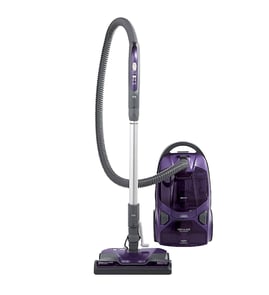

What is the best vacuum canister?
The “best” canister vacuum depends on your floors and priorities. For most homes, a top pick is a sealed, bagged canister with strong suction, a good floor tool, and effective filtration; your Kenmore 34627185790 canister vacuum is built around those core strengths when it is maintained per the owner's manual.
Focus on the features that change real-world cleaning performance:
- Floor type match: A combo floor tool or dedicated carpet nozzle matters most for mixed flooring.
- Filtration: Look for a well-sealed system with quality pre-filter and exhaust filtration.
- Airflow and suction control: Variable suction helps protect rugs and improves above-floor cleaning.
- Hose and wand usability: Comfortable handle, smooth swivel, and a wand length that fits your height.
- Maintenance cost and ease: Filters and dust collection should be simple to service.
| If you want... | Prioritize... | Why it matters |
|---|---|---|
| Deep carpet cleaning | Strong agitation at the floor tool, high airflow | Pulls embedded debris from carpet fibers |
| Great hard-floor pickup | Smooth hard-floor tool, good edge pickup | Prevents scatter and improves corners |
| Allergy-friendly cleaning | Sealed airflow path, effective outlet filter | Reduces dust blowback into the room |
| Low hassle ownership | Easy filter access, durable hose and cord reel | Keeps performance consistent over time |
Even a great canister vacuum will feel weak if airflow is restricted. For this model, we recommend these checks first:
- Empty the dust box before it is packed tight
- Clean or replace the pre-filter and outlet filter on schedule
- Inspect the hose, curved handle, and wand for clogs
- Check the floor tool for hair wrap and blocked channels
- Verify the cord reel and power cord are operating smoothly
Canister vacuums are all about airflow. The right floor tool plus clean filters typically makes a bigger difference than chasing a “most powerful” label, especially on mixed flooring and pet hair.
Last updated: February 2026
Where to find model number on Kenmore canister vacuum?
On a Kenmore canister vacuum like model 34627185790, the model number is printed on the model and serial number plate attached to the vacuum body (the canister). Use the owner's manual to confirm the exact label location and how the number is formatted.
Look for a sticker or metal plate on the canister housing in one of these spots:
- Bottom of the canister (flip the unit over and check the base)
- Back of the canister near the power cord reel area
- Under the dust box or dust compartment cover
- Near the wheel area or rear wheel housing
- Inside a service door or access panel (if your unit has one)
Kenmore canister model numbers are often shown with punctuation in manuals (for example, 346.27185790), but you can use the digits-only version (34627185790) when searching parts.
| Where you see it | Example | What to do with it |
|---|---|---|
| Model/serial plate on the vacuum | 34627185790 | Use for parts lookup and diagrams |
| Printed in the manual | 346.27185790 | Same model; punctuation is normal |
| Serial number on the same plate | Varies | Use for age tracking and service records |
Using the exact model number helps us match the correct Kenmore canister vacuum parts (filters, hose, wand, floor tool components, and electrical parts) so fit and connections are right the first time.
- Wipe the plate with a damp cloth, then dry it (dust can hide digits)
- Use a flashlight at an angle to make embossed text stand out
- Take a close-up photo and zoom in to read worn characters
Last updated: February 2026
How long do Kenmore canister vacuums last?
A Kenmore canister vacuum like model 34627185790 typically lasts 10 to 15 years with normal home use and routine maintenance. Heavy use, clogged filtration, and running with a full dust box can shorten life; consistent cleaning and timely filter care extend it.
- Light use (1 to 2 times/week): about 12 to 15 years
- Average use (2 to 4 times/week): about 10 to 12 years
- Heavy use (daily, large homes, lots of pet hair): about 7 to 10 years
- With excellent maintenance: 15+ years is common for many canister designs
- Restricted airflow from a dirty pre-filter or outlet filter
- Motor strain from blockages in the hose, wand, or floor tool
- Worn electrical items (power cord, cord reel, switch)
- Broken moving parts (rear wheels, casters, floor tool brush/roller)
Use the maintenance and troubleshooting steps in the owner's manual.
- Empty the dust box before it is packed tight
- Clean or replace filters on a schedule (more often with pets)
- Check the hose and floor tool for clogs when suction drops
- Keep the floor tool brush area clear of hair and string
- Avoid pulling the vacuum by the hose; use the handle and wand
| If you notice this | Most likely cause | What to do first |
|---|---|---|
| Suction is weak | Clog or dirty filters | Clear clogs; service filters |
| Vacuum shuts off | Overheating from restriction | Let it cool; remove blockage |
| Burning smell | Belt/brush jam or motor strain | Stop use; inspect floor tool and airflow |
| Cord won’t retract | Cord reel issue | Inspect cord path; check reel mechanism |
Canister vacuums rely on steady airflow to cool the motor. When filters, hoses, or the floor tool are restricted, the motor runs hotter and wears faster. Simple upkeep protects the motor, cord reel, and switch, which are the most expensive items to replace.
Last updated: February 2026
What is a canister hoover?
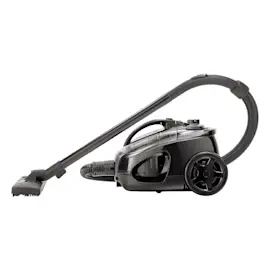
A canister hoover (canister vacuum) is a vacuum where the motor and dust container sit in a separate canister that rolls on the floor, connected to a flexible hose and wand. On the Kenmore 34627185790, this design helps you reach under furniture and clean stairs more easily.
A canister vacuum separates the “power unit” from the cleaning head, so you move the canister with one hand and clean with the hose and wand.
Common components include:
- Canister body with motor and dust container (or bag)
- Suction hose and curved handle
- Wand(s) for reach
- Floor tool for carpets and hard floors
- Filters (pre-filter and exhaust or outlet filter)
Canister vacuums are popular for homes with mixed flooring and tight spaces because the hose-and-wand setup is flexible.
| Cleaning need | Why a canister helps | Typical attachment |
|---|---|---|
| Stairs | Canister stays on a step while you clean with the hose | Hose + wand |
| Under furniture | Low-profile reach without pushing a bulky upright | Wand + floor tool |
| Edges and corners | Better control at baseboards and crevices | Crevice tool |
| Dusting | Gentle airflow and brush control | Dusting brush |
Because airflow travels through a hose, filters, and the dust container, performance depends on keeping those paths clear.
We recommend:
- Emptying the dust box before it gets packed
- Checking the hose and wand for clogs if suction drops
- Cleaning or replacing filters on schedule
- Inspecting the power cord and cord reel for smooth operation
Knowing you have a canister-style vacuum helps you troubleshoot correctly: most suction problems come from a full dust container, a clogged hose/wand, or restricted filters, not the floor tool itself. For model-specific diagrams and part names, use the owner's manual.
Last updated: February 2026
What is the list of vacuum cleaner parts?
For the Kenmore 34627185790 canister vacuum, the parts list includes the dust box assembly, filters, hose and wands, floor tool and attachments, wheels/casters, cord reel and power cord, and internal motor-related components. For the complete illustrated list, use the owner's manual.
These are the main assemblies and accessories called out in the Kenmore 34627185790 parts list:
- Dust box (dust container) and related packings/seals
- Pre-filter, dust filter assembly, and outlet filter
- Suction hose components (hose, hose end, curved handle, hose cover)
- Wands and joints (connection wand, wand hose joint)
- Floor tool assembly (base, brush base assembly, roller, slide arm, bumper)
- Attachments (crevice tool, dusting brush, tool caddy)
- Mobility and stability parts (rear wheel, caster)
- Power and controls (switch, cord reel components, power cord)
| Function | What it includes | What it affects |
|---|---|---|
| Suction and airflow | Hose, air inlet fitting, seals/packings | Weak suction, air leaks |
| Filtration | Pre-filter, dust filter, outlet filter | Dust blow-by, odors, motor protection |
| Floor cleaning | Floor tool, brush base, roller | Pickup on carpet and hard floors |
| Power delivery | Power cord, cord reel, switch | No power, intermittent power |
| Movement | Wheels, casters | Tracking, ease of pulling |
Knowing the parts list helps us match the right replacement when you have symptoms like low suction (filters or air leaks), poor pickup (floor tool brush/roller), or power issues (cord reel, switch, cord).
- Match parts by the exact model number: 34627185790.
- Use the exploded view to confirm where the part sits (hose, floor tool, cord reel, or dust box area).
- Replace filters on schedule; clogged filters are the most common cause of reduced suction.
- Check seals and packings if you hear a whistle or feel air leaking at joints.
- If the vacuum cuts in and out, inspect the cord reel area and switch wiring before ordering parts.
Last updated: February 2026