 Owner’s manual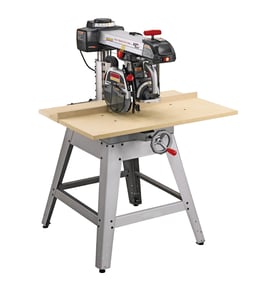

Are radial arm saws worth anything?
Yes. A Craftsman radial arm saw like model 113196321 is worth something when it is complete, runs smoothly, and can be tuned to cut accurately; value is driven mostly by condition, included accessories, and local demand rather than age alone.
What affects value the most
- Condition and completeness: guard, fence, table boards, yoke/arm locks, and hardware present
- Accuracy and adjustability: the arm can be squared to the fence and holds settings
- Motor and arbor health: starts cleanly, no burning smell, no excessive sparking, minimal bearing noise
- Safety equipment present: blade guard and anti-kickback parts for ripping
- Included extras: dado set, clamps, jigs, original wrenches, stand, or a well-built bench
Typical price ranges you’ll see
Prices vary by region, but these ranges are common for older 10-inch radial arm saws.
| Condition | What it usually means | Typical local value |
|---|---|---|
| Parts/unknown | won’t run, missing guard/table, heavy rust | $0 to $75 |
| Working, needs tune-up | runs, but cuts are not square yet | $75 to $200 |
| Clean and tuned | accurate crosscuts, smooth travel, complete | $200 to $400 |
Quick checks before you buy or sell
Unplug the saw before inspecting or adjusting.
- Arm square to fence: the manual’s “square crosscut travel” adjustment is the baseline for accuracy
- Carriage travel: should slide smoothly without binding or wobble
- Blade mounting: the manual notes the motor shaft uses left-hand threads; the arbor nut should be snug, not over-tightened
- Ripping hazards: radial arm saw ripping has specific kickback and outfeed-zone risks; confirm the saw has the right setup and you are comfortable using it
For the model-specific adjustment sequence and safety sections, use the owner's manual.
Why it matters
A tuned radial arm saw can be excellent for repeatable crosscuts and dados, but value drops fast if it cannot hold alignment or if key safety parts are missing. A careful inspection protects both your budget and your shop safety.
Last updated: February 2026
What are the common problems with radial arm saws?
Common problems with the Craftsman 113196321 10" radial saw include inaccurate cuts from loose or misadjusted carriage bearings, rough carriage travel from dirty or worn tracks, binding and smoking during ripping, and safety hazards like kickback, thrown workpieces, and entanglement with the rotating arbor or blade. For model-specific adjustment steps and safety rules, use the owner's manual.
Common cutting and alignment problems
These issues usually show up as crooked cuts, burning, or the motor bogging down:
- Workpiece binds, smokes, or the motor slows or stops during ripping (often alignment, feed rate, or blade condition)
- Workpiece strikes the riving knife during ripping (riving knife not aligned to the blade)
- Board pulls away from the fence during ripping (blade alignment or normal feed-pressure effect)
- Inaccurate cuts because the carriage bearings are loose (blade can move up, down, or sideways)
- Carriage does not travel smoothly on the arm (dirty track, bearing adjustment, worn track, or bad bearing)
Quick symptom-to-cause guide
| Symptom | Common cause | What to do first |
|---|---|---|
| Binding, smoke, motor slows | Feed rate too fast, dull/incorrect blade, alignment | Slow feed rate; inspect blade; re-align |
| Workpiece hits riving knife | Riving knife out of line | Align riving knife to blade |
| Rough carriage travel | Dirty track or bearing issue | Clean track; adjust carriage bearings |
| Cuts not square/consistent | Loose carriage bearings | Adjust carriage bearings; then realign |
Common lock and movement issues
If the saw shifts after you lock it, accuracy and safety both suffer:
- Radial arm moves when locked in a non-indexed miter position (miter lock wear or not locked firmly)
- Motor moves when bevel lock is locked (bevel lock needs adjustment)
- Yoke moves when rip lock is locked (rip lock needs adjustment)
Why it matters (safety and cut quality)
Radial arm saws can cause severe cuts, eye injuries from thrown chips or workpieces, bodily impact injuries, burns, and shock if the tool is misused or out of adjustment. Ripping also adds major hazards such as outfeed zone hazard, kickback, and wrong-way feed; keeping the saw aligned and locks tight reduces risk.
What we recommend first
- Unplug the saw before adjustments; wait for the blade to fully stop
- Clean the arm tracks (steel rods) and inspect carriage bearings
- Test for carriage bearing looseness and adjust as needed (then realign)
- Verify the riving knife and blade alignment before ripping
- Use a sharp, correct blade and slow the feed rate if the motor bogs
Last updated: February 2026
When did Craftsman stop making radial arm saws?
Craftsman radial arm saws like model 113196321 were largely phased out of Sears retail sales in the early 1990s; most were no longer sold new after about 1992, with some smaller models continuing a bit longer. For model-specific identification details and parts diagrams, use the owner's manual.
What this means for Craftsman 113196321 owners
Even though this 10-inch radial saw is an older model, it is still serviceable when key wear items are maintained and safety components are intact.
Common areas that typically need attention over time:
- Carriage bearings and tracks (smooth travel and accurate cuts)
- Arm lock and index hardware (repeatable angles)
- Power cord and strain relief (safe power delivery)
- Guard components and dust elbow (basic protection and chip control)
- Fasteners that loosen from vibration (alignment stability)
How to confirm what you have (and avoid ordering the wrong parts)
Radial arm saw families often share similar castings and assemblies, so confirming the exact model number matters.
Use these checks:
- Verify the model tag reads 113196321 (not a close variant like 113.196221 or 113.196421)
- Match your saw’s assemblies to the manual’s exploded views (arm, yoke, base)
- When referencing parts lists, order by part number, not key number (the manual calls this out)
Quick reference: where to look in the manual
| What you need | Where it shows up | Why it helps |
|---|---|---|
| Exploded views | Figures for arm, yoke, base | Confirms the correct assembly |
| Parts list | “Always order by Part Number” tables | Prevents mismatched hardware |
| Troubleshooting | Symptom and fix charts | Points to likely wear items |
Why it matters
Knowing Craftsman stopped selling most radial arm saws new in the early 1990s sets expectations: parts availability can vary, and condition depends heavily on maintenance. The manual’s parts lists and adjustment steps are the fastest way to keep your 113196321 cutting accurately and operating safely.
Last updated: February 2026