Owner’s manual
 Error Codes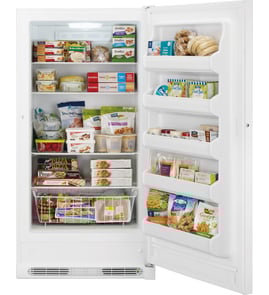


How many cubic feet is a Kenmore model 25328262802 freezer?
The Kenmore 25328262802 upright freezer is typically in the 20 to 21 cubic foot class. For the exact capacity for your specific unit, we recommend confirming it in the 25328262802 owner's manual.
How to confirm the exact capacity
Capacity is usually listed in the specifications section of the Use & Care Guide. If you are checking the freezer itself, the model and serial tag is commonly found on the upper left wall inside upright models.
- Check the specifications section in the manual for “capacity” or “cu. ft.”
- Verify the full model number on the serial plate matches 25328262802
- If you are comparing to another freezer, compare usable shelf space, not just total cu. ft.
- Keep airflow clear around shelves and the air baffle so storage does not block circulation
Typical capacity range (what most owners see)
| Upright freezer type | Typical capacity |
|---|---|
| Full-size upright freezer (like Kenmore 253-series) | 20 to 21 cu. ft. |
| Compact upright freezer | 3 to 9 cu. ft. |
| Small apartment-size upright freezer | 10 to 16 cu. ft. |
Why it matters
Knowing cubic feet helps us size the freezer for bulk storage, estimate energy use, and choose the right organization accessories (bins, shelves, and spacing) so cold air can circulate evenly.
Last updated: January 2026
Is there a reset button on a Kenmore upright freezer?
Kenmore upright freezers like model 25328262802 typically do not have a single dedicated “reset” button. Instead, resetting is usually done by cycling power, and some electronic-control versions use the temperature control panel buttons (UP and DOWN) inside the freezer to clear certain conditions.
What to try first (safe reset steps)
- Unplug the freezer (or switch the breaker off) for 5 minutes.
- Plug it back in and let it run several hours to stabilize temperature.
- If your freezer has an electronic control panel inside, try pressing UP (warmer) and DOWN (colder) to confirm the buttons respond.
- If the alarm is sounding or a temp alarm light is blinking, press ALARM OFF (if your control panel has it).
- Keep the door closed as much as possible while it recovers.
For control locations and button functions on this model family, use the 25328262802 owner's manual.
Which control type you have (and what “reset” means)
The manual describes multiple control styles used on Kenmore upright models. Here is how “reset” typically works by control type:
| Control type | Where it is | Typical “reset” method |
|---|---|---|
| Electromechanical control (knob) | Inside freezer | Power cycle; then adjust knob and wait several hours |
| Standard electronic control (UP/DOWN) | Inside freezer | Power cycle; then adjust with UP/DOWN and allow several hours |
| Deluxe electronic control (with alarm features) | Control panel | Use ALARM OFF to silence; power cycle if needed |
Why it matters
A power cycle clears many temporary control glitches, but it will not fix underlying problems like poor airflow, heavy frost buildup, or a failed defrost component. If the freezer won’t hold temperature after a reset, troubleshooting the defrost system is often the next step.
Common symptoms that point beyond a “reset”
- Freezer warms up but the compressor runs a lot
- Heavy frost on the back wall (possible defrost issue)
- Alarm keeps returning after temperature recovers
- Fan noise changes or stops (airflow problem)
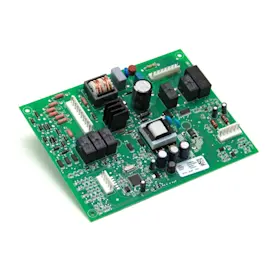
If you’re seeing error indicators on an electronic control, use Kenmore electronic control module freezer error codes to match the display to the next diagnostic step.
Last updated: January 2026
How long does a Kenmore upright freezer last?
A Kenmore upright freezer like model 25328262802 typically lasts 10 to 15 years with normal household use. Keeping the door gasket sealing well, maintaining airflow, and following the care steps in the 25328262802 owner's manual helps you reach the full expected lifespan.
Typical lifespan and what affects it
Most upright freezers land in the 10 to 15 year range; heavy use and poor ventilation shorten life, while steady temperatures and good maintenance extend it.
- Frequent door openings and warm-room placement increase run time
- Frost buildup and blocked vents reduce efficiency and strain components
- Dirty condenser areas can raise operating temperatures
- Power interruptions and surges can stress the electronic control board
- Overloading with unfrozen food can force long run cycles (the manual notes a cool-down period and gradual loading)
What “end of life” usually looks like
Common symptoms show up before a total failure:
- Freezer warms above 0°F
- Compressor runs constantly or clicks on and off
- Heavy frost on the back wall (defrost system issue)
- Loud fan noise or no airflow
- Temperature alarm or control issues
Quick symptom-to-part area guide
| Symptom | Most likely system | Example parts for this model |
|---|---|---|
| Heavy frost, warming | Defrost system | Defrost heater 5304496687, defrost timer 5304518034 |
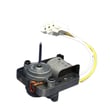
| Warm spots, poor airflow | Evaporator fan system | Freezer evaporator fan motor 297309000 |
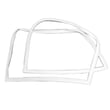
| Door won’t seal, frost at edges | Door sealing | Freezer door gasket 5304507201 |
Why it matters
A freezer that is nearing the end of its service life often uses more electricity and struggles to hold safe food-storage temperatures. Catching airflow, defrost, or gasket problems early can prevent food loss and reduce wear on the compressor.
Last updated: January 2026