Error Codes




What is the most common problem with a GE refrigerator?
The most common issue we see on GE refrigerators like model GNE27JGMWFWW is a cooling problem (warm fresh food section, soft ice, or temperature swings). The usual causes are restricted airflow, a failing evaporator fan, defrost system trouble, or a temperature-sensing/control issue.
Most common causes to check first
- Dirty condenser coils: reduces heat removal and raises cabinet temps.
- Airflow blocked inside: overpacked shelves or blocked vents causes warm spots.
- Evaporator fan not running: little to no cold air circulation to the fresh food section.
- Defrost system problem: frost buildup on the evaporator restricts airflow.
- Temperature sensing/control issue: incorrect readings can cause short cycling or poor cooling.
Quick troubleshooting steps (safe, no tools)
- Confirm settings: refrigerator about 37°F, freezer about 0°F.
- Make sure doors close fully; check for gaps and torn gaskets.
- Clean condenser coils and verify the condenser fan runs when the compressor runs.
- Listen for the evaporator fan (often a steady whir from the freezer area).
- If you see error codes, use GE refrigerator error codes to narrow the failure.
Parts that commonly relate to cooling complaints on this model
If basic checks point to a component issue, these parts on our GNE27JGMWFWW parts list often match cooling symptoms:
| Symptom | Common suspect | Example part on this page |
|---|---|---|
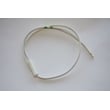
| Temps swing or read wrong | Temperature sensor | GE profile refrigerator temperature sensor WR55X10025 |
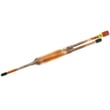
| Heavy frost, warm fridge | Defrost thermostat issue | Refrigerator defrost bi-metal thermostat WR50X10069 |
| Warm fridge, freezer OK or noisy | Evaporator fan issue | Motor dc evap fan WR60X39625 |
| Random cooling failures | Control problem | Main control board (listed on this page) |
Why it matters
Cooling problems can spoil food quickly and also make the compressor run longer than normal. Catching airflow and defrost issues early often prevents bigger, more expensive repairs.
To order parts for GNE27JGMWFWW, use the parts list for this model or search by model number on Sears PartsDirect.
Last updated: February 2026
How to remove bottom grille on GE refrigerator?
On a GE GNE27JGMWFWW bottom-mount refrigerator, the bottom grille (base grille or toe grille) typically comes off by releasing its retaining clips or removing a couple of screws, then pulling the grille straight out and down. This gives you access for cleaning and basic inspection.
Quick removal steps (most common)
- Unplug the refrigerator or switch off power at the breaker.
- Open both fresh food doors for better access.
- Look along the top edge of the grille for clip tabs.
- If you see screws, remove them with a Phillips screwdriver.
- Pull the grille straight toward you to release the clips.
- Tilt the grille down and lift it away from the bottom edge.
Reinstalling the grille
In most cases, reinstalling is the reverse of removal: align the bottom edge first, then push the top edge in until the clips snap into place (or reinstall the screws).
| What you see at the grille | What to do | What it means |
|---|---|---|
| No screws, grille feels “snapped in” | Pull firmly near each end to pop clips free | Clip-retained toe grille |
| 2 screws (often one on each side) | Remove screws, then pull grille forward | Screw-retained base grille |
| Grille won’t release evenly | Work left to right, releasing one clip at a time | Prevents cracking tabs |
Why it matters
Removing the bottom grille lets us clean dust from the condenser area and check for airflow issues. Better airflow helps the compressor run efficiently and can reduce warm-temperature complaints.
If you are removing it to troubleshoot cooling or noise
After the grille is off, check these common items:
- Heavy dust buildup restricting airflow
- Condenser fan running (if equipped)
- Unusual vibration from the grille itself
- Signs of water dripping or a puddle under the unit
For deeper troubleshooting, use our DIY guides like how to fix your evaporator cooling fan or browse model-specific parts for GNE27JGMWFWW on the parts list, then search by model on Sears PartsDirect.
Last updated: February 2026
How to read a GE refrigerator model number?
GE refrigerator model numbers are a structured code that identifies the product family, size class, feature set, and finish. For your GE refrigerator model GNE27JGMWFWW, matching the full model number is the most important step because it ensures the parts list and diagrams line up with your exact configuration.
What the characters usually mean (quick guide)
While GE formats vary by series, most model numbers follow a consistent pattern: letters first (platform/series), then numbers (size class), then letters (feature package), and a finish code at the end.
- Leading letters: product platform/series (helps narrow the correct parts breakdown)
- Numbers (often 2 digits): size class (commonly tied to capacity range)
- Middle letters: feature package (ice maker, dispenser style, controls, door style)
- Ending letters: finish/color and revision codes (can change bins, shelves, trim, or electronics)
How we recommend using the model number for parts
When you are ordering parts for a bottom-mount refrigerator like GNE27JGMWFWW, the safest workflow is to use the full model number first, then confirm the part by name and ID.
- Copy the model number exactly from the rating label (no spaces)
- Use the model-specific parts list to find the correct diagram section
- Match the part by part name and part ID, not just by appearance
- If multiple versions appear, compare your refrigerator’s existing part markings
- For water and ice issues, confirm whether your unit uses a filter and which style
Common examples for this GE model
These are frequently referenced items on this model’s parts list; they are good examples of why the exact model suffix matters.
| System | What the model number helps you match | Example part on this model page |
|---|---|---|
| Water filtration | Filter style and housing/manifold | GE refrigerator water filter XWFE |
| Water supply | Valve style and electrical connector | Refrigerator water inlet valve WR57X30890 |
| Temperature control | Sensor type and harness fit | GE profile refrigerator temperature sensor WR55X10025 |
Why it matters
Even small model-number suffix differences can change door bins, control boards, water filter housings, and wiring connectors. Using GNE27JGMWFWW exactly helps prevent wrong-part returns and speeds up repairs.
For broader model-number searches and cross-checking, we also support lookup by model on Sears PartsDirect.
Last updated: February 2026
What is the average life expectancy of a GE refrigerator?
Most GE refrigerators, including the GE GNE27JGMWFWW bottom-mount style, typically last 12 to 15 years with normal household use. Regular maintenance (clean airflow, good door sealing, and stable temperatures) is what most often separates a shorter lifespan from a longer one.
Typical lifespan ranges (what to expect)
Refrigerator life varies mainly by usage, environment, and maintenance. Here is a practical range we see for modern full-size refrigerators:
| Condition | Typical lifespan | What usually drives it |
|---|---|---|
| Heavy use, dusty area, warm garage | 8 to 12 years | Poor airflow, higher run time |
| Average home use | 12 to 15 years | Normal wear on sealed system and fans |
| Well-maintained, good ventilation | 15 to 19 years | Clean condenser area, stable temps |
Maintenance that extends life (high impact)
These steps reduce compressor run time and prevent common cooling and water system failures:
- Keep the condenser area clean and unobstructed (pet hair and dust are major heat traps).
- Confirm doors close fully and gaskets seal; avoid overloading door bins.
- Set stable temps (most homes do best around 37°F fresh food and 0°F freezer).
- Replace the water filter on schedule to protect water flow and the dispenser system (use GE refrigerator water filter XWFE).
- Address temperature swings early; a failing sensor can cause overcooling or warm temps (see GE profile refrigerator temperature sensor WR55X10025).
Signs your refrigerator is nearing end-of-life
A single symptom does not always mean replacement, but repeated issues usually indicate major wear:
- Food spoils faster or temperatures drift even after cleaning and resetting settings
- Loud or frequent fan noise, or warm cabinet sides for long periods
- Frost buildup that returns soon after defrosting
- Water dispenser slows down even with a new filter
- Multiple repairs close together (especially cooling plus electronics)
Why it matters
A refrigerator that is struggling to maintain temperature runs longer and harder, which accelerates wear on the compressor, fans, and control boards. Catching airflow, sealing, and temperature-sensing problems early often prevents the most expensive failures.
Ordering parts for your GE GNE27JGMWFWW
We list model-matched replacement parts for GE GNE27JGMWFWW on this page (for example, filters and sensors), and you can also search by model number on Sears PartsDirect.
Last updated: February 2026
How can I tell what size my refrigerator is?
To tell what size your GE GNE27JGMWFWW refrigerator is, we look at two “sizes”: the outside dimensions (to confirm it fits your space) and the inside capacity (cubic feet, to confirm it fits your household). Measuring both gives you the most accurate answer.
Measure the outside dimensions (fit)
Use a tape measure and record in inches:
- Width: left to right across the cabinet (measure at the widest point)
- Height: floor to top of the cabinet (include hinges if they stick up)
- Depth: front to back (measure cabinet depth and also depth with doors/handles)
- Door swing clearance: space needed for doors to open fully
- Ventilation clearance: space behind, above, and at the sides for airflow
Quick fit checklist
- Measure the cabinet opening and compare it to the refrigerator’s max width and max depth.
- Confirm you can still open doors and drawers without hitting walls or islands.
- Plan a path through doorways and hallways; remove doors/handles only if needed.
Estimate the inside capacity (cubic feet)
Capacity is the usable storage volume inside the refrigerator and freezer. If you do not have the capacity label handy, a practical rule of thumb is:
- About 4 to 6 cubic feet per person in the household
Household sizing guide
| Household size | Typical total capacity range |
|---|---|
| 1 to 2 people | 10 to 18 cu. ft. |
| 3 to 4 people | 18 to 25 cu. ft. |
| 5+ people | 25 to 30+ cu. ft. |
Where to find the exact size on the refrigerator
On most GE refrigerators, the model and capacity information is commonly found on a rating label inside the fresh food section (often on a side wall) or near a door frame.
Why it matters
Getting both measurements right prevents common problems like poor airflow (warm temps), doors that cannot open fully, and delivery issues. It also helps you choose correctly sized replacement items like a GE refrigerator water filter XWFE and keep water and ice performance consistent.
You can also shop model-matched parts for GNE27JGMWFWW from the parts list for this refrigerator, or search by model number on Sears PartsDirect.
Last updated: February 2026