Error Codes


Are whirlpool washer parts interchangeable?
Whirlpool washer parts are only interchangeable when the replacement part is listed as compatible with your exact washer model, such as WFW6620HC3. Even within Whirlpool, similar-looking parts can have different connectors, mounting points, or software compatibility, so we match parts by model, not by appearance.
Parts can be interchangeable only if they share the same fit and function for the same design platform. For a front-load washer like Whirlpool WFW6620HC3, the most common non-interchangeable areas are the door lock system, water fill components, and electronic controls.
- Always confirm compatibility by model number (WFW6620HC3)
- Match the part ID and description, not just the brand name
- Electrical parts must match connectors and control logic
- Water-handling parts must match flow rate and port orientation
- Mechanical parts must match mounting holes and clearances
These are model-matched parts for this washer; using a different version can cause leaks, no-fill/no-drain symptoms, or door lock errors.
| System | Example part for WFW6620HC3 | What can go wrong if mismatched |
|---|---|---|
| Draining | Washer drain pump assembly W11458345 | Won’t drain, noisy pump, leaks |
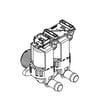
| Filling | Water valve W11688995 | Slow fill, overfill, water hammer |
| Door locking | Ha15g janus- W11565030 | Door won’t lock/unlock, won’t start |
- Use the full model number WFW6620HC3 when searching.
- Compare the exact part ID (for example, W11458345) and part name.
- If you’re troubleshooting an error message, use an error code guide first to avoid replacing the wrong part.
- For error displays, start with Whirlpool duet steam front load washer error codes
- For no-drain symptoms, check the drain path for clogs before replacing the pump
- For no-fill symptoms, verify both hot and cold supply valves are fully open
Using the correct Whirlpool-compatible part protects wash performance, prevents leaks, and avoids repeat failures caused by mismatched electrical connectors or incorrect water flow characteristics.
Last updated: February 2026
What does F3E2 mean on a whirlpool washer?
On the Whirlpool WFW6620HC3 washer, the F3E2 error points to a water level (pressure) sensing problem. In most cases, the washer is not reading the tub water level correctly because of a pressure sensor issue, a pressure hose problem, or a drain condition that prevents stable water level readings.
- Unplug the washer for 1 minute, then restore power and retry a cycle.
- Make sure the drain hose is not shoved too far down the standpipe (it can siphon water out).
- Check for a slow drain: if water lingers in the tub, the level reading can act erratic.
- Run a rinse and spin; listen for the drain pump running and watch for strong flow at the drain.
- If the washer recently moved, confirm it is level and not rocking.
F3E2 is usually tied to the pressure system (sensor plus hose) or a drain issue that confuses level sensing.
| Symptom you notice | Most likely area | What we typically do |
|---|---|---|
| Stops mid-cycle, beeps, shows F3E2 | Pressure sensing | Inspect/replace pressure sensor or hose |
| Overfills or underfills | Pressure sensing or inlet | Check pressure hose, then inlet valve |
| Won’t complete drain, then errors | Drain system | Clear pump filter/obstruction, check pump |
If basic checks do not clear the code, these model-matched parts are the usual next step:
- Pressure sen W11316246 (water level pressure sensor)
- Hose, pressure switch W11456953 (air/pressure hose to the sensor)
- Washer drain pump assembly W11458345 (if the washer is draining slowly or intermittently)
- Water valve W11688995 (if fill is inconsistent and you have good household water pressure)
The washer uses the pressure sensor to prevent overfilling and to time wash, rinse, and spin correctly. When the signal is wrong, the control can stop the cycle to protect the washer and your laundry.
For code lookups and what to check next, use our Whirlpool duet high efficiency front load washer error codes guide.
Last updated: February 2026
What is the average lifespan of WFW6620HC3?
The average lifespan of a Whirlpool front-load washer like model WFW6620HC3 is about 10 years with normal household use and routine maintenance. Keeping the drain system clear, the door seal clean, and the washer level helps you reach that service life.
- Load size and frequency: frequent heavy loads shorten bearing, suspension, and motor life.
- Drain health: coins, lint, and small items strain the pump and can cause slow drains.
- Water quality: hard water increases detergent buildup and can affect valves and sensors.
- Ventilation and cleaning: leaving the door ajar and cleaning the seal reduces odor and mold.
- Leveling and vibration: an unlevel washer increases wear on the tub, drum, and rotor.
- Run a monthly cleaning cycle; wipe the door glass and gasket after use.
- Check pockets to prevent debris from reaching the pump.
- Use HE detergent and avoid overdosing.
- Verify the washer is stable; tighten the leveling legs and locking nuts if needed.
- If you notice slow draining or standing water, inspect the drain path and consider replacing the washer drain pump assembly W11458345.
| Component | Typical service life | Common early warning signs |
|---|---|---|
| Drain pump | 5 to 10 years | Humming, slow drain, water left in tub |
| Water valve | 7 to 12 years | Won’t fill, fills slowly, leaks at inlet |
| Control board | 8 to 12 years | Random resets, dead panel, cycle stops |
| Door bellow (gasket) | 5 to 10 years | Leaks at door, odor, visible tears |
Knowing the expected lifespan helps you decide whether to maintain, repair, or replace. On a 10-year washer, a targeted repair (pump, valve, bellow) often restores reliable performance and prevents secondary damage from leaks or poor draining.
Last updated: March 2026