Owner’s manual
 View engine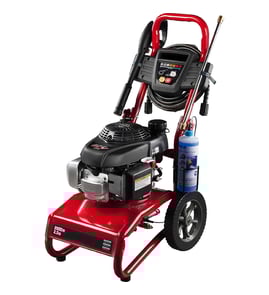



What kind of gas goes in a Craftsman 580752052 pressure washer?
Use clean, fresh, unleaded gasoline with a minimum rating of 87 octane (87 AKI, 91 RON) in your Craftsman 580752052 gas pressure washer. Gasoline with up to 10% ethanol (gasohol) or up to 15% MTBE is acceptable; do not use E85 and do not mix oil into the gas (it is not a 2-cycle fuel mix). See the owner's manual for the full fuel and safety instructions.
Fuel requirements for model 580752052
Use fuel that meets these basics:
- Unleaded gasoline only
- Minimum 87 octane (87 AKI, 91 RON)
- Fresh, clean fuel (old gas can cause hard starting and surging)
- Up to 10% ethanol (E10) is OK
- Up to 15% MTBE is OK
- No E85; no oil mixed into gasoline
Quick do and don’t table
| Item | OK to use? | Notes |
|---|---|---|
| Unleaded 87 octane (or higher) | Yes | Meets the minimum requirement |
| E10 (up to 10% ethanol) | Yes | Common pump gas |
| MTBE up to 15% | Yes | Acceptable oxygenate |
| E85 | No | Can damage the fuel system |
| Gas mixed with oil | No | This engine uses straight gasoline |
Why it matters
Correct fuel helps the engine start easily, run smoothly under load, and protects the carburetor and fuel system from deposits. Using the wrong fuel (especially E85 or stale gas) is a common cause of “won’t start” and “losing power” symptoms.
Helpful related troubleshooting
If you still have starting or performance issues after refueling with fresh gas, follow the step-by-step checks in pressure washer won't start or pressure washer engine losing power.
Last updated: February 2026
Why does my gas pressure washer have no pressure?
If your Craftsman 580752052 gas pressure washer runs but has no pressure, the most common causes are air trapped in the pump, a restricted water supply (clogged inlet screen or kinked hose), or a spray tip/gun issue. Purge air first, then confirm steady water flow before troubleshooting the pump.
Quick fixes to try first (in order)
- Turn water on fully and confirm strong flow from the garden hose.
- Disconnect the spray tip and trigger the gun to purge air until flow is steady.
- Check and clean the water inlet screen (the manual calls this out as routine maintenance). See the owner's manual.
- Inspect the high-pressure hose for kinks, cuts, or internal collapse; replace if damaged.
- Swap to a different spray tip (a clogged tip can feel like “no pressure” or “weak pressure”).
What to check if pressure is still low
Water supply and temperature
Your washer needs a solid water supply; the manual also notes using water not to exceed 100°F.
Hose, gun, and leaks
A leak or restriction anywhere after the pump reduces pressure.
| Checkpoint | What you’re looking for | What to do |
|---|---|---|
| Water inlet screen | Debris, sand, torn screen | Clean; replace if torn/perforated |
| High-pressure hose | Kinks, cuts, soft spots, leaks | Replace the hose if damaged |
| Spray gun/wand | Drips at fittings, weak stream | Tighten fittings; replace worn seals |
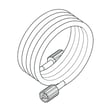
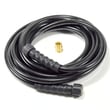
If your hose is leaking, kinked, or damaged, replacing it is often the fastest fix. The model’s parts list includes the pressure washer hose 84006753.
Pump-related causes (after supply checks)
If water supply is good and you have purged air, low or no pressure often points to a sticking unloader valve, worn pump seals/valves, or debris in the pump.
- If pressure surges or cycles, suspect the unloader valve.
- If pressure is consistently weak, suspect pump valves/seals or a restriction.
For step-by-step guidance, use how to replace a pressure washer unloader valve.
Why it matters
Running a pressure washer with poor water supply, trapped air, or restrictions can overheat and damage the pump. Confirming proper flow first protects the pump and restores pressure faster.
Last updated: February 2026
What is a good PSI for a gas pressure washer?
A good PSI for a gas pressure washer depends on what you’re cleaning. For typical home jobs, 1,300 to 2,800 PSI works well. Your Craftsman pressure washer model 580752052 is rated at 2,550 PSI max, which fits most driveway, siding, and deck cleaning needs (with the right spray tip). See the 580752052 owner's manual for operating and spray tip guidance.
Quick PSI guide by task
- 1,300 to 2,000 PSI: cars, patio furniture, grills (use a wider spray tip)
- 2,000 to 2,800 PSI: decks, fences, sidewalks, most home exterior cleaning
- 2,800 to 3,500 PSI: heavy concrete stains, large driveways (more risk of surface damage)
- Over 3,500 PSI: commercial use; easy to etch concrete or damage wood if used incorrectly
What your 580752052 is designed to deliver
Your model is built around these key performance specs:
| Spec | Craftsman 580752052 rating | Why it matters |
|---|---|---|
| Max pressure | 2,550 PSI | Strong enough for most home cleaning without being overly aggressive |
| Max flow | 2.3 GPM | Higher GPM usually cleans faster than higher PSI alone |
| Water supply requirement | At least 20 PSI at the hose end | Prevents pump cavitation and poor pressure |
How to get the best results (and avoid damage)
- Start with the widest spray tip that still cleans effectively; narrow tips increase cutting power.
- Keep the nozzle moving; lingering in one spot can etch concrete or fuzz wood.
- Purge air from the pump before starting; squeeze the trigger with water on until flow is steady.
- Never run the pump without water connected and turned on.
- If pressure seems low, check for a kinked garden hose, clogged inlet screen, or a worn/leaking high-pressure hose.
Why it matters
Choosing the right PSI range helps you clean efficiently while protecting surfaces and the pump. With a 2,550 PSI, 2.3 GPM machine like the Craftsman 580752052, technique and spray tip choice usually matter more than chasing higher PSI.
Last updated: February 2026