



What's the average lifespan of a Goodman furnace?
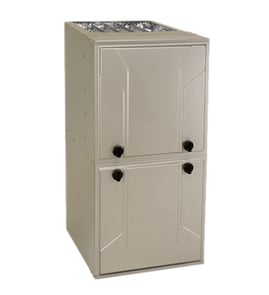
A Goodman gas furnace like model GMP100-5 typically lasts 15 to 20 years. To reach the high end of that range, we recommend consistent filter changes, keeping airflow unobstructed, and addressing ignition or blower issues early with the correct replacement parts.
Typical lifespan range (what to expect)
Most residential gas furnaces fall into a predictable lifespan window based on use and maintenance.
| Furnace condition | Typical outcome | What you can do |
|---|---|---|
| Well maintained | 18 to 20 years | Change filters regularly; keep vents open |
| Average maintenance | 15 to 18 years | Schedule seasonal checks; clean dust buildup |
| Poor airflow or repeated overheating | 10 to 15 years | Fix airflow restrictions; correct blower/limit issues |
What shortens furnace life fastest
These are the most common life-reducers we see on gas furnaces:
- Dirty or restrictive air filter causing overheating
- Blocked supply or return vents reducing airflow
- Repeated short-cycling (often tied to airflow, thermostat, or control issues)
- Ignition problems that cause frequent retries and stress components
- Dust buildup on the blower wheel and inside the cabinet
Parts that often matter as a furnace ages
If your GMP100-5 is struggling to start, runs inconsistently, or the blower is noisy, these model-matched parts are commonly involved:
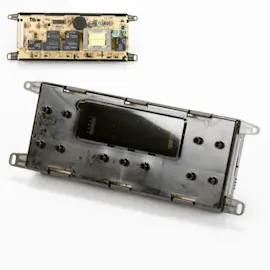
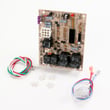
- Board B1809913S (ignition/control functions)
- Blower wheel D6723311S (air movement and airflow balance)
Why it matters
A furnace near the end of its lifespan can still run, but small issues like restricted airflow or unreliable ignition tend to snowball into more frequent shutdowns, higher operating stress, and comfort problems. Catching those issues early helps the furnace run cooler, steadier, and longer.
Last updated: February 2026
How to fix furnace pressure switch stuck open?
A “pressure switch stuck open” condition on your Goodman GMP100-5 gas furnace usually means the furnace is not proving draft. In most cases, fixing it comes down to restoring proper airflow through the inducer and venting system, or replacing a failed control component.
Safety first (before you touch anything)
- Turn off electrical power to the furnace at the switch or breaker.
- Shut off the gas supply if you will be opening the burner compartment.
- Let the furnace cool for 10 to 15 minutes.
- If you smell gas, stop and contact a qualified technician.
What to check (in the order that solves most “stuck open” calls)
- Vent and intake piping: Look for snow, leaves, bird nests, sagging pipe, or disconnected joints.
- Inducer area and drain paths: Clear any water, debris, or blockage that could prevent proper draft.
- Pressure switch hose: Remove the rubber tube and clear moisture or debris; make sure it is not cracked, soft, or loose.
- Port on the inducer housing: The small nipple where the hose connects can clog; clear it carefully.
- Wiring connections: Reseat spade terminals at the pressure switch and control board.
Quick diagnostic checks you can do
| Check | What you’re looking for | What it points to |
|---|---|---|
| Inducer starts and runs | Strong, steady draft sound | If weak or noisy, draft problem likely |
| Hose condition | Dry, tight fit, no splits | Leaks prevent switch from closing |
| Vent termination | Clear and unobstructed | Blocked vent keeps switch open |
| Electrical connections | Tight, clean terminals | Loose wiring can mimic a fault |
When a part is the likely cause
If venting is clear, the hose and port are clear, and the inducer runs normally, the issue is commonly a failed pressure switch circuit or control logic. On this model, a failing ignition control board can also contribute to pressure switch fault behavior; if you are diagnosing control issues, start with the board B1809913S.
Why it matters
The pressure switch is a safety device. It prevents burner ignition unless the furnace can safely move combustion gases through the flue. Bypassing it is unsafe and can damage the furnace.
Last updated: February 2026
How much does it cost to install a Goodman furnace?
Installing a Goodman gas furnace like model GMP100-5 typically costs about $3,500 to $9,000+ total (equipment plus labor). Most replacements land in the $4,000 to $7,000 range, with price driven by efficiency level, job complexity, and whether ductwork, venting, or electrical upgrades are needed.
What changes the installed price the most
- Replacement vs. new install: A like-for-like swap is usually the lowest cost.
- Efficiency and venting: Higher-efficiency setups often require different venting and added labor.
- Ductwork condition: Leaky, undersized, or damaged ducts can add significant cost.
- Electrical and controls: Adding a new thermostat, running new wiring, or correcting power issues increases labor.
- Permits and code items: Local requirements (gas shutoff, drain, venting, combustion air) can add parts and time.
- Accessibility: Tight closets, attics, or crawlspaces increase labor time.
Typical cost ranges (what you’re paying for)
| Scenario | What’s included | Typical total cost |
|---|---|---|
| Basic replacement | Remove old unit, set new furnace, reconnect existing duct and vent (when compatible) | $3,500 to $5,500 |
| Standard replacement | Replacement plus common updates (thermostat, minor venting or gas line work) | $4,000 to $7,000 |
| Complex install | Duct changes, venting redesign, electrical upgrades, difficult access | $7,000 to $9,000+ |
Quick ways to keep the quote accurate
- Confirm the exact model number and fuel type before ordering parts or scheduling work (see how to find your appliance model number (and what it means for parts)).
- Ask whether the quote includes ductwork modifications, venting changes, and permits.
- If the furnace is having ignition or control issues, price out repair parts first (for example, the board B1809913S).
Why it matters
Furnace installation cost is mostly labor and job scope. Two homes can install the same Goodman furnace model and end up with very different totals because venting, ductwork, and code requirements change the amount of work required.
Last updated: February 2026
Does a Goodman furnace have a reset button?
Yes. Goodman gas furnaces, including model GMP100-5, use one or more manual-reset safety switches that people call a “reset button”; it is not a single reset for the entire furnace. If a safety trips again after one reset, we stop resetting and correct the cause.
Where the “reset” is usually found
Manual resets are typically on safety devices, not on the thermostat:
- Flame rollout switch near the burner area (often has a small center button)
- Some high-limit switches in the supply-air or heat exchanger area (many are auto-reset)
- Control board lockout that clears by cycling power (repeated lockouts mean a fault)
Safe reset steps
- Turn off power at the furnace switch or breaker.
- Remove the access panel and find the tripped safety (look for a small center button).
- Press the button once firmly (you may feel a click).
- Reinstall panels, restore power, and call for heat.
What usually causes a safety to trip
A resettable safety is reacting to overheating or flame disturbance:
- Dirty or restrictive air filter
- Closed registers or blocked return air
- Low airflow from a dirty blower wheel
- Venting or combustion-air restriction
- Burner or flame problems
| What you see | What it often means | First checks |
|---|---|---|
| Runs then shuts off on limit | Overheating, low airflow | Filter, registers, blower airflow |
| Repeated ignition attempts | Ignition or control issue | Wiring, grounds, flame sensing |
If you suspect an ignition/control problem, a common replacement is the board B1809913S.
Why it matters
A tripped rollout or limit switch is a safety warning. Resetting repeatedly can lead to more damage and unreliable heat; one reset is a checkpoint to fix airflow, venting, or ignition issues.
Last updated: February 2026