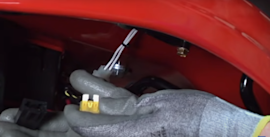
Installation guide
 Owner’s manual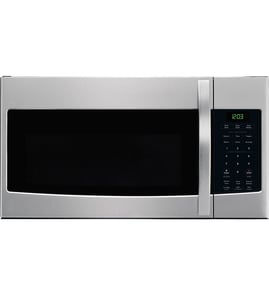



What is the average lifespan of a GE microwave?
A GE microwave typically lasts 8 to 10 years. For an over-the-range model like GE PVM1870DM1BB, lifespan depends most on daily run time, keeping the cavity and filters clean, and avoiding door-slam damage that can affect the interlock system.
What affects lifespan the most
- Door use and alignment: Worn latches or switches can stop the microwave from running.
- Ventilation and grease buildup: A clogged grease filter makes the vent fan work harder.
- Heating system stress: Repeated long cook times can wear high-voltage components.
- Power quality: Surges and frequent breaker trips shorten control and power component life.
- Cleaning habits: Harsh cleaners and moisture intrusion can damage surfaces and electronics.
Quick care checklist for PVM1870DM1BB
Use these habits to help your microwave reach the typical 8 to 10 year range:
- Clean interior splatters regularly; avoid abrasive cleaners.
- Wash the grease filter on a routine schedule (more often with heavy frying).
- Do not run the microwave empty.
- Close the door gently; confirm it latches fully every time.
- Follow the cleaning and use guidance in the PVM1870DM1BB owner’s manual.
Common “end of life” symptoms and likely areas
| Symptom | What it often points to | Example part on this model |
|---|---|---|
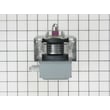
| Runs but does not heat | High-voltage circuit issue | Microwave magnetron WB27X10880 |
| Dead display, no response | Fuse or power supply issue | (Check wiring and fuse per manual) |
| Only works when door is held | Door latch or interlock switch issue | Micro-switch WB24X830 |
| Loud humming or burning smell | High-voltage component failure | (Stop using and service) |
Why it matters
A microwave/hood combo like the GE PVM1870DM1BB is both a cooking appliance and a vent system. Keeping the door latching correctly and the vent path clean reduces strain on key components and helps prevent nuisance shutdowns.
Last updated: January 2026
Is 1800 watts a lot for a microwave?
Yes. For a home microwave, 1800 watts is at the very high end; most countertop and over-the-range units cook in the 800 to 1200 watt range. Your GE PVM1870DM1BB is designed for a standard 120V, 15A circuit and is rated at about 1.58 kW input, so “1800 watts” usually refers to cooking output on other models, not this one. See the PVM1870DM1BB installation guide for the electrical rating.
What “watts” means for microwaves
Microwave wattage is commonly discussed two ways:
- Cooking power (output watts): how fast it heats food
- Electrical input (watts or kW): what it draws from the outlet
- Circuit requirement: the breaker and wiring needed (amps and volts)
For the PVM1870DM1BB, the installation instructions list 120V AC, 60 Hz, 15 amps, and 1.58 kilowatts input, which is the number that matters for wiring and breaker sizing.
Is higher wattage better?
Higher cooking wattage can be “better” because it heats faster, but it also means you may need to adjust cook times and power levels to avoid overcooking.
- Use shorter cook times and stir or rotate more often
- Use lower power levels for delicate foods (butter, chocolate, sauces)
- Use covered microwave-safe cookware to heat more evenly
- Avoid running the microwave empty
Quick wattage comparison
| Microwave type | Typical cooking wattage | What you’ll notice |
|---|---|---|
| Compact | 500 to 800 W | Slower heating, longer cook times |
| Standard home | 800 to 1200 W | Most recipes are written for this range |
| High-power home | 1200 to 1800 W | Faster heating, easier to overcook |
Why it matters
Wattage affects both cooking results and electrical planning. If you are comparing models or troubleshooting performance, we use the electrical rating from the PVM1870DM1BB installation guide and the cooking guidance in the PVM1870DM1BB owner’s manual to set expectations and adjust power levels.
Last updated: January 2026
Is there a big difference between a 1000 and 1200 watt microwave?
Yes. A 1200-watt microwave typically heats and cooks noticeably faster than a 1000-watt unit, so you often reduce cook times and get better results with dense foods. For your GE PVM1870DM1BB, using power levels (1 to 10) helps fine-tune heating even when wattage differs; see the PVM1870DM1BB owner’s manual.
What the extra 200 watts changes in real use
A 1200-watt microwave delivers about 20% more cooking power than a 1000-watt model, so foods reach temperature sooner and you usually need less total run time.
- Faster reheating for leftovers, beverages, and frozen meals
- Shorter cook times for dense foods (potatoes, casseroles)
- Less time needed to bring liquids to a simmer
- More margin before food dries out from long run times
- More consistent results when you follow packaged directions written for higher wattage
How to adjust recipes when wattage is different
If a recipe or package assumes 1200 watts and you have 1000 watts, increase time; if it assumes 1000 watts and you have 1200 watts, decrease time.
| If directions are written for | Using a 1000W microwave | Using a 1200W microwave |
|---|---|---|
| 1200 watts | Add about 15% to 25% time | Follow directions |
| 1000 watts | Follow directions | Reduce time about 10% to 20% |
Use power levels to improve results (not just time)
Your GE PVM1870DM1BB lets you change power levels during cooking. Lower power can heat more evenly and reduce boil-overs.
- Use Power level 10 for most quick heating
- Use Power level 7 to 8 for gentler reheating (less splatter)
- Use Power level 3 to 5 for foods that boil over easily
- Stir, rotate, or turn food more often when using high power
Why it matters
Wattage mainly affects speed and consistency. Higher wattage can be more forgiving for busy cooking, but correct time and power-level adjustments matter more than the number on the label for day-to-day results.
Last updated: January 2026
What are common problems with GE Profile microwaves?
Common problems we see with GE Profile over-the-range microwaves like model PVM1870DM1BB include not heating, not starting, sparking/arcing, vent fan issues, and door latch or interlock switch problems. Many symptoms trace back to power supply checks, door closure, or high-voltage components; use the PVM1870DM1BB owner's manual troubleshooting section to match symptoms to safe next steps.
Most common symptoms and what they usually mean
- Microwave runs but does not heat: often a high-voltage component issue such as the magnetron, capacitor, or diode.
- Microwave will not start: commonly a tripped breaker/blown house fuse, a loose plug, or the door not closing securely.
- Sparking or arcing: frequently caused by food debris/grease buildup, damaged waveguide cover area, or metal items/racks used incorrectly.
- Vent fan problems (noisy, weak, or runs unexpectedly): grease buildup, a failing fan motor, or normal automatic fan operation under certain conditions.
- Door won’t latch or feels “off”: worn latch parts or door interlock switch components.
Quick checks we recommend first (safe, no disassembly)
- Confirm the outlet has power; reset the breaker if needed.
- Unplug the microwave for 1 minute, then plug it back in to clear a minor control glitch.
- Open and close the door firmly; the door must be fully latched for operation.
- Clean the underside and filters regularly; grease buildup can affect venting and performance.
- Avoid abrasive cleaners and never use oven cleaner inside the microwave.
Parts that commonly fix these issues on PVM1870DM1BB
| Symptom | Common part involved | Example part for this model |
|---|---|---|
| Won’t start or stops when door moves | Door interlock switch/latch parts | Micro-switch WB24X830, microwave latch body WB06X10676 |
| Runs but no heat | High-voltage circuit | Microwave magnetron WB27X10880, microwave high-voltage capacitor WB27X10011, h.v. diode WB27X10597 |
| Weak/no venting | Vent fan drive | Microwave vent fan motor assembly WB26X10210 |
Why it matters
A microwave that will not start is often a simple power or door-latch issue, but a microwave that runs without heating typically points to high-voltage components. Those repairs require strict safety handling; we use the manual’s troubleshooting guidance to decide when a basic check is enough versus when service is the safer path.
Last updated: January 2026