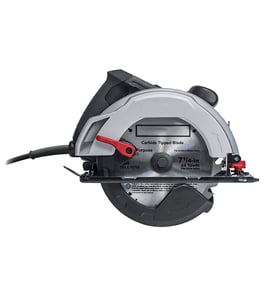

How do I know what size blade my circular saw is?
For your Craftsman circular saw model 315109231, the blade size is the blade’s diameter (for example, 7-1/4 in). We recommend confirming it two ways: read the blade’s etched markings and verify the saw’s maximum blade diameter and arbor size before installing a replacement blade.
Quick ways to identify the blade size
- Check the blade etching: look for diameter (inches), arbor (bore) size, and tooth count.
- Measure the blade diameter: measure straight across the blade through the center (tip to tip).
- Measure the arbor hole: use a ruler or calipers across the center hole.
- Check the saw’s blade guard label: many saws list the maximum blade diameter and arbor.
- Match the blade to the application: framing blades often have fewer teeth; finish blades have more.
What measurements matter (and what they mean)
| What to check | What it tells you | Why it matters |
|---|---|---|
| Blade diameter | Overall blade size (ex: 6-1/2 in, 7-1/4 in) | Must fit under the guard and match the saw’s max rating |
| Arbor (bore) size | Center hole size (ex: 5/8 in) | Must match the saw arbor so the blade mounts correctly |
| Kerf (thickness) | Blade body/cut width | Affects cut load, power demand, and cut quality |
| Tooth count | How many teeth | Controls speed vs. smoothness of cut |
Step-by-step: measuring the blade safely
- Unplug the saw (or remove the battery if it’s cordless).
- Raise the lower guard by hand and inspect the blade etching first.
- If markings are unreadable, remove the blade and measure diameter tip-to-tip.
- Measure the arbor hole; do not guess this size.
Why it matters
Using the wrong diameter or arbor size can prevent the blade from mounting correctly or interfere with the guard, which affects safety, cut accuracy, and motor load.
For more help with identifying the correct model information before ordering, use how to find your appliance model number (and what it means for parts).
Last updated: February 2026
What is a 140 tooth circular saw blade used for?
A 140-tooth circular saw blade is used for ultra-smooth, low tear-out cuts in thin sheet goods and trim materials; it is a good choice when you want a clean, finish-ready edge from your Craftsman 315109231 circular saw.
Best uses for a 140-tooth blade
A high tooth count means smaller “bites” per tooth, which helps reduce splintering and chipping.
- Plywood and veneered panels (clean face cuts)
- Melamine and laminated sheet goods (reduced edge chipping)
- Hardboard and thin paneling
- Non-ferrous metals (only if the blade is rated for it)
- Plastic sheet (only if the blade is rated for it)
When a 140-tooth blade is the wrong choice
A 140T blade cuts slower and can build heat if you push too hard, especially in thick stock.
- Thick framing lumber (2x material): use a lower tooth count for faster ripping
- Wet or pressure-treated wood: higher friction and heat buildup
- Fast demolition cuts: tooth damage risk is higher
Quick tooth-count guide
| Blade type | Typical tooth count | What it’s for |
|---|---|---|
| Rip / framing | 18 to 24T | Fast cuts in thick lumber |
| General purpose | 40 to 60T | Everyday crosscuts and sheet goods |
| Fine finish | 80 to 140T | Smooth cuts, minimal tear-out |
Why it matters
Using the right tooth count helps your saw cut cleaner, run cooler, and reduce kickback risk. For fine-finish work, a 140T blade can save time on sanding and edge cleanup.
Safety and setup tips
- Unplug the saw (or remove the battery) before changing the blade
- Match the blade diameter and arbor size to the saw
- Install the blade with the teeth facing the correct direction
- Support sheet goods to prevent pinching and binding
- Let the blade reach full speed before entering the cut
For more general DIY safety guidance before repairs or adjustments, use our are diy appliance repairs safe.
Last updated: February 2026
Is a 6 1/2 or 7 1/4 circular saw better?
A 7-1/4 inch circular saw is the better all-around choice because it delivers more cutting depth and broader blade availability for common framing and remodeling work; a 6-1/2 inch saw is better when you want a lighter, easier-to-handle tool for frequent overhead cuts or quick sheet-good breakdown.
Quick comparison (what changes in real use)
| Feature | 6-1/2 inch saw | 7-1/4 inch saw |
|---|---|---|
| Typical best use | Light-duty DIY, portability | General-purpose, framing, versatility |
| Cutting depth | Shallower | Deeper (handles thicker cuts more easily) |
| Weight/handling | Lighter, less fatigue | Heavier, steadier in long cuts |
| Blade selection | Good, but fewer options | Widest selection and easiest to find |
How to choose the right size for your projects
Pick 7-1/4 inch if you regularly:
- Cut 2x lumber and want more margin for bevel cuts
- Need one saw to handle most jobs (decking, framing, subfloor)
- Want the easiest blade shopping (rip, crosscut, plywood, finish blades)
Pick 6-1/2 inch if you prioritize:
- Lower weight for ladder work, overhead cuts, or long workdays
- Compact storage and easier one-handed positioning
- Mostly straight cuts in plywood, OSB, and thinner stock
Why it matters
Blade diameter directly affects maximum cut depth, which affects whether you can make a cut in one pass (especially on thicker material or at a bevel). The right size also impacts comfort: a lighter saw reduces fatigue, while a larger saw tends to feel more stable in long rips.
Notes for Craftsman model 315109231
Your Craftsman 315109231 is a circular saw model where the “better” choice depends on the work you do most. If you are shopping parts or confirming what you own, use our model number tips in how to find your appliance model number (and what it means for parts).
Last updated: February 2026
What brand of circular saw is best?
The best circular saw brand depends on how you use it. For everyday DIY and home projects, Craftsman (including model 315109231) is a strong value choice; for heavy daily jobsite use, pro-focused brands are typically built for higher duty cycles, battery ecosystems, and long-run performance.
How to choose the “best” brand for your needs
Focus on the features that affect cut quality, safety, and comfort more than the logo.
- Power source: corded for steady power; cordless for portability (battery platform matters)
- Blade size: 7-1/4 in. is most common; smaller blades trade depth for lighter weight
- Motor type: brushless (often longer runtime and efficiency) vs brushed (often lower cost)
- Base/shoe quality: rigid base helps keep cuts straight
- Bevel capacity and stops: faster, more repeatable angle cuts
- Dust management: helps visibility and reduces cleanup
Quick brand comparison (what most buyers prioritize)
| Buyer type | Best fit | Why it’s “best” for them |
|---|---|---|
| Occasional DIY | Craftsman, SKIL | Good performance per dollar, easy to live with |
| Serious DIY / remodel | DeWalt, Makita | Strong power, smoother controls, broad tool lineup |
| Daily pro use | Milwaukee, DeWalt, Makita | High durability, fast cutting, deep battery ecosystems |
What matters most for cut results (regardless of brand)
A “best” saw still cuts poorly with the wrong setup. We recommend:
- Use the right blade for the material (framing, plywood, finish, fiber cement)
- Set blade depth so only about 1/4 in. of tooth shows below the workpiece
- Check the shoe is square to the blade for 90° cuts
- Keep the blade sharp; dull blades cause burning and wandering cuts
- Use a straightedge guide for long rip cuts
Why it matters
Choosing a brand that matches your workload reduces kickback risk, improves cut accuracy, and saves money long-term by avoiding underpowered tools or mismatched batteries.
For help confirming you have the correct model number before shopping for parts or diagrams, use how to find your appliance model number (and what it means for parts).
Last updated: February 2026
Why is my circular saw stopping mid cut?
If your Craftsman circular saw model 315109231 stops mid-cut, it is almost always being overloaded (blade binding, dull blade, or cutting too fast) or losing electrical power (bad cord/plug, worn brushes, or a failing switch). Correcting the load and verifying steady power usually fixes it.
Quick checks (most common causes)
- Blade is dull or wrong type for the material; a dull framing blade will stall in plywood or wet lumber.
- Blade is binding because the kerf is closing (warped board, no support, pinching near the end of the cut).
- Cut is too aggressive; pushing hard overheats the motor and can trip internal protection.
- Loose blade or arbor issue; a slipping blade can feel like the saw “quits” under load.
- Power loss from a damaged extension cord, loose plug, or intermittent outlet.
Step-by-step troubleshooting
- Unplug the saw and remove the battery if it is a cordless variant (most 315-series are corded, but always verify your tool).
- Inspect the blade: look for pitch buildup, missing teeth, wobble, or rubbing on the guard.
- Check material support: support both sides of the cut so the offcut cannot sag and pinch the blade.
- Verify power delivery:
- Try a different outlet.
- Avoid long, undersized extension cords.
- Wiggle-test the cord near the strain relief (unplugged) for cuts or soft spots.
- Check the switch behavior: if it cuts out and restarts when you release and pull the trigger, the switch may be packed with dust or worn.
What the symptom usually points to
| What you notice | Most likely cause | What to do |
|---|---|---|
| Stops only in thick/hard wood | Overload or dull blade | Slow feed rate; replace blade |
| Stops near end of cut | Blade pinch | Improve support; use a wedge |
| Stops randomly, even no-load | Cord, switch, brushes, or motor | Inspect cord; consider brush/motor service |
| Restarts after cooling | Overheating | Let it cool; reduce load |
Why it matters
Repeated stalling overheats the armature, damages brushes, and can warp the blade. Fixing binding and power issues protects the motor and improves cut quality.
For safe electrical checks and continuity testing, we use the same approach shown in how to use a multimeter to test electrical parts video.
Last updated: February 2026
