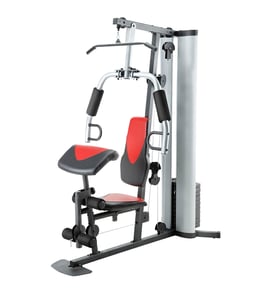


What are the dimensions of the Weider WESY96352?
Weider does not publish a single, fixed assembled dimension set for every WESY96352 setup because the real footprint changes with arm position, attachments, and how the unit is configured in your room. We recommend measuring your assembled machine at its widest, deepest, and tallest points.
How to measure the assembled footprint (most accurate)
Measure with the machine fully assembled and set up the way you will actually use it.
- Width: measure at the widest point (often the press arms or uprights)
- Depth/length: measure from the front-most attachment (leg developer or front stabilizer) to the rear-most frame point
- Height: measure from the floor to the highest pulley/tower point
- Repeat with arms moved: check the widest position of moving arms
- Include accessories: add any protruding handles, chains, or cable ends
Clearance we recommend around a home multi-gym
Leaving working space prevents wall contact and gives you room for full range of motion.
| Area around the unit | Typical clearance to leave |
|---|---|
| Each side | 24 to 36 in |
| Front (exercise space) | 36 to 48 in |
| Back (service access) | 12 to 24 in |
Why it matters
Accurate measurements help you avoid cable rub, restricted arm travel, and hard-to-service areas. It also reduces wear on moving components like pulleys and chains.
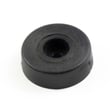
If you are rebuilding or refreshing contact points while setting up, a common comfort and wear item is the exercise equipment foam pad 208378.
Last updated: January 2026
What are the most common issues with WESY96352?
The most common issues we see on the Weider WESY96352 pro 9635 weight system are cable and pulley wear, loose hardware that causes wobble or noise, and worn contact parts like foam pads or straps. These problems usually show up as rough movement, uneven resistance, or squeaks and clunks.
Common problems and what they point to
- Rough or jerky motion: pulley wear, misrouted cable, or a chain/hook binding
- Squeaking or grinding: dry pivot points, worn bushings, or a pulley rubbing the frame
- Weight stack does not lift smoothly: selector pin not fully seated, cable slack, or misalignment
- Clunking or wobble: loose bolts/nuts/washers, or a worn pivot connection
- Leg developer or arm station feels unstable: loose hardware at pivots or worn pads/straps
Quick checks we recommend first
- Inspect the cable path and make sure it sits centered in every pulley groove.
- Check the weight stack selector and confirm the pin goes fully through the plate hole.
- Tighten frame hardware evenly (do not overtighten to the point of binding).
- Look for cracked, flattened, or missing wear items.
- Test movement with no load, then with light load to isolate where binding starts.
Parts that commonly solve these symptoms
| Symptom | Commonly involved part | Example part on this model |
|---|---|---|
| Jerky pull, squeal near a wheel | Pulley | Puly,3.5"od, 230475 |
| Cable/attachment feels unsafe | Hook/connector | Nordictrack exercise equipment snap hook 103087 |
| Leg attachment uncomfortable or slipping | Strap/pad | Image weight system ankle strap 115177 |
| Weight selection inconsistent | Selector pin | Pin,wt stack 193926 |
Why it matters
A weight system that binds or wobbles increases wear on the cable path and hardware, and it can make resistance feel inconsistent. Keeping pulleys, hooks, and fasteners in good shape helps the WESY96352 operate smoothly and reduces the chance of sudden slippage.
Last updated: March 2026
What is the weight limit on Weider Pro bench?
For the Weider WESY96352 pro 9635 weight system, the bench weight limit is the capacity printed on the bench’s rating label (typically on the frame near the seat/back hinge or base). Use that label as the safe maximum for user weight and total load.
How to find the correct capacity on your bench
Because “Weider Pro bench” can refer to multiple designs, the bench’s own label is the correct spec to follow.
- Look for a sticker or stamped plate on the main frame, seat support, or backrest hinge area
- Check whether the label lists user weight, lift load, or total load (user plus weights)
- Confirm the bench matches your WESY96352 setup (same frame style and attachments)
- If the label is missing or unreadable, stop increasing weight until the bench is inspected
- Recheck capacity after any repairs or hardware replacement
Safety checks before lifting heavier
Do these checks first; bench capacity assumes the frame and hardware are in good condition.
- Tighten all fasteners; replace any rounded, stripped, or mismatched nuts/bolts
- Inspect welds and tubing for cracks, bends, or rust-through
- Check pivot points for wobble or elongated holes
- Make sure the bench sits flat; replace missing caps or supports that cause rocking
- If your bench uses the weight stack, inspect connectors for wear and secure engagement
Parts that can affect stability on WESY96352 setups
| Symptom | What to inspect | Example part |
|---|---|---|
| Frame rocks or feels unstable | Pads, supports, contact points | Exercise equipment foam pad 208378 |
| Attachment movement feels rough | Chain condition and routing | Nordictrack weight system chain, 11-in 116868 |
| Connector does not fully close | Hook wear or deformation | Nordictrack exercise equipment snap hook 103087 |
Why it matters
Bench capacity is a safety limit based on the frame design and hardware. Staying within the labeled rating helps prevent sudden shifting, fastener failure, and loss of control during lifts.
Last updated: January 2026
