View engine
Is it cheaper to repair or replace a lawn mower?
For the Yard Pro 371580 walk-behind mower, it’s cheaper to repair when the problem is a normal wear item (blade, belt, cable, wheel hardware) and the total fix stays under about $100 to $200. Replacing makes more sense when a major drivetrain or engine repair costs more than about half the price of a comparable new mower.
Quick decision checklist
- Repair if the mower starts and runs well and only the cut or drive performance is off.
- Repair if the issue is a common wear part like a belt 532157769 or lawn mower throttle cable 532168552.
- Repair if the deck is solid (not rusted through) and the handle and wheels are stable.
- Replace if the engine has low compression, heavy smoke, or persistent no-start after basic fuel/ignition checks.
- Replace if the self-propel system needs multiple major parts (transmission plus wheels plus controls).
- Replace if repeated small repairs are adding up every season.
Typical repair costs vs. replacement value
| Situation | Usually best choice | Why |
|---|---|---|
| Dull/bent blade, poor cut | Repair | Low cost, immediate improvement |
| Self-propel slips but engine runs strong | Repair | Often belt, cable, or drive hardware |
| Transmission failure on self-propel | Compare | Part and labor can approach replacement cost |
| Multiple structural issues (deck, wheels, handle) | Replace | Safety and reliability drop fast |
What we see most often on this model type
On walk-behind mowers like the Yard Pro 371580, the most cost-effective repairs are usually in the cutting and drive controls:
- Replace a worn blade (a 22-inch deck commonly uses a 22-inch blade; match by model fit).
- Restore self-propel drive with a belt and adjustment.
- Fix speed or engagement issues with a control cable or drive control bar.
- Tighten or replace wheel hardware (nuts, washers, dust covers) to stop wobble.
Why it matters
A mower that already has a solid engine and deck is worth repairing because wear parts restore performance quickly. When the repair is major (engine or transmission) the cost and downtime often outweigh the benefit, especially compared to a newer mower with updated features.
Last updated: February 2026
What are the most common issues with 371580?
The most common issues we see on the Yard Pro 371580 walk-behind mower involve drive problems (self-propel not pulling), poor cutting quality, and control/cable wear. These problems usually trace to the drive belt and transmission parts, a worn blade, or stretched control cables.
Common symptoms and what they usually mean
- Mower will not self-propel or slips: worn or stretched drive belt, worn drive pawls, or transmission wear
- Cuts unevenly or leaves uncut strips: dull or bent blade, deck buildup, or height setting mismatch
- Drive control feels loose or does not engage: stretched/binding drive control cable or worn control bar linkage
- Bagging or discharge performance is poor: damaged rear door/deflector, clogged baffle, or worn bag
- Wheel issues (wobble, drag, noise): worn wheel/bearing, missing dust cover, or loose hardware
Parts that commonly fix these issues
If your symptoms match, these model-specific parts are common repair starting points:
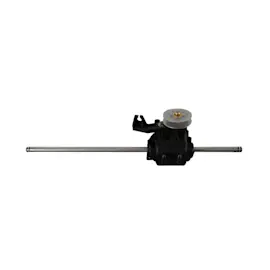
- Self-propel problems: belt 532157769, drive pawl 532404845, lawn mower transmission assembly 532415226
- Cutting quality problems: lawn mower 22-in deck mulching blade 532406713
- Control engagement problems: lawn mower drive control cable 532194653, lawn mower throttle cable 532168552
Quick checks before you order parts
- Tip the mower with the air filter and carburetor facing up; inspect the belt area for glazing, cracking, or slack.
- Check the blade for rounded edges, bends, or heavy nicks.
- Squeeze the drive control bar and confirm the cable moves smoothly and returns fully.
- Spin each wheel by hand; look for side-to-side play and listen for grinding.
Symptom-to-part cheat sheet
| Symptom | Most likely area | Common part to inspect |
|---|---|---|
| No self-propel | Drive system | Belt, pawls, transmission |
| Poor cut | Blade/deck | Blade, height adjusters |
| Won’t stay engaged | Controls | Drive control cable |
| Weak discharge/bagging | Rear door/baffle | Deflector, rear door |
Why it matters
On a self-propelled mower like the 371580, a small amount of belt stretch or cable slack can stop the drive from engaging fully; a dull blade also forces the engine to work harder and reduces cut quality.
Last updated: March 2026
How do I find the model number on my 371580?
Your Yard Pro walk-behind mower’s model number is printed on the mower’s ID label (also called a model tag). On model 371580, check the mower deck housing near the rear wheels or the rear discharge area; write the number exactly as shown.
Where to look on a Yard Pro 371580 mower
Check these common ID-label locations first:
- Top of the mower deck, near the engine mounting area
- Rear of the deck, above or between the rear wheels
- Near the bagging or rear-door area (if equipped)
- On the handle support brackets close to where the handle bolts on
- Under the deck lip near the discharge opening (wipe grass buildup first)
What the label usually includes (and what to copy)
Most mower tags list several identifiers. For parts lookup, we use the model number first.
| Label item | What it’s used for | Example of what to write down |
|---|---|---|
| Model number | Primary identifier for diagrams and parts | 371580 |
| Product number | Helps narrow exact build | Full code as printed |
| Serial number | Identifies your specific unit | Full code as printed |
Tips to make the tag readable
Grass, oil, and sun fading can hide the print. These steps usually bring it back:
- Brush off debris, then wipe with a damp rag and mild detergent
- Use a flashlight at an angle to highlight stamped or faded text
- Take a close-up photo and zoom in to read small characters
- Copy every digit and letter; do not add spaces
Why it matters
Using the exact model number ensures you get the correct diagrams and the right-fit parts for your mower, such as the lawn mower 22-in deck mulching blade 532406713 or the belt 532157769.
Last updated: March 2026