 Owner’s manual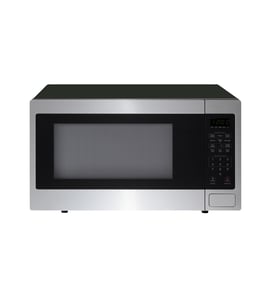






Is there a reset on a Kenmore microwave?
Yes. On the Kenmore 40573169310 countertop microwave, you can usually clear a glitch by disconnecting power briefly (unplugging the cord or switching the breaker off), then restoring power to reboot the control. For model-specific control settings and clock setup, use the owner's manual.
Quick reset options (start with the simplest)
- Power reset: Unplug the microwave for 1 to 3 minutes, then plug it back in.
- Stop/Cancel reset: Press Stop/Cancel to clear an incorrect entry and return to standby.
- Door reset: Close the door fully and try again if the oven will not start (a door not fully latched can prevent operation).
- Outlet check: Plug a small lamp into the same outlet to confirm the outlet has power.
What a reset fixes (and what it does not)
A reset helps when the display is frozen, the keypad is unresponsive, or the microwave will not start due to a temporary control issue. It does not fix a failed internal component.
| Symptom | Best first step | Next step |
|---|---|---|
| Display or keypad acting “stuck” | Power reset | Review settings in the owner's manual |
| Oven will not start | Confirm door is fully closed; press Stop/Cancel | Verify outlet power |
| Runs but does not heat | Stop using it and troubleshoot heating circuit | Use why is my microwave not heating |
Why it matters
Microwaves use safety interlocks and high-voltage components; a simple reboot can restore normal control operation, but repeated failures point to an electrical or door-switch issue that needs proper diagnosis.
Last updated: February 2026
Can you put a countertop microwave in a cabinet with a trim kit?
Yes, you can install the Kenmore 40573169310 countertop microwave in a cabinet with a trim kit as long as the cabinet setup still provides the required ventilation clearances and does not block any intake or outlet openings. Use the clearances and placement rules in the owner's manual.
Cabinet and ventilation requirements (what to follow)
When you enclose a countertop microwave, airflow becomes the main concern. For this model, the manual calls out these placement rules:
- Leave at least 3 inches (7.5 cm) between the microwave and adjacent walls.
- Keep one side open.
- Leave at least 12 inches (30 cm) of clearance above the microwave.
- Do not remove the legs from the bottom of the microwave.
- Do not cover or block openings (blocking vents can damage the microwave).
Trim kit guidance
A trim kit can make a built-in look cleaner, but it must be designed to keep the required airflow paths open.
Use this quick checklist
- The trim frame does not cover side, top, or rear venting areas.
- The cabinet cutout allows the clearances listed above.
- The microwave sits level and stable (legs installed).
- The power cord is not pinched or routed near heat.
Quick fit check table
| Item to verify | What you need for this model | Why it matters |
|---|---|---|
| Side clearance | 3 in. minimum to adjacent walls; one side open | Prevents overheating and poor performance |
| Top clearance | 12 in. minimum above | Allows heat to escape |
| Vent openings | Not blocked by cabinet or trim | Protects internal components |
Why it matters
Countertop microwaves like the Kenmore 40573169310 are designed to pull in cooling air and exhaust warm air through built-in openings. A cabinet or trim kit that restricts airflow can lead to overheating, nuisance shutdowns, or component damage.
Last updated: February 2026
Why would a Kenmore microwave stop working?
A Kenmore microwave like model 40573169310 commonly stops working because it is not getting power, the door is not fully closed and latched, or a control setting is preventing a start. Start with the basic checks in the owner's manual troubleshooting chart before moving to electrical testing.
Quick checks first (most common causes)
- Confirm the microwave is plugged in firmly and the outlet has power (try a lamp or small appliance).
- Close the door completely; a misaligned door or latch can prevent operation.
- Re-enter a simple cook cycle (for example, 30 seconds at full power) to rule out a wrong operation setting.
- Make sure the unit is not being run empty (some models will arc or behave abnormally when empty).
- Check for signs of arcing or sparking; stop using it until the cause is corrected.
What “stopped working” usually means
| Symptom | Common cause | What to do next |
|---|---|---|
| No display, no response | No power at outlet, loose plug | Verify outlet power; reset the home breaker if needed |
| Display works, won’t start | Door not closed, latch issue, wrong setting | Re-close door; retry a basic cook cycle |
| Runs but does not heat | Heating circuit problem (often involves internal components) | Follow safe diagnostic guidance; use our why is my microwave not heating article for next steps |
| Arcing/sparking | Non-microwave-safe items, food splatter, damaged interior surface | Stop use; clean cavity; remove metal/foil; inspect interior |
Parts that may be involved (when the turntable system is the issue)
If the microwave “works” but the turntable is not rotating, check these common turntable parts for your model:
- Midea microwave glass tray F06015Q00AP (tray not seated, cracked, or missing)
- Midea tray shaft 262200100005 (worn or stripped coupler/shaft)
Why it matters
A microwave that will not start is often a simple power or door-closure issue, but a microwave that runs without heating or shows arcing can indicate a condition that should be corrected before continued use. Using the troubleshooting steps helps you avoid replacing parts that are not needed.
Last updated: February 2026
Are Kenmore microwaves good?
Kenmore microwaves are a solid choice for everyday reheating and cooking because they typically deliver reliable heating performance and practical features at a good value. For the Kenmore 40573169310 countertop microwave, following the care and safety guidance in the owner's manual helps you get the best long-term results.
What “good” means for a countertop microwave
A “good” microwave consistently heats food, runs quietly, and holds up to normal kitchen use. In our experience, most customer satisfaction comes down to a few basics:
- Even heating at multiple power levels
- A door that closes and seals smoothly
- A stable turntable system (tray, roller support, coupler/shaft)
- Controls that respond consistently
- Easy-to-clean interior and door surfaces
Model-specific tips that improve reliability (40573169310)
Your manual emphasizes safe operation and proper cleaning of the door and sealing surfaces. Those habits directly affect performance and longevity.
- Keep the door sealing surfaces clean; use mild, nonabrasive soap and a soft cloth.
- Do not run the microwave if the door, cord, or plug is damaged.
- Do not block ventilation openings.
- Use the microwave for household cooking and reheating only.
Common “good vs. not good” symptoms
| What you notice | What it usually points to | What to do first |
|---|---|---|
| Food stays cold | Heating circuit issue | Stop using it and follow why is my microwave not heating checks |
| Loud grinding or thumping | Turntable parts worn or misaligned | Inspect tray seating and the shaft/coupler area |
| Sparking or burn marks | Food splatter, damaged waveguide cover, or metal contact | Clean interior; stop if arcing continues |
| Dead display or no start | Power supply or fuse issue | Follow how to replace a microwave fuse guidance |
Parts that often affect day-to-day performance
If your microwave “works but feels rough” (noise, wobble, uneven rotation), the turntable system is a common place to start:
Why it matters
A microwave can seem “bad” when a simple issue (dirty door seals, blocked vents, or a worn turntable component) causes poor heating results, extra noise, or inconsistent cooking. Keeping the unit clean and using the correct replacement parts protects performance.
Last updated: February 2026
What is a standard size countertop microwave?
A “standard size” countertop microwave is usually about 20 to 22 inches wide, 12 to 14 inches tall, and 16 to 18 inches deep. For Kenmore model 40573169310, the external dimensions are 21.73 x 12.83 x 17.83 inches (W x H x D); confirm details in the 40573169310 owner's manual.
Typical countertop microwave sizes
Most countertop microwaves fit into these common size bands:
- Compact (0.7 to 1.0 cu. ft.): about 17 to 20 in. wide
- Mid-size (1.1 to 1.6 cu. ft.): about 20 to 22 in. wide
- Large (1.7 to 2.2 cu. ft.): about 22 to 24 in. wide
- Typical height: 10 to 14 in.
- Typical depth: 14 to 20 in.
Kenmore 40573169310 dimensions and key specs
These are the model-specific specs used for fit planning:
| Spec | Kenmore 40573169310 |
|---|---|
| External width | 21.73 in. |
| External height | 12.83 in. |
| External depth | 17.83 in. |
| Turntable diameter | 13.6 in. |
Countertop space and ventilation clearances
Even when the footprint fits, the microwave needs airflow around the cabinet.
- Leave a minimum 3 inches between the oven and any adjacent wall
- Keep one side open
- Leave a minimum 12 inches of clearance above the oven
- Do not block intake or outlet vents
- Do not remove the legs from the bottom of the oven
Why it matters
Microwaves in the “standard” range can still vary enough that the door swing, cord reach, and venting clearance become the deciding factors. Planning for both the exterior dimensions and the required airflow helps prevent overheating and performance problems.
Last updated: February 2026


