Installation guide
 Owner’s manual


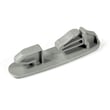
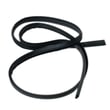
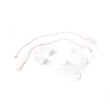
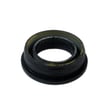
How do I tell what model Kenmore dishwasher I have?
Your Kenmore dishwasher’s model number is printed on the model and serial number label, which is typically located inside the door opening on the tub rim or inner door frame. For your unit, the model number format looks like 2213222N414; match the label exactly for correct parts.
Where to look first (fastest checks)
- Open the dishwasher door and inspect the tub rim around the opening.
- Check the left and right inner door frame edges.
- Look along the top edge of the door opening.
- Scan the tub wall just inside the door.
- Wipe the area clean; soap film can hide the print.
What the label should include
Most Kenmore dishwasher labels list both identifiers. Use the model number for parts lookup and the serial number for age and production details.
| Label item | What it’s used for | Example format |
|---|---|---|
| Model number | Ordering parts, fit checks, manuals | 2213222N414 or 665.xxxx |
| Serial number | Manufacturing info, service history | Letters and numbers |
If you still cannot find it
- Check the outer edge of the door (hinge side and latch side).
- Look behind the toe kick panel area (front bottom) for an additional sticker.
- If the label is damaged, compare your control panel layout and rack style to the diagrams in the 2213222N414 owner's manual.
Why it matters
Kenmore dishwashers often share similar designs across series, but parts like the door latch, rack adjusters, and pumps can vary by model. Using the exact model number helps us match the correct replacement, such as the dishwasher door latch WPW10653840 when a latch issue prevents starting.
Last updated: February 2026
Can you still get parts for a Kenmore dishwasher?
Yes. We still support replacement parts for many Kenmore dishwashers, including model 2213222N414, by matching parts to your exact model number and the specific symptom (leaking, not draining, poor cleaning, door not latching). Using the model number prevents ordering a look-alike part that will not fit.
How to find the right part for your Kenmore 2213222N414
Start with the symptom, then confirm the part location and any access steps in the 2213222N414 owner's manual.
Common part lookups we see for this model include:
- Rack problems (rack won’t roll, rack won’t adjust height)
- Drain issues (standing water, slow drain)
- Fill issues (won’t fill, fills slowly)
- Leaks (door area, under the unit)
- Heating and drying complaints (water not hot, dishes not drying)
Popular parts that are commonly replaced
These are examples of parts available for 2213222N414 that often solve everyday problems:
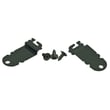
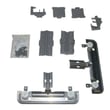
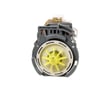
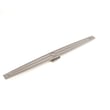
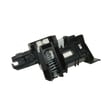
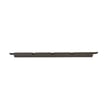
- Dishwasher rack adjuster W10712395 for an upper rack that won’t raise/lower or sits unevenly
- Whirlpool dishwasher dishrack wheel W10195416V for a lower rack that binds, falls off track, or rolls poorly
- Dishwasher drain pump W10876537 for a dishwasher that won’t drain
- Dishwasher water inlet valve W11175771 for no-fill or weak-fill symptoms
- Dishwasher door latch WPW10653840 for a door that won’t close or a cycle that won’t start
Quick symptom-to-part checklist
| Symptom | What to check first | Common part type |
|---|---|---|
| Won’t drain | Kinked hose, clogged filter area | Drain pump, drain hose |
| Won’t fill | Water supply on, inlet screen | Water inlet valve |
| Door won’t latch | Strike alignment, latch wear | Door latch |
| Upper rack issues | Broken adjusters, missing stops | Rack adjuster, rail stop |
Why it matters
Kenmore dishwashers are built with serviceable components, so replacing a targeted part (like a drain pump, inlet valve, or rack hardware) restores performance without replacing the whole dishwasher.
Last updated: February 2026
What are common problems with Kenmore dishwashers?
Common problems we see with the Kenmore 2213222N414 dishwasher include not starting or stopping mid-cycle (often door-latch related), poor cleaning from clogged spray paths, draining issues, and drying or spotting problems tied to water temperature and rinse aid use. For model-specific operating checks, use the 2213222N414 owner's manual.
Most common symptoms and what usually causes them
- Dishwasher does not run: door not fully closed and latched, Control/Lock enabled, cycle not selected, or power interruption (tripped breaker/fuse).
- Start/Resume light blinking: door was opened or not closed quickly enough after pressing Start/Resume.
- Poor cleaning: blocked spray nozzles, overloaded racks, or soil buildup in the filter area.
- Not draining: kinked/blocked drain hose, clogged air gap, or a failing drain pump.
- Cloudy or spotted dishes: hard water, too little rinse aid, or incoming water below 120°F (49°C).
Quick checks we recommend first (fast, no tools)
- Close the door firmly; then press START/RESUME (or press it and close the door within 3 seconds if the light is blinking).
- Confirm Control/Lock is off and a cycle is actually selected.
- Verify house power (breaker/fuse) and that the dishwasher has power.
- Check loading: large items should not interfere with the wash system at the back of the tub.
- Confirm water heater setting and incoming water temperature are 120°F (49°C).
Parts that commonly fix these issues on this model
| Symptom | Common fix | Example part for 2213222N414 |
|---|---|---|
| Won’t start, won’t stay running | Door not latching | Dishwasher door latch WPW10653840 |
| Won’t drain | Drain pump not pumping out | Dishwasher drain pump W10876537 |
| Poor wash coverage | Spray arm worn or clogged | Dishwasher spray arm, lower W10849471 |
| Slow fill or no fill | Water inlet valve restricted/failed | Dishwasher water inlet valve W11175771 |
Why it matters
Most “dead” or “won’t start” complaints are simple door-latch or control-lock conditions, while cleaning and spotting problems are often caused by loading, maintenance, and water temperature. Fixing the root cause prevents repeat failures and protects the pump, heater, and control.
Last updated: February 2026
Is it worth repairing a Kenmore dishwasher?
Yes, repairing a Kenmore dishwasher like model 2213222N414 is usually worth it when the problem is a wear item (rack parts, latch, hoses, valve) or a single failed component; it becomes less cost-effective when multiple major electrical or motor-driven parts are failing at the same time. Use the 2213222N414 owner's manual troubleshooting section to narrow the failure before buying parts.
Quick way to decide (repair vs. replace)
We use these checkpoints because they match how dishwashers typically fail over time:
- Repair when the issue is mechanical or a single part (door won’t latch, won’t drain, rack won’t roll).
- Repair when the unit otherwise cleans and dries normally after the fix.
- Replace when you have repeated leaks, multiple error codes, or intermittent power/control issues.
- Replace when the repair requires multiple high-cost assemblies (control plus motor/pump, for example).
- Repair when you can do a safe DIY swap (many rack and hose repairs are straightforward).
Common repairs that are usually worth it on 2213222N414
These are frequent, targeted fixes that restore normal operation without rebuilding the whole dishwasher:
- Upper rack won’t adjust or sags: dishwasher rack adjuster W10712395
- Door won’t close or won’t start because it won’t latch: dishwasher door latch WPW10653840
- Not filling or filling slowly: dishwasher water inlet valve W11175771
- Not draining: check the drain path; if the pump is bad, dishwasher drain pump W10876537
- Poor wash coverage from below: dishwasher spray arm, lower W10849471
Cost and complexity snapshot
| Repair type | Typical effort | Typical “worth it” signal |
|---|---|---|
| Rack/roller/stop parts | Low | Restores smooth racks, prevents damage |
| Latch/door seal issues | Low to medium | Fixes “won’t start” and many leaks |
| Inlet valve/drain hose | Medium | Fixes fill or drain complaints |
| Control or motor assemblies | High | Only worth it if the rest of the unit is in great shape |
Why it matters
A correct diagnosis prevents buying the wrong part and helps you avoid repeat failures. The manual for this Kenmore dishwasher includes a dedicated Troubleshooting section and service information, which is the fastest way to confirm whether you’re dealing with a simple component failure or a larger system problem.
Last updated: February 2026
How to remove lower spray arm Kenmore Elite dishwasher?
On Kenmore dishwasher model 2213222N414, the lower spray arm typically lifts off or releases from a center retainer so you can clean it or service the pump area. We remove the lower rack first, then release the spray arm carefully to avoid dropping debris into the sump.
Steps to remove the lower spray arm
- Turn off power at the breaker (dishwashers use line voltage under the tub).
- Pull out and remove the lower dishrack.
- If your model has a center cap or retainer, turn it counterclockwise to unlock, then lift it off.
- Lift the lower spray arm straight up off the hub.
- Check the spray arm nozzles for clogs; rinse under warm water.
- Reinstall by seating the arm fully, then locking the retainer back in place.
What to watch for (to prevent extra problems)
The spray arm sits above the filter and sump area. Keeping that area protected prevents screws or debris from falling into the pump.
- Place a towel over the pump and spray arm area when working above the sump (a common install and service best practice).
- Do not force the spray arm; if it will not lift, the retainer is still engaged.
- Clean the filters while you are there; a clogged filter can reduce wash pressure.
Quick troubleshooting table
| What you see | Most likely cause | What we do next |
|---|---|---|
| Spray arm will not lift off | Center retainer still locked | Unlock retainer, then lift straight up |
| Poor cleaning after reinstall | Nozzles clogged or filter dirty | Rinse nozzles; clean and reinstall filters |
| Arm wobbles or hits dishes | Not seated on hub | Reseat arm; confirm retainer is tight |
Related maintenance that helps wash performance
Your 2213222N414 uses a removable filter system. Cleaning it restores water flow and spray pressure.
- Remove upper filter assembly by turning 1/4 turn counterclockwise and lifting out
- Lift and pull the lower filter forward to remove
- Rinse under running water; use a soft brush for hard deposits
For the exact diagrams and part locations for your model, use the 2213222N414 owner's manual.
Why it matters
A properly seated lower spray arm and clean filter keep water pressure where it belongs, which improves cleaning and helps prevent redepositing food soil on dishes.
Last updated: February 2026