 Error Codes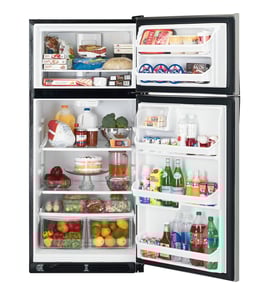



What are the disadvantages of a top mount fridge?
A top-mount refrigerator like the GE GTE18MSRBRSS puts the freezer on top and the fresh-food section below; the main disadvantages are less convenient access to everyday refrigerated items, fewer premium storage features, and fewer built-in dispenser options compared with many bottom-freezer designs.
Common drawbacks you may notice
- More bending for fresh food: the refrigerator compartment is lower, so you reach down more often for produce, drinks, and leftovers.
- Less “at-a-glance” organization: many top-mount models have simpler shelving and bin layouts than higher-end bottom-mount units.
- Fewer external features: top-mount refrigerators are less likely to include through-the-door water and ice.
- Freezer usability: the top freezer can be deep, so smaller items can get buried.
- Door swing and clearance: depending on your kitchen layout, the upper freezer door can feel more intrusive when open.
Quick comparison: top mount vs. bottom freezer
| Feature | Top mount (like GTE18MSRBRSS) | Bottom freezer |
|---|---|---|
| Fresh-food access | Lower, more bending | Higher, easier reach |
| Organization | Often simpler | Often more flexible |
| Dispenser options | Less common | More common |
| Freezer access | Eye level | Lower, often drawers |
Why it matters
Most households use the fresh-food section more than the freezer. If you are frequently in and out for refrigerated items, the top-mount layout can feel less ergonomic over time, even though it is a proven, space-efficient design.
If you are trying to decide what fits your needs
- Choose top mount if you want a straightforward layout and do not need a dispenser.
- Choose bottom freezer if you want easier access to fresh food and more premium storage options.
- If your concern is door sealing or temperature consistency, start with basic maintenance (clean seals, confirm doors close fully).
For door-closing and sealing issues on this model, common related parts include the closure mechanism - right WR13X38687 and the GE freezer door gasket WR14X38686.
Last updated: February 2026
How to read a GE refrigerator model number?
GE refrigerator model numbers are a short code that identifies the exact refrigerator configuration (series, size class, feature set, and finish). For your GE top-mount refrigerator model GTE18MSRBRSS, matching the full model number is the fastest way to get the right replacement parts and avoid fit issues.
What the characters usually mean (using GTE18MSRBRSS as the example)
GE model numbers are typically read left to right; each section narrows down the exact build.
- Prefix letters identify the product line/series (for example, many GE top-mount models start with GTE).
- Numbers commonly indicate the size class (often tied to approximate capacity; for example, 18 is typically an 18 cu. ft. class).
- Middle letters often represent feature packages or design variations.
- Ending letters commonly indicate the finish/color and sometimes a revision.
Where to find the model number on the refrigerator
On most GE top-mount refrigerators, the model/serial tag is found in one of these spots:
- Inside the fresh food compartment on a side wall
- On the ceiling of the fresh food compartment near the controls
- Behind the crisper drawers on an interior wall
- On a label visible when the door is open (near the hinge area)
Why the exact model number matters for parts
Even small model-number differences can change door hardware, electrical parts, and cooling components.
| What can change | Example part type | Example from this model’s parts list |
|---|---|---|
| Door style and fit | Door, gasket, handle | GE refrigerator door - stainless steel WR78X38691 |
| Door sensing and alarms | Door switch | Refrigerator door switch WR23X20371 |
| Cooling system design | Compressor, drier | Compressor & electricals WR87X38746 |
Quick tips to avoid ordering the wrong part
- Copy the model number exactly as printed: GTE18MSRBRSS (letters and numbers matter).
- If your tag includes extra characters after the model, record those too.
- Match the part by part ID (not just the description) when possible.
- If you are troubleshooting a door-alarm issue, start with the door switch and alarm reset steps.
Helpful related DIY info
For door-alarm behavior and resets on GE refrigerators, use our guide: how to reset the door alarm on a GE refrigerator.
Why it matters
Reading the model number correctly prevents returns, saves time, and helps ensure parts like a door gasket, thermistor, or control-related components fit and work correctly the first time.
Last updated: February 2026
Are top mount or bottom mount fridges better?
Top-mount and bottom-mount refrigerators are both good choices; the better option depends on how you use your kitchen. For a GE GTE18MSRBRSS top-mount refrigerator, you typically get strong efficiency and simpler design, while a bottom-mount usually puts fresh food at eye level for easier daily access.
Quick comparison
| Feature | Top-mount (freezer on top) | Bottom-mount (freezer on bottom) |
|---|---|---|
| Fresh food access | Lower; more bending | Higher; less bending |
| Freezer access | Easier | More bending or drawer access |
| Energy use (typical) | Often lower | Often slightly higher |
| Repair complexity (typical) | Often simpler | Often more complex |
| Price (typical) | Often lower | Often higher |
Choose a top-mount if you want
- Better value for the capacity
- A layout that is usually more energy efficient
- A simpler, proven design with fewer premium features to maintain
- Easy access to frozen foods (especially if you use the freezer often)
Choose a bottom-mount if you want
- Fresh food at a more comfortable height (less bending)
- A freezer drawer that can be easier to organize for bulk items
- A layout that fits how you cook (more fridge use than freezer use)
Why it matters
The “best” style is the one that matches your daily habits. If you open the refrigerator section far more than the freezer, bottom-mount convenience can be worth it. If you want straightforward performance and typically lower operating cost, a top-mount like the GE GTE18MSRBRSS is a strong pick.
A practical tip for long-term satisfaction
Door sealing and temperature stability matter more than freezer location. If you ever notice warm spots, frost buildup, or the door not closing tightly, addressing airflow and sealing issues early helps protect food and reduce energy use. For door-seal basics, we recommend how to fix a fridge door seal.
Last updated: February 2026
What is the most common problem with a GE refrigerator?
The most common GE refrigerator problem is a cooling issue (warm fridge, warm freezer, or temperature swings). On the GE GTE18MSRBRSS top-mount, the usual causes are restricted airflow, dirty condenser coils, or a problem in the evaporator fan and defrost system; our how to fix your evaporator cooling fan guide helps you narrow it down.
Quick checks we recommend first
- Confirm the controls are set correctly and the doors close fully.
- Make sure food packages are not blocking air vents in the fresh food section or freezer.
- Clean condenser coils and the area around the condenser (dust buildup reduces heat removal).
- Listen for the evaporator fan in the freezer; it should run when the compressor is running.
- Look for heavy frost on the freezer back wall (often points to a defrost problem).
- Check door gaskets for gaps, tears, or areas that do not seal.
Common symptoms and what they usually mean
| Symptom | Most likely cause | What to do next |
|---|---|---|
| Fridge warm, freezer cold | Airflow issue between compartments | Clear vents; check for frost blockage; inspect fan operation |
| Both sections warm | Dirty coils, compressor not running, or sealed system issue | Clean coils; verify compressor/fan operation |
| Freezer packed with frost | Defrost heater/thermistor/defrost control issue | Inspect defrost components; check for ice blocking the fan |
| Door alarm or interior light issues | Door not closing or door switch problem | Check alignment; test the switch |
Parts that commonly relate to cooling complaints on this model
If troubleshooting points to a specific failure, these model-matched parts are commonly involved:
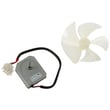
- Fan motor WR60X38704 (moves cold air across the evaporator and through the refrigerator)
- Defrost heater WR09X38707 (melts frost off the evaporator during defrost)
- Thermistor WR09X38711 (temperature sensing for control decisions)
- GE refrigerator door switch WR23X20371 (can affect lights, alarms, and sometimes fan behavior)
- GE freezer door gasket WR14X38686 (poor sealing causes moisture, frost, and temperature problems)
Why it matters
Cooling problems are usually progressive: restricted airflow and dirty coils make the compressor run longer, increase frost buildup, and can lead to food spoilage. Catching the root cause early often prevents secondary issues like ice blockage and fan strain.
Last updated: February 2026
What is the average life expectancy of a GE refrigerator?
Most GE refrigerators, including the GE GTE18MSRBRSS top-mount style, typically last 12 to 15 years with normal household use. Regular maintenance (clean airflow, good door sealing, stable temperatures) is what most often separates a shorter lifespan from a longer one.
What affects refrigerator lifespan the most
- Condenser cleanliness: Dust buildup makes the compressor run hotter and longer.
- Door gasket condition: Air leaks cause longer run times and frost or moisture issues.
- Fan performance: Weak airflow can lead to warm temps and compressor strain.
- Defrost system health: Ice buildup reduces cooling efficiency.
- Room conditions: Hot garages, tight cabinets, and blocked vents shorten life.
Quick maintenance checklist (10 minutes that pays off)
- Vacuum dust from the front grille and any accessible condenser area.
- Keep the doors closing firmly; avoid overloading door bins.
- Set steady temps (typical targets: 37°F fresh food, 0°F freezer).
- Leave space for airflow around the cabinet; do not block interior vents.
- Listen for changes: new clicking, buzzing, or a fan that stops and starts.
Common wear items vs. major repairs
| What fails | What you notice | Typical fix type |
|---|---|---|
| Door sealing parts | Warm spots, moisture, longer run time | Adjustment or gasket/closure repair |
| Fan or defrost parts | Frost buildup, warm freezer, noisy fan | Component replacement |
| Compressor system | Poor cooling, long run time, higher energy use | Sealed-system service |
Model-relevant parts that can extend service life
If you are troubleshooting symptoms that can shorten lifespan (warm temps, frost, poor airflow), these parts are commonly involved on this model:
- Fan motor WR60X38704 (airflow through the evaporator)
- Defrost heater WR09X38707 (prevents heavy frost buildup)
- Thermistor WR09X38711 (temperature sensing and control)
Why it matters
A refrigerator that runs longer than it should uses more electricity and puts extra heat and wear on the compressor and electrical components. Keeping airflow clear and doors sealing correctly is the simplest way to protect the cooling system.
Last updated: February 2026





