Owner’s manual
 Error Codes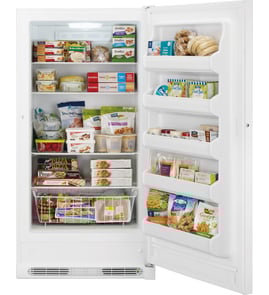


Where is the model number on a Frigidaire upright freezer?
On a Frigidaire upright freezer like model LFFU14F5HWC, the model number is printed on the appliance’s rating label; we typically find it just inside the door opening on the cabinet liner, or on an interior side wall near the temperature control area. Use the LFFU14F5HWC owner's manual as your reference for label locations and feature layout.
Where to look first (fastest checks)
- Open the freezer door and inspect the cabinet frame around the door opening (especially the upper corners).
- Check the interior side walls near the top, where controls and wiring often route.
- Look behind or beside the temperature control area (many upright models place controls inside the cabinet).
- Inspect the lower interior area near the bottom basket or lower shelf supports.
- If your unit has a base grille or toe-kick, check nearby surfaces that are visible with the door open.
What the label looks like and what to record
The rating label usually includes both the model number and serial number. We recommend recording both because parts lookups and service procedures often use the serial number to confirm revisions.
| Item on label | Why it matters | Example format |
|---|---|---|
| Model number | Identifies the exact freezer design for parts | LFFU14F5HWC |
| Serial number | Helps match production run and part changes | Letters and numbers |
| Electrical ratings | Useful for diagnosing power issues | Volts/amps |
Why it matters
Using the exact model number ensures you get the correct Frigidaire freezer parts (controls, door switch, gasket, evaporator fan motor) and the right instructions for your configuration.
Tip for future parts ordering
Once you find the label, take a clear photo and keep it with your paperwork; it speeds up ordering and troubleshooting.
Last updated: February 2026
Is Frigidaire a good brand for upright freezers?
Yes. Frigidaire is a solid, widely trusted brand for upright freezers, and the Frigidaire LFFU14F5HWC is built around the features most owners want: stable temperature control, practical storage options, and straightforward operation and alarms described in the LFFU14F5HWC owner's manual.
What “good” usually means for an upright freezer
When customers ask if a brand is good, we focus on day-to-day performance and serviceability.
- Consistent freezing and recovery after door openings
- Usable storage layout (shelves, bins, baskets) for organization
- Reasonable noise level from the compressor and evaporator fan
- Clear temperature controls and alarms
- Parts availability for common repairs (fan motor, control board, defrost parts)
Features called out in the manual that support reliability
The manual highlights practical design and control features common to Frigidaire upright models:
- Electronic temperature controls that let you adjust colder or warmer and allow time to stabilize
- A high-temperature alarm system (HI TEMP light and buzzer) to alert you if temps rise
- Storage components like door bins, tilt-out shelf (some models), pizza shelf (some models), and basket dividers
- Defrosting and cleaning guidance, including avoiding sharp metal tools on coil-containing shelves
Common ownership pros and tradeoffs
These are typical strengths and the most common “watch-outs” for upright freezers in this class.
| Area | What’s typically good | What to watch |
|---|---|---|
| Temperature performance | Steady freezing for long-term storage | Warm spots if airflow is blocked by overpacking |
| Organization | Shelves and bins make food easier to find | Shelves can feel less forgiving if overloaded |
| Frost management | Many uprights are frost-free | Door left ajar can still cause frost and temp swings |
| Serviceability | Common parts are replaceable | Sealed-system repairs are more involved |
Why it matters
A “good” upright freezer is one you can keep at a safe, steady temperature with minimal fuss. Features like alarms, sensible shelving, and replaceable components help protect food quality and reduce downtime if something fails.
Last updated: February 2026
Can I look up Frigidaire parts by model number?
Yes. Looking up parts by model number is the most accurate way to get compatible replacement parts for your Frigidaire upright freezer model LFFU14F5HWC, because the parts list is tied to the exact configuration of your freezer.
How to find the model number on your freezer
We recommend using the model number from the freezer’s data tag and matching it exactly (letters and numbers). Your LFFU14F5HWC owner's manual also has a section for recording the model and serial numbers.
Common places to check on an upright freezer:
- Inside the cabinet near the door opening
- On an interior side wall
- Near the lower front area behind the base grille or toe panel
- On the back of the cabinet (less common, but possible)
How model-number lookup helps you get the right part
Model-number search narrows parts down to what fits your freezer’s design, wiring, and refrigeration system.
Here are examples of model-matched parts you may see for LFFU14F5HWC:
- Cooling and airflow parts (like an evaporator fan motor)
- Defrost system parts (heater, thermostat)
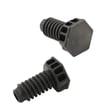
- Door sealing parts (gasket, liner fasteners)
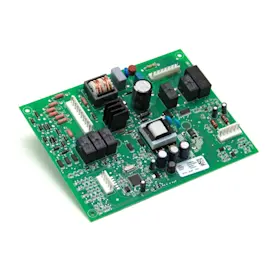
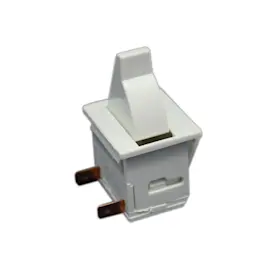
- Electrical parts (control board, door switch)
Quick examples (what the part does)
| Part example for LFFU14F5HWC | What it affects | Common symptom when it fails |
|---|---|---|
| Freezer electronic control board 216954214 | Temperature control and operation | Warm temps, erratic operation |
| Defrost heater 5304496687 | Defrost cycle | Heavy frost, poor airflow |
| Freezer door switch 297243800 | Light and fan behavior | Fan stops, light issues |
Why it matters
Using the exact model number prevents ordering a look-alike part that mounts differently, uses a different connector, or is calibrated differently. That saves time and helps restore proper freezing performance faster.
Last updated: February 2026
Is it worth repairing an upright freezer?
Yes, repairing a Frigidaire upright freezer like model LFFU14F5HWC is worth it when the problem is a door seal, airflow, or defrost issue; those repairs are typically far less expensive than replacing the freezer. It is usually not worth it when the sealed system (compressor or refrigerant components) is the failure.
Quick way to decide
Use this checklist to separate “repairable and practical” from “likely replacement.”
- Repair is usually worth it if the freezer still runs and you have: frost buildup, warm spots, a door that does not seal, or a fan that is not moving air.
- Repair is usually not worth it if the compressor is not starting, the unit is not cooling at all, or you have a confirmed sealed-system leak.
- Start with installation basics; the manual notes leveling is very important because a misaligned door can cause sealing, cooling, frost, and moisture problems.
- Check for alarms or error indications; the manual notes a “HI TEMP” condition and that an “E” on the display indicates a malfunction that needs service-level repair.
- Defrost and drainage issues can be practical repairs; the manual describes defrosting when frost reaches about 1/4 to 1/2 inch and using the defrost drain setup on upright models.
Common repairs and what they typically mean
These are the most common “worth it” repairs for an upright freezer.
| Symptom | Most likely area | Typical fix type |
|---|---|---|
| Frost on back wall, poor airflow | Evaporator fan or defrost system | Replace fan motor, heater, or thermostat |
| Door pops open or won’t seal | Leveling or door gasket | Level unit; replace gasket |
| Runs a lot, temps drift warm | Control or airflow restriction | Check settings; replace control board if needed |
| Warm alarm / HI TEMP | Temperature control, door sealing, airflow | Correct cause; reset alarm |
Parts that can drive the repair cost up
If your diagnosis points to one of these, the repair can get expensive quickly.
- Upright freezer compressor 5304507765 (sealed-system level repair)
- Freezer electronic control board 297370600 (electronic diagnosis often required)
- Freezer condenser coil 5300123788 (major refrigeration component)
Why it matters
A freezer that is out of level or not sealing can create repeat problems (warm temperatures, frost buildup, moisture). Fixing the root cause first helps you avoid replacing multiple parts and protects frozen food quality.
For model-specific operating details (leveling, alarms, temperature adjustment, and defrosting steps), follow the LFFU14F5HWC owner's manual.
Last updated: February 2026