Owner’s manual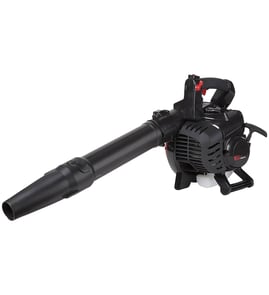


How long does a gas-powered leaf blower last?
A gas-powered leaf blower typically lasts about 10 years with normal homeowner use and consistent maintenance. For the Craftsman 358794201, lifespan depends most on clean airflow, fresh fuel practices, and staying on top of wear items listed in the 358794201 owner's manual.
Most gas blowers fail early from fuel system issues, overheating from restricted airflow, or running with worn engine parts.
- 10+ years is common with seasonal use and proper storage
- 5 to 8 years is common with heavier use or inconsistent maintenance
- Shorter lifespan happens when fuel is left in the tank/carburetor during storage
- Longer lifespan happens when the air filter and muffler area are kept clean
These are the highest-impact habits for a 2-cycle blower like the Craftsman 358794201:
- Use the correct 2-cycle fuel mix and avoid old fuel
- Keep the air filter clean; replace it when it will not clean up well
- Inspect and clean around the muffler/spark arresting screen area to prevent performance loss
- Do not run the blower with clogged intake or damaged blower tube components
- Store the blower dry and secure after it cools down
| Item type | Examples | What it means for lifespan |
|---|---|---|
| Routine wear items | Air filter, spark plug, fuel lines | Normal replacements that help the engine last longer |
| Starting system wear | Recoil parts, springs, pulleys | Fixable; usually not end-of-life |
| Engine internal wear | Rings, piston/cylinder damage | Often the point where repair cost matters most |
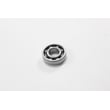
If compression drops or the engine loses power even with good fuel and airflow, internal engine wear can be involved. For example, a worn ring can reduce compression; the piston ring 545154001 is one of the engine wear parts used on this model.
A blower that is maintained and stored correctly keeps its compression, starts easier, and runs cooler. That directly reduces expensive engine wear and helps you get the full expected service life from your Craftsman gas leaf blower.
Last updated: January 2026
What is the best gas-powered leaf blower on the market?
The “best” gas-powered leaf blower depends on how you’ll use it, but for most homeowners we recommend choosing by performance (MPH/CFM), comfort, and serviceability. Your Craftsman model 358794201 is a solid benchmark at 150 MPH and 305 CFM; use those numbers to compare other handheld and backpack blowers in the same class using the 358794201 owner's manual.
Focus on the specs and features that change real-world results.
- Air volume (CFM): higher CFM moves more leaves at once
- Air speed (MPH): higher MPH helps lift wet or stuck debris
- Type: handheld for quick jobs; backpack for long sessions and large yards
- Engine size and build: 2-cycle engines are common; look for durable housings and easy access to service parts
- Noise and neighborhood use: plan to run at the lowest throttle that still gets the job done
- Maintenance access: air filter, fuel lines, and starter parts should be easy to reach
Your Craftsman 358794201 is labeled 150 MPH and 305 CFM in the manual, which makes it a useful reference point when shopping.
| What you compare | Why it matters | What to look for |
|---|---|---|
| CFM | How much material you can move | Higher for heavy leaf coverage |
| MPH | How well it dislodges debris | Higher for wet leaves and gravel edges |
| Handheld vs. backpack | Comfort and fatigue | Backpack for long runtimes |
| Service parts availability | Long-term ownership | Common wear parts easy to buy |
Across the market, many customers compare gas blowers from Stihl, Husqvarna, and ECHO because they offer strong performance and a wide range of handheld and backpack options. Match the model’s published MPH/CFM to your yard size and the debris you deal with most.
If you buy based only on “most powerful,” you can end up with a blower that is heavier, louder, and harder to control than you need. Using your 358794201 specs as a baseline helps you choose a blower that clears faster without unnecessary weight or noise.
Last updated: January 2026
What is the gas mix ratio for a leaf blower?
For the Craftsman gas leaf blower model 358794201, the correct fuel mix is 40:1 (2-cycle oil to unleaded gasoline). That equals 3.2 oz of synthetic 2-cycle air-cooled engine oil per 1 gallon of gas; follow the 358794201 owner's manual for fueling and safety details.
Use a quality synthetic 2-cycle air-cooled engine oil and mix in an approved fuel container.
| Gasoline amount | Oil needed (40:1) |
|---|---|
| 1 gallon | 3.2 oz |
| 1/2 gallon | 1.6 oz |
| 1 quart | 0.8 oz |
- Add about half the gasoline to the container first
- Measure and add the correct amount of 2-cycle oil
- Cap and shake to fully blend
- Add the remaining gasoline, then shake again briefly
- Fill the tank outdoors, with the engine off, and wipe up any spills
Using the wrong oil can damage a 2-cycle engine.
- Do not use automotive oil
- Do not use boat (marine) oil
- Do not “eyeball” the ratio; measure the oil
A 40:1 mix provides the lubrication the 2-cycle engine needs. Too little oil can score the piston and cylinder; too much oil can cause heavy smoke, carbon buildup, and poor performance.
Last updated: January 2026
Is there a 300 mph leaf blower?
Yes, 300 MPH leaf blowers exist; they are typically high-output backpack blowers. For Craftsman model 358794201, the performance rating to rely on is the one printed in the product documentation; the 358794201 owner's manual lists 150 MPH air speed and 305 CFM air volume, so 300 MPH is outside what this model is designed to deliver.
MPH is the air speed at the nozzle; CFM is the amount of air moved. For moving wet leaves and heavier debris, CFM and nozzle design often matter as much as MPH.
- Higher MPH helps break loose stuck debris
- Higher CFM helps push larger piles and heavier material
- Nozzle length and shape change “feel” and effectiveness
- Engine tune and air filter condition can reduce both MPH and CFM
Use this as a practical comparison when shopping or setting expectations.
| Spec or trait | Craftsman 358794201 (manual rating) | Typical 300 MPH class blower |
|---|---|---|
| Air speed | 150 MPH | 300 MPH |
| Air volume | 305 CFM | Often higher CFM as well |
| Common format | Handheld | Backpack |
| Best for | Light to moderate cleanup | Larger areas, heavier debris |
Most “low power” complaints on 2-cycle blowers come from airflow restriction or fuel delivery issues.
- Make sure the blower tube is fully seated and snapped in place
- Clean or replace the air filter; a clogged filter restricts airflow (use ayp line trimmer air filter 530047932)
- Use fresh fuel mixed at the correct 2-cycle ratio listed in the manual
- Inspect fuel lines for cracks, soft spots, or kinks
- Check the fuel cap venting; a blocked vent can starve the carburetor
A 300 MPH rating is a different performance class than the Craftsman 358794201. Matching blower type (handheld vs backpack) and overall airflow to your yard size and debris type delivers better results than chasing MPH alone.
Last updated: January 2026