Owner’s manual
 View engine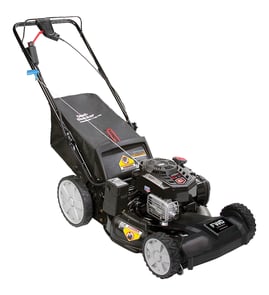
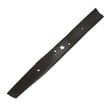


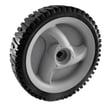
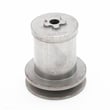
How to look up Craftsman model number?
To look up the Craftsman model number for your walk-behind mower, find the model-number label on the mower deck housing (typically on the rear of the deck near the discharge area) or on the handle support area; then match that number to the parts list in the 917376542 owner's manual.
Where to find the model number on a walk-behind mower
On Craftsman walk-behind mowers like model 917376542, the model number is usually on a sticker or metal tag in one of these spots:
- Rear of the mower deck (behind the engine, near the back flap)
- Side of the mower deck near the wheel height adjuster
- Handle bracket or handle mounting area
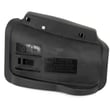
- Under the rear door area (bagging opening) on some deck designs
How to use the model number to look up parts
Once you have the model number, use it to confirm you are ordering the correct blade, drive parts, and controls.
- Write the model number exactly as shown (example: 917.376542 may appear with a dot on the label)
- Use the model number to cross-check the illustrated parts list and key numbers
- Match the part description and key number to the part you need
- Replace worn cutting and drive items with OEM-equivalent parts for best fit
Common parts you may look up by model
| What you need | Example part type | Example from this model’s parts |
|---|---|---|
| Cutting performance | Blade | Husqvarna lawn mower 22-inch deck 3-in-1 blade 532421825 |
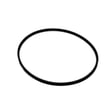
| Self-propel issues | Ground drive belt | Lawn mower ground drive belt 532196853 |
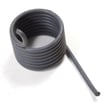
| Drive control feel | Return spring | Return spring 532406558 |
Why it matters
Craftsman mower parts are model-specific. Using the exact model number helps ensure the correct fit for critical items like the 22-inch blade, drive belt routing, and control cable connections, which prevents poor cutting, vibration, or drive problems.
Last updated: February 2026
Is it cheaper to repair or replace a lawn mower?
For a Craftsman walk-behind mower like model 917376542, it’s cheaper to repair when the problem is routine wear (blade, belt, cable, wheels) or basic maintenance. Replacement makes more sense when the engine or drive system needs major work and the repair total approaches about half the cost of a comparable new mower (or the mower has repeated failures).
Quick decision guide (repair vs replace)
- Repair when the mower still starts reliably and the fix is a normal wear item (blade, drive belt, control cable, wheel parts).
- Repair when the mower just needs seasonal maintenance (oil change, air filter, spark plug, blade service).
- Replace when the engine has low compression, heavy smoking, or persistent no-start after fuel and ignition checks.
- Replace when the self-propel drive has major internal damage and multiple drive parts are worn.
- Replace when safety-related damage exists (cracked deck, bent crankshaft after striking an object).
Typical cost ranges (what most owners see)
| Repair type | What it usually involves | Typical cost range |
|---|---|---|
| Basic tune-up | Oil, spark plug, air filter, blade service | $75 to $200 |
| Wear-part repair | Blade, belt, cable, wheel components | $25 to $200 + labor |
| Major repair | Engine internal work or major drive overhaul | $250+ |
Model-specific notes that affect the decision
Your 917376542 manual calls out common “expendable” wear items (blade, belts, air cleaner, spark plug) and routine maintenance that keeps the mower running efficiently. Use the maintenance schedule and service procedures in the 917376542 owner’s manual to estimate what your mower needs now versus later.
If the mower won’t propel, a common, cost-effective repair is replacing the drive belt such as the lawn mower ground drive belt 532196853 (when the belt is worn, stretched, or slipping). If cut quality is the issue, replacing a bent or damaged blade is often the best value, for example the husqvarna lawn mower 22-inch deck 3-in-1 blade 532421825.
Why it matters
Repairing normal wear items usually restores performance for a fraction of the cost of a new mower. Replacing the mower becomes the better value when you are paying for major drivetrain or engine work and still ending up with an older machine that may need additional repairs soon.
Last updated: February 2026
Should I use 87 or 91 gas for lawn mower?
For the Craftsman walk-behind mower model 917376542, use regular unleaded gasoline with a minimum of 87 octane. Using 91 octane does not improve performance on this mower; the key is using fresh, clean fuel and storing it correctly (see the 917376542 owner's manual).
Recommended fuel for model 917376542
Use fuel that matches these basics:
- Octane: 87 minimum (regular unleaded)
- Freshness: buy only what you can use in about 30 days
- Mixing: do not mix oil with gasoline
- Fill level: fill only to the bottom of the filler neck (do not overfill)
- Spills: wipe up spilled fuel before starting
When higher octane helps (and when it does not)
Octane is mainly about preventing knock in high-compression engines. Most walk-behind mower engines, including the engine used on this model, are designed to run correctly on regular fuel.
| Fuel choice | What you can expect | Our guidance |
|---|---|---|
| 87 octane (regular) | Normal starting and power | Best everyday choice |
| 89 to 91 octane (premium) | Typically no performance gain | Not necessary for this mower |
Fuel storage tips (prevents hard starting)
If the mower will sit 30 days or longer, stale fuel can cause starting and carburetor problems. We recommend:
- Run the engine until the tank, fuel lines, and carburetor are empty before long storage
- Use fresh fuel at the start of the next season
- Avoid alcohol-blended fuels when possible; they can attract moisture during storage
- Follow seasonal storage steps in the 917376542 owner's manual
Why it matters
Using the correct fuel (87+ octane) and keeping it fresh helps prevent rough running, hard starting, and fuel-system issues that can lead to extra maintenance on the carburetor and fuel lines.
Last updated: February 2026
What are the common problems with Craftsman lawn mowers?
Common problems on the Craftsman 917376542 gas walk-behind mower are no-start conditions (stale fuel, dirty air filter, bad spark plug, disconnected plug wire), loss of power from airflow or deck buildup, and vibration or hard pulling caused by a loose or damaged blade or blade adapter. See the 917376542 owner's manual for the model’s troubleshooting chart and maintenance schedule.
Most common symptoms and what usually causes them
- Won’t start: stale fuel, water in fuel, dirty air filter, bad spark plug, control bar not held to the handle
- Loss of power: dirty air filter, cutting too much grass, grass and debris packed under the deck
- Poor cut: worn or bent blade, uneven wheel height settings, deck packed with clippings
- Excessive vibration: worn, bent, or loose blade; bent crankshaft; broken blade adapter
- Starter rope hard to pull: blade dragging in grass; brake engaged when control bar is released
Quick checks we recommend first (fast, no parts guessing)
- Use fresh gasoline; drain and refill if the fuel is old.
- Check the air filter; replace if dirty or oil-soaked.
- Inspect the spark plug and wire; reconnect the wire firmly and replace the plug if fouled.
- Clean under the mower deck (engine off, spark plug wire removed).
- Confirm the control bar is held down against the handle while starting.
Parts that commonly solve cut and vibration complaints
If the mower is shaking, cutting unevenly, or leaving uncut strips, the blade is the first place we look.
| Symptom | What to inspect | Common fix |
|---|---|---|
| Vibration | Blade condition and tightness | Replace blade and tighten hardware |
| Poor cut | Blade edge and lift | Sharpen or replace blade |
| Hard to pull | Blade dragging, deck packed | Clean deck; verify blade is straight |
For blade replacement on this model, match the deck size and blade style; the husqvarna lawn mower 22-inch deck 3-in-1 blade 532421825 is a listed blade option for 917376542.
Why it matters
Running with stale fuel, a clogged air filter, or a bent blade can cause hard starting, poor performance, and excessive vibration. Keeping the deck clean and following the maintenance schedule helps the engine breathe properly and keeps the cut consistent.
Last updated: February 2026
What year is a Craftsman 917376542 riding mower?
Craftsman model 917376542 is not a riding mower; it is a 22-inch, power-propelled walk-behind rotary lawn mower (160cc Honda engine). For the exact production date range tied to your unit, use the identification information and specifications listed in the 917376542 owner's manual.
Why the “year” can be confusing
Craftsman model numbers that start with 917 are used across multiple outdoor power equipment types. The reliable way to pin down the correct product and its details is to match the model number and product description on the mower to the manual.
How to identify your mower and confirm the correct model
Use these checks on your Craftsman 917376542:
- Confirm the model number reads 917.376542 on the mower label
- Verify it is a walk-behind mower with a 22-inch cutting deck
- Look for the 160cc Honda engine noted for this model
- Compare your handle, rear door, and drive control layout to the illustrated parts list in the manual
- If you are shopping parts, match by model number first, then by part name/ID
Common “year” lookup methods (what works best)
If you need a build year for registration, resale, or service records, these are the most practical options.
| Method | What you get | Best for |
|---|---|---|
| Manual model match | Confirms the exact product type and configuration | Avoiding wrong parts and wrong specs |
| Mower ID label details | Manufacturing identifiers tied to your unit | Narrowing down production timeframe |
| Engine model/type/code (on Honda engine) | Engine build date info | Engine-specific parts and service |
Why it matters
Getting the product type right (walk-behind vs. riding) prevents ordering the wrong blade, belt, or drive parts. For example, this model uses a 22-inch deck blade such as the husqvarna lawn mower 22-inch deck 3-in-1 blade 532421825, which is specific to this walk-behind platform.
Last updated: February 2026